


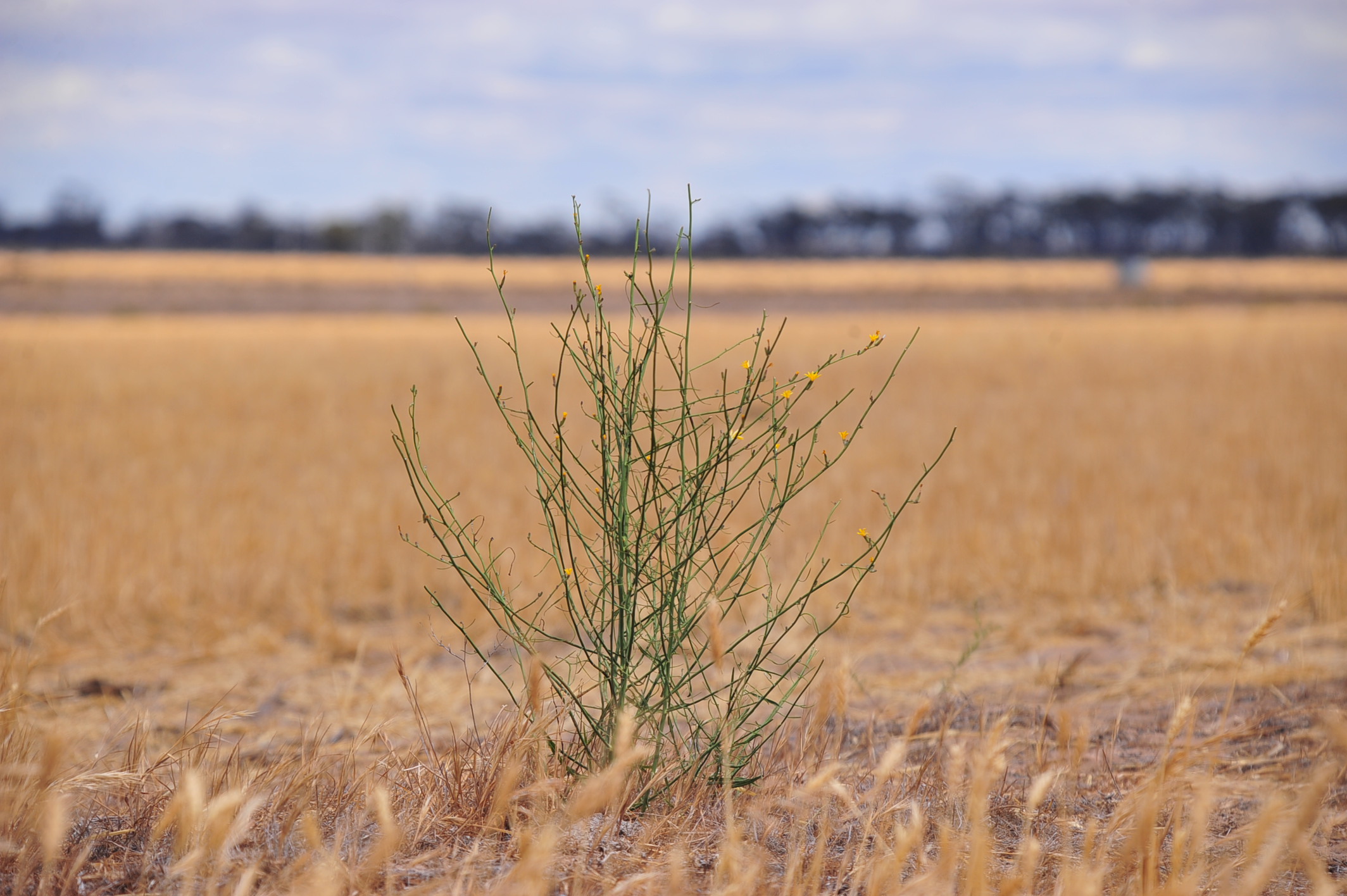
With much of the Annual Searching Program now completed, the Skeleton weed response will focus on its annual surveillance campaign.
The surveillance campaign will cover areas where skeleton weed is not currently recorded, but in the potential spread path, with the aim to find emerging infestation areas before they can establish.
The campaign will target more than 60 properties spanning more than 55,000 hectares across the grain growing areas of the state.
Skeleton weed – with its striking yellow daisy flowers and skeleton-like stems – is a declared weed in WA, as it competes with crops and pastures for nitrogen and soil moisture – impacting yields and quality.
The initiative is led by Department of Primary Industries and Regional Development (DPIRD), in association with seven Local Action Groups.
DPIRD project manager Martin Atwell said the program included ground searches, complemented by the use of drones to detect plants in target, high risk areas.
“Searching started a little earlier than normal this season and the first flowering plants were detected in November,” he said.
“To date the summer searching program has been going well and much of the scheduled searching has been done. It is important that landholders continue to monitor searched paddocks and treat any emerging plants, particularly if we get summer rains.”
Landholders are encouraged to support the eradication efforts by surveying paddocks over summer and reporting suspect observations.
The Skeleton Weed Program’s activities are funded by growers through the Grains, Seeds and Hay Industry Funding Scheme.
Activities include herbicide trials, precision mapping and historical data analysis to stem the spread of the weed, as well as a number of research projects.
Funds are also directed to research investments to help reduce overall skeleton weed infestations, including pollen monitoring and an ongoing initiative examining biocontrol options.
For more information on the Skeleton Weed Program, including the Skeleton Weed Management Guide, visit www.agric.wa.gov.au/skeletonweed.
Suspect skeleton weed plants should be reported to DPIRD using the MyPestGuide reporter app or the department’s Pest and Disease Information Service on (08) 9368 3080 or padis@dpird.wa.gov.au.
 Print this page
