


The Department of Primary Industries and Regional Development (DPIRD) research, supported by the Grains Research and Development Corporation (GRDC), was profiled at the Australian Agronomy Conference in Albany today.
A six year survey found while wheat grown after a break crop or pasture had a modest yield benefit compared with a wheat-on-wheat crop, the water use efficiency of a three year rotation of continuous wheat declined significantly.
The survey – with more than 3700 field visits to 184 paddocks spanning 14 million hectares between 2010-2015 – measured weed, nutrient and soil borne plant disease constraints to production and water use efficiency.
Results showed the traditional role of break crops and pastures in reducing weed and disease risks and providing nitrogen had been partially replaced by an increased use of herbicides and fertiliser and management strategies.
Despite this increase in management intensity, by year three of a continuous wheat crop water use efficiency had declined markedly.
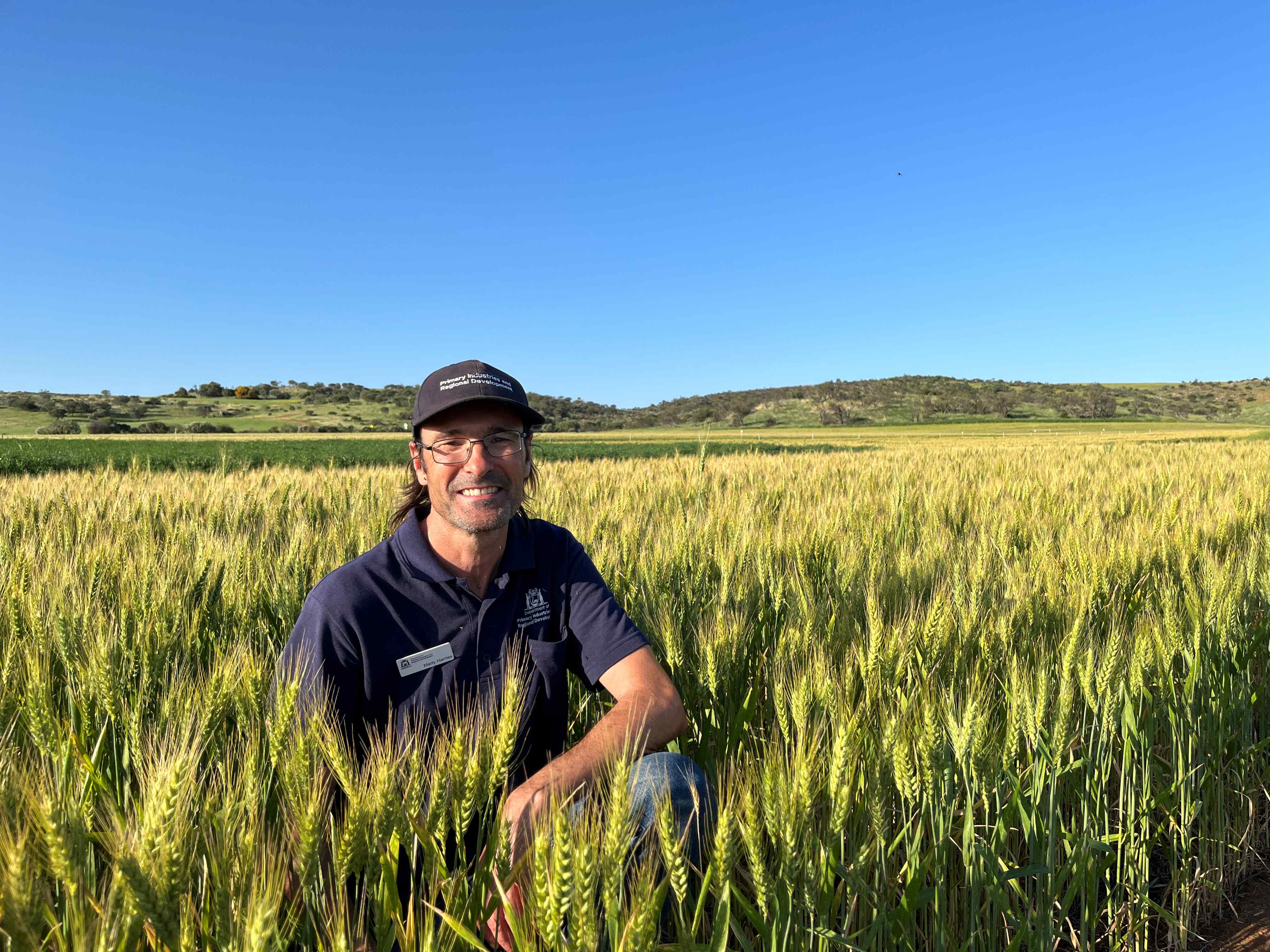
DPIRD senior research scientist Martin Harries analysed results from the field survey, as part of his PhD studies at the University of Western Australia.
Dr Harries said the findings highlighted the need to consider using break crops and pastures to maintain high water use efficiency and its associated benefits over several years.
“Wheat water use efficiency after a break crop, like canola or lupins, or pastures produced 12.5 kilograms of grain per hectare per millimetre of water used by the crop,” he said.
“This was marginally higher than wheat grown after one previous wheat crop, which yielded 11.2kg/grain/ha.mm.
“However, water use efficiency of wheat declined significantly when more than three wheat crops were grown in succession, to just 8.4kg/ha.mm.
“These results show that while the high level of inputs and sophisticated management used in wheat-on-wheat crops overcame biophysical constraints to achieve high water use efficiency, in the long term the system still required more diverse rotations to utilise water effectively.
“This highlights the need to continue to investigate farming systems that profitably incorporate breaks and pastures.”
A DPIRD project is now underway, co-funded by the GRDC, to explore water use efficiency across the system with the incorporation of break crops and pastures through three long term rotation trials at Northampton, Merredin and Lake Grace.
The research was one of 26 DPIRD presentations at the conference, across a range of topics including crop management, soil health, pest and disease management and climate change adaptation.
The two-day conference included a full day of field tours, providing international and interstate visitors.
The program featured more than 160 presentations from 130 professionals, researchers and agronomy experts.
More conference information is available from Agronomy Australia website.
 Print this page
