


The role of soil science in transforming Western Australia’s sandy soils into profitable farming systems was the focus of the annual 2025 Boodja Lecture in Perth today.
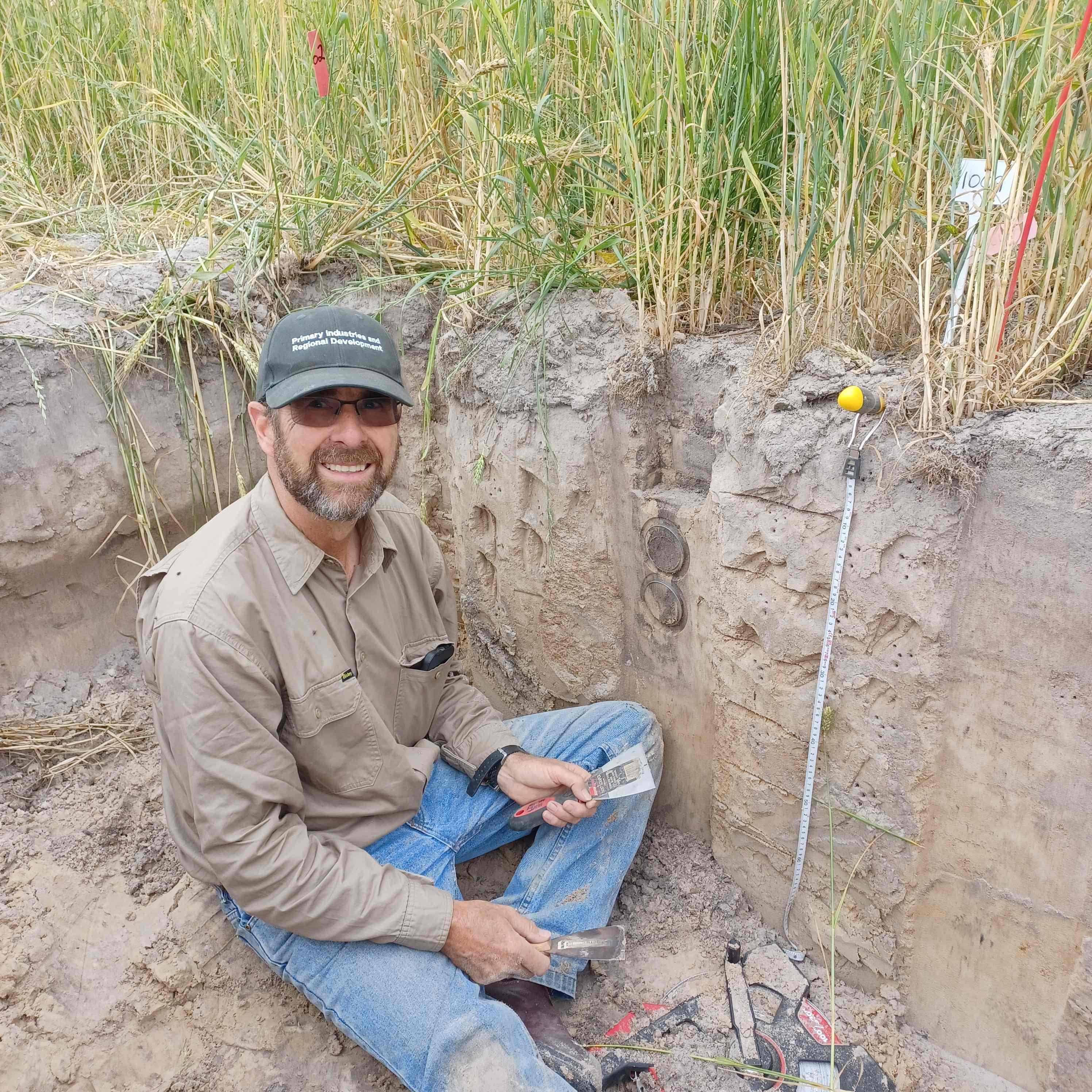
Department of Primary Industries and Regional Development (DPIRD) retiring principal research scientist David Hall gave the Soil Science Australia – WA Branch lecture, drawing on his 32 years of knowledge and experience.
Based at Esperance, Mr Hall has spent much of his career working alongside his colleagues and farmers to optimise the productivity of WA’s sandy South Coast soils to improve yields and grains crop profitability.
“Australia’s ancient soils are notoriously infertile, particularly in WA,” he said.
“Up until the 1960s, investors doubted the profitability of farming on WA’s south coastal sandplain, however, persistent efforts to manage multiple soil constraints have transformed these once poor sands into highly productive farmland.”
During his career, Mr Hall has seen Esperance Port Zone crop production increase from just under 600,000 tonnes in the early 1990s to more than four million tonnes in recent years.
Much of the increase in productivity has resulted from greater efficiencies, as opposed to more land being invested in cropping.
In his lecture Mr Hall recounted how this transformation occurred, whether it was sustainable and the strategies that could be applied to other sandy soils.
“DPIRD has worked closely with farmers and scientists to better understand and overcome the limitations of South Coast sandy soils, including water repellence, compaction, acidity and nutrition,” he said.
“By contrast, many inland clay soils continue to suffer from subsoil chemical constraints, such as sodicity, salinity and boron toxicity, which restrict root development and water and nutrient uptake.
“These challenges are often compounded by a drying climate and marginal farm profits.”
The lecture examined how sandy soils could be transformed by managing constraints and targeted amelioration strategies, while clay subsoils limitations could be managed via management and amelioration.
Mr Hall said a four phase approach to soil amelioration had seen some challenging soils rejuvenated to become significantly more productive.
“First is to identify the problem, the mechanisms responsible, its extent and severity,” he said.
“Next is to modify the soil profile and remove the chemical and physical constraints, then the biology will follow.
“The following step is assessing the effect of soil fertility, production and profitability, before determining if treatments are biologically and economically sustainable over multiple crops and years.”
A key theme was the value of long term, field-based research to deliver practical, innovative solutions for Australian farmers.
“Key soil science innovations over the past 30 years include the introduction of minimum and no tillage, furrow seeding together with claying, deep ripping and liming,” he said.
“In the new millennium we have seen the GPS (global positioning system) revolution, with tramline farming and variable rate amendments.
“Soil renovation technical advances, including strategic deep tillage and deep placed amendments, have laid the foundations for deep profile soil re-engineering, which has enabled plants to access water and nutrients deeper within the soil profile.
“Together with advances in nutrient and pest management options, break crops, crop breeding improvements and the efforts of grower groups and specialist advisers, WA has made tremendous gains in crop productivity and profitability.”
Mr Hall said while significant advances had been achieved, more work was required.
“Soil science has had a fundamental impact on improving crop yields on sandplain soils by overcoming multiple constraints,” he said.
“Much more work is now required to achieve the same levels of improvement in the clay soils.
“Scientists working together with landholders, grower groups, academics and students will help to unlock the next transformation of WA soils.”
 Print this page
