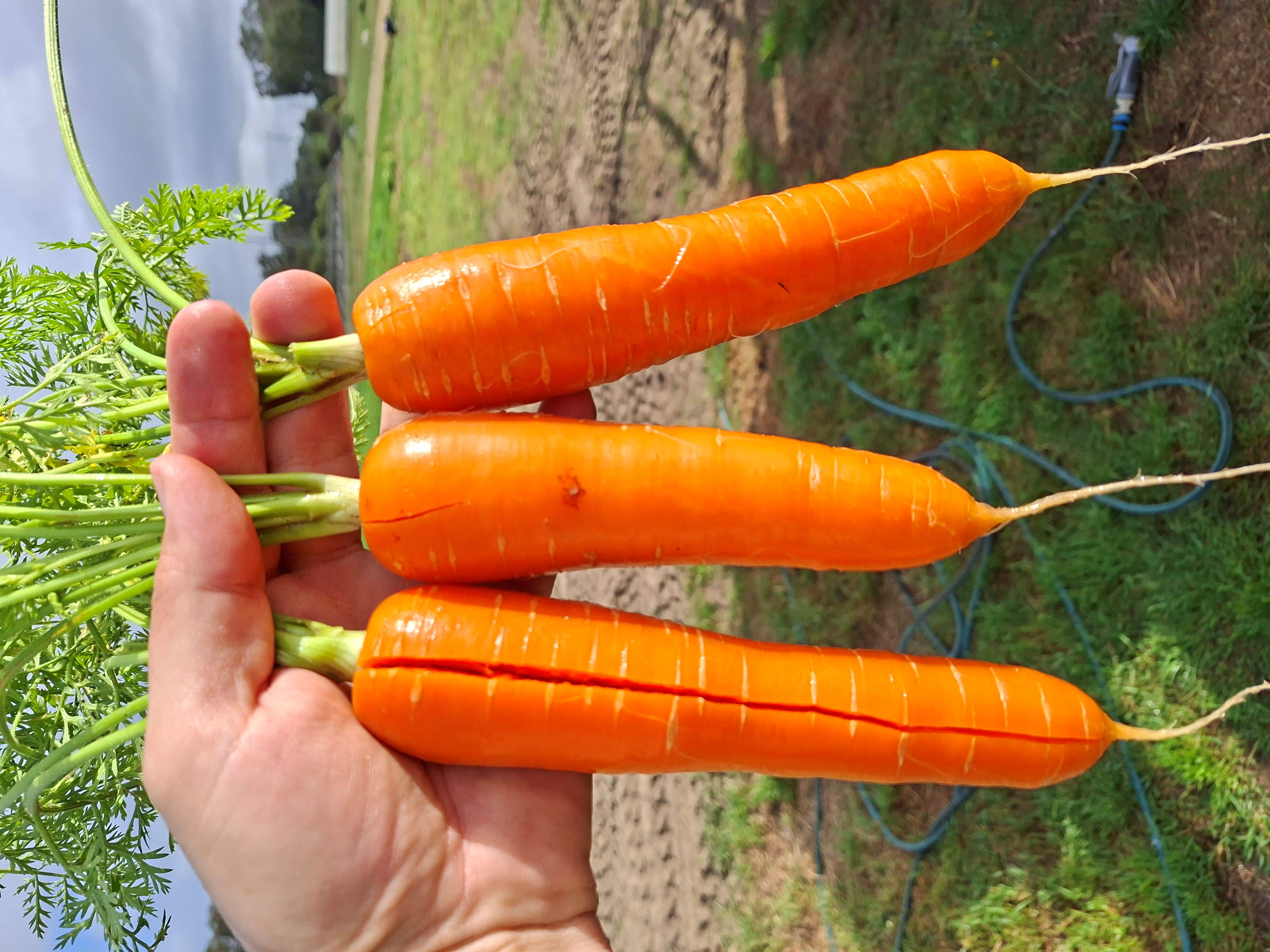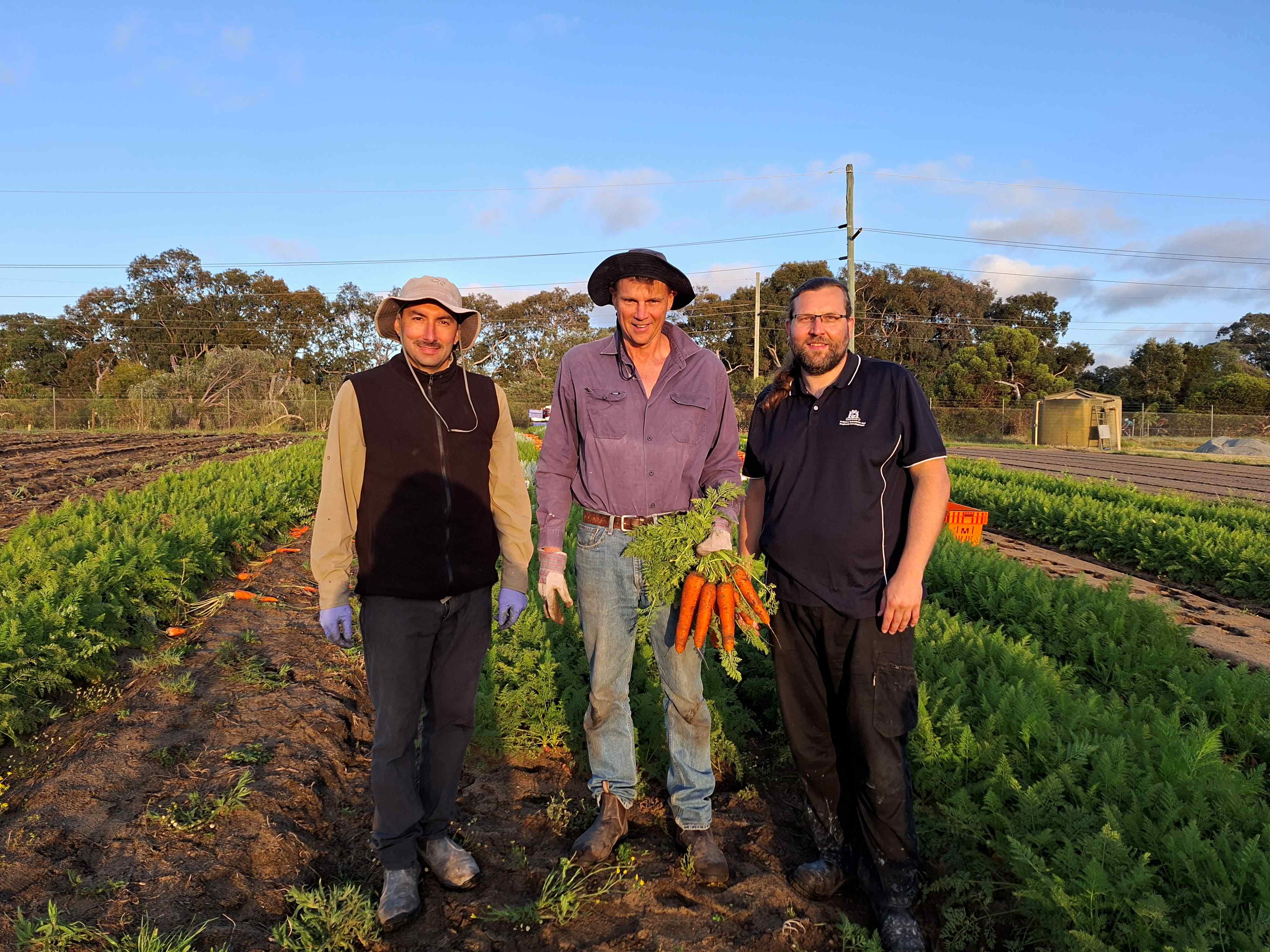
Research is underway in Western Australia to reduce risk of carrots splitting, forking and stumping, as part of a national project to increase the proportion of high-grade produce for sale while building a profitable and resilient future for industry.
WA is Australia’s biggest carrot producer, comprising about 40 per cent, and the country’s biggest exporter, with about 80 per cent of national production destined mainly for the Middle East and South East Asia.
The WA Department of Primary Industries and Regional Development (DPIRD) is leading the Maximising Carrot Packout project funded by Hort Innovation, together with the South Australian Research and Development Institute and Queensland DPI.
The packout rate is the percentage of harvested carrots that successfully meet customer quality specifications – more Class 1 carrots and fewer rejects improve production efficiencies and returns to growers.
A variety of production issues can influence packout rates into Class 1 carrots, including carrot shape and size, disease, insect damage, greening, mechanical damage, splitting, forking and stumping.
The research follows a literature review and extensive consultation with growers from across the country to determine challenges and research gaps.
DPIRD research scientist Neil Lantzke said WA growers identified carrot splitting as a major issue, which occurs in the field, at harvest, and during packing and post harvest handling –making carrots unmarketable and costing the State’s growers an estimated $5 million per annum.
“Carrot splitting is a physiological disorder that particularly affects WA carrot production during spring and is related to climate, plant growth rate, water and fertiliser management, however, the exact parameters are not well understood,” he said.
“DPIRD is monitoring sites on growers’ properties and conducting trials to better understand when, how and why splitting occurs.
“An impact sensor ‘dummy carrot’ is also being used to identify damage points in the harvest and packing process.
“The research team is trialling possible solutions, such as leaf trimming and applying foliar sprays in the days before harvest to slow plant growth, as well as investigating plant nutrition.”
DPIRD is also conducting research in conjunction with South Australian researchers to reduce the incidence of forking and stumping.
These defects occur when young roots are damaged by pathogens, such as Pythium or nematodes, resulting in a forked tap root or causing the carrot to become short and stumpy.
Mr Lantzke said while there was much anecdotal evidence available on forking and stumping, there was comparatively little scientific analysis.
“We are monitoring growers’ properties to understand what species of pathogens are involved and helping refine management strategies, such as chemical and biological options, as well as planting cover crops with non-host species,” he said.
“We will undertake pot trials and inoculate soil and carrots with Pythium and nematodes separately to better understand what the symptoms look like for each pathogen, which will provide more confidence for in-field diagnostics.
“Greenhouse trials will then be conducted to test chemical and biological control options, before progressing on-farm field trials.”
The other project partners’ work includes research on the influence of scab and fusarium, as well as post-harvest impacts, while an economic analysis of alternative management practices will also be undertaken.
Hort Innovation General Manager of Sustainability and Production R&D, Anthony Kachenko, said the project was an investment for the future of Australia’s carrot industry.
“This project is about giving growers the tools and knowledge they need to deliver top-quality carrots to market, improving profitability and strengthening the supply chain,” he said.
“By focusing on practical solutions and industry collaboration, we’re helping growers overcome production challenges, reduce losses and, ultimately, achieve better returns for their hard work.”
For more information on the Maximising Carrot Packout project visit the Hort Innovation website.