


This system allows users to plan and practice parachute training by recreating descents in virtual reality.
Background
Virtual Simulation Training has been applied across various professional disciplines including healthcare, military, mining and metallurgy. The most extensive and high-quality research has occurred in the medical and allied health fields, primarily in the United States. Early attempts to enhance military parachute training with Immersive Virtual Reality were limited with respect to visual and forced-feedback fidelity, resulting in less authentic simulations and limited training variability. However, the advent of novel enhancements in this space make training through these platforms far more user-friendly, accessible and fit-for-purpose.
Approach
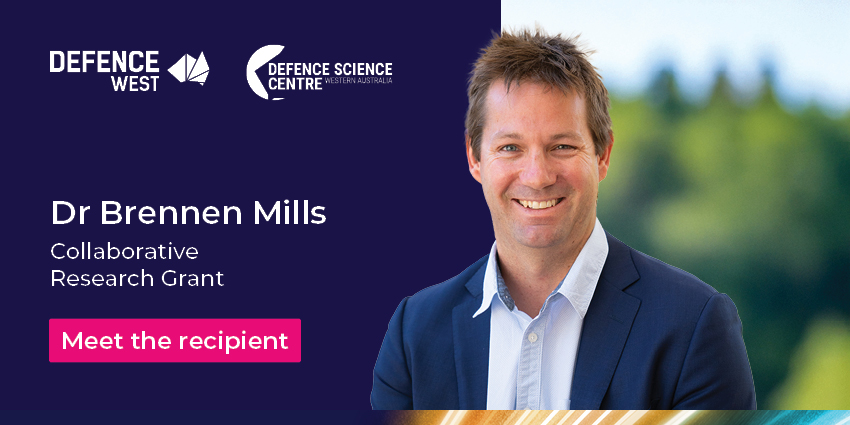
Dr Brennen Mills, a Senior Lecturer from Edith Cowan University (ECU), led a collaboration between ECU’s Simulation and Immersive Digital Technology Group (SIDTG), the Department of Defence, Special Operations Command (SOCOMD), Murdoch University and Curtin University. Together, they created an immersive virtual reality (IVR) enhanced parachute training tool for military applications.
The team consulted with SOCOMD advisory group members to understand the core functionality required from the application. With this information, development staff designed a realistic immersive parachute experience using real-world topography imagery allowing users to perform virtual jumps in selected areas worldwide.
Dr Mills stated “This was a great example of a co-design-based project. None of the project team had ever jumped out of an aeroplane before, let alone understood the core functions required to put together a simulator like this, so having good access to SOCOMD expertise was imperative to drive the project.”
Outcomes
The virtual training system allows training to be conducted without travelling to a specific location and without needing an instructor. Trainees can practice a particular descent as many times as desired. “The best solutions are derived from understanding the core problem. When SOCOMD came to us to better understand how Immersive VR might help provide a training solution, I think we were both surprised at the opportunities that existed and the kind of impact this technology could generate.” said Dr Mills.
Adverse weather conditions often limit real-world training opportunities, but ParaVerse allows training to continue regardless of weather conditions. The software can replicate conditions such as snow, rain and cloud and allows for the manipulation of wind speed and direction. This feature gives the trainee the opportunity to practice jumps into difficult or dangerous terrain and dangerous weather conditions, thereby reducing the risk of injury they would face in an actual jump environment.
Virtual training also results in significant cost savings by reducing the need for aircraft and aircrew resources. The application runs on a desktop or laptop PC using an immersive VR headset and hand-held controls, ensuring portability.
Awards
ParaVerse competed in the Indian Ocean Defence and Security Conference (IODS24) Innovation Awards, which highlight those at the forefront of innovative technology. Applications were sought in the following 4 categories:
- Innovation Award
- Emerging Technology Award
- Young Innovator Award
- Collaborative Innovation Award
A total of 15 finalists were required to deliver a 3-minute pitch of their projects to a panel of judges and an audience of potential partners, investors and customers at IODS24.
ParaVerse took out both the Emerging Technology Award, and the Collaborative Innovation Award, with each award carrying a cash prize of $10,000.00.
In addition, ParaVerse was awarded the 2024 INCITE Award in the Innovating Government category.
The Defence Science Centre congratulates Dr Mills and the team on their success.
The Collaborative Research Grant (CRG) is one of several grants operating through the Defence Science Centre.
 Print this page
