


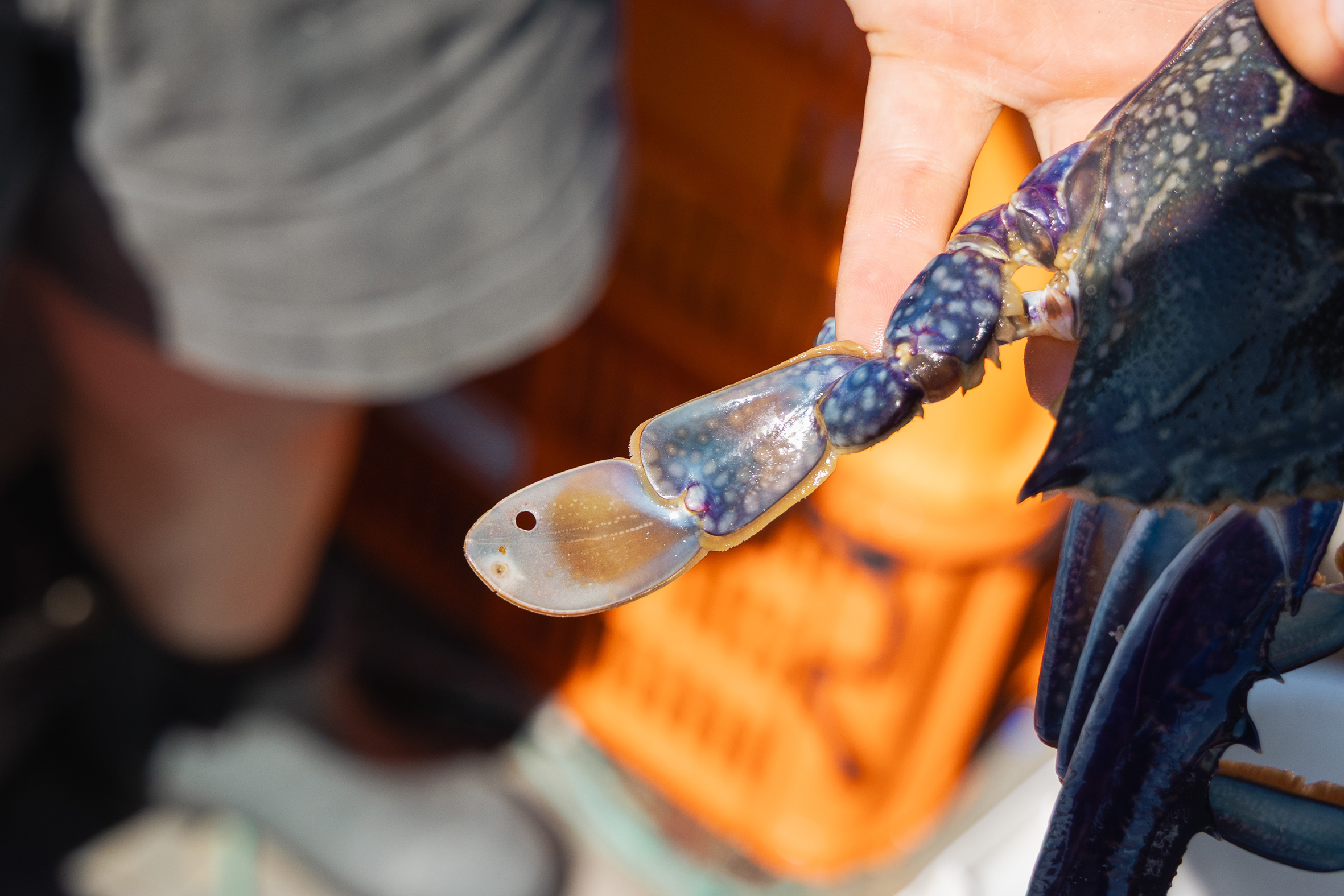
Crabbers in Cockburn Sound are being encouraged to take a closer look at their catch this season and record any small holes punched in a crab’s swimmeret as part of research tracking the health of crab stocks.
Department of Primary Industries and Regional Development (DPIRD) researchers have been trialling the swimmeret marking method to track capture rates to help understand the impact of this season’s crabbing on stocks in the area.
The swimmeret is the flipper-like paddle used by crabs to swim.
This novel method could represent an efficient way to look at depletion in crustacean stocks where traditional methods such as attaching tags are not appropriate.
Research officers onboard DPIRD vessels have been conducting monthly surveys since October, deploying baited research crab traps for 24-hour periods in Cockburn Sound and Owen Anchorage (between Woodman Point and the Fremantle port) to gather important scientific information on crab stocks.
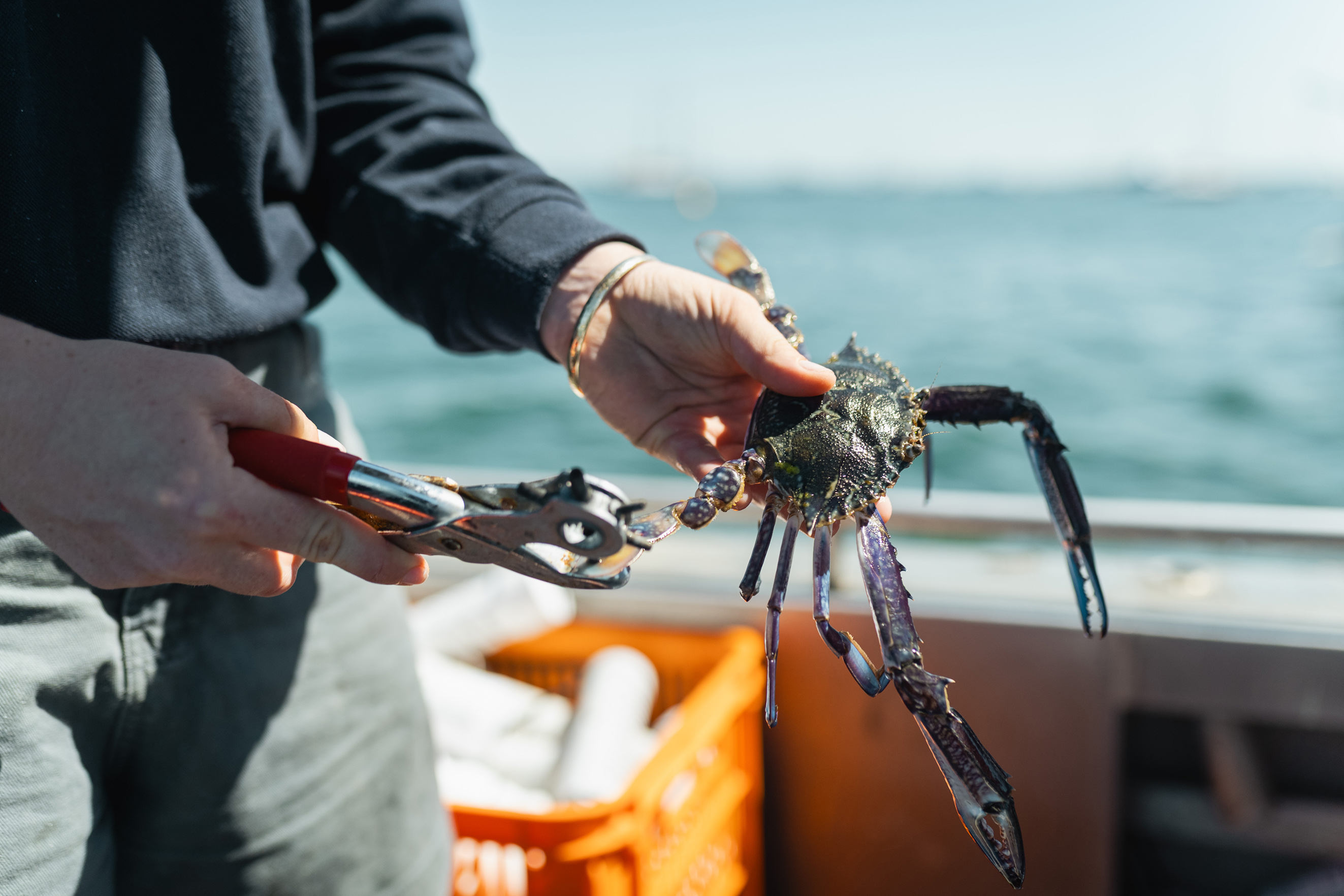
DPIRD crab research scientist David Harris said every crab caught in the traps was measured, the sex recorded and information collected on maturity, moult stage and spawning.
“We use the information together with data collected from fishers interviewed at boat ramps to build a picture of stock status and composition,” Mr Harris said.
“Researchers have also been punching a hole in the swimmeret every time we catch a crab so we can investigate stock depletion levels through recapture rates.
“Each crab is temporarily anaesthetised in an ice slurry for 30 seconds before marking so it won’t cause any discomfort, and the holes don’t impact the crab’s swimming abilities.
“We have been punching holes in a different location on either swimmeret each month to identify when the crab was tagged.”
Mr Harris said during the season, fishers who caught a marked crab were asked to note when and where the crab was caught, the exact location of the hole on the left or right swimmeret, and to take a photo of the holes if possible.
The information can be provided to crab researchers back at the boat ramp or emailed to david.harris@dpird.wa.gov.au
“This research supports the management and sustainability of our crab fisheries for future generations to enjoy quality crabbing experiences,” he said.
 Print this page
