


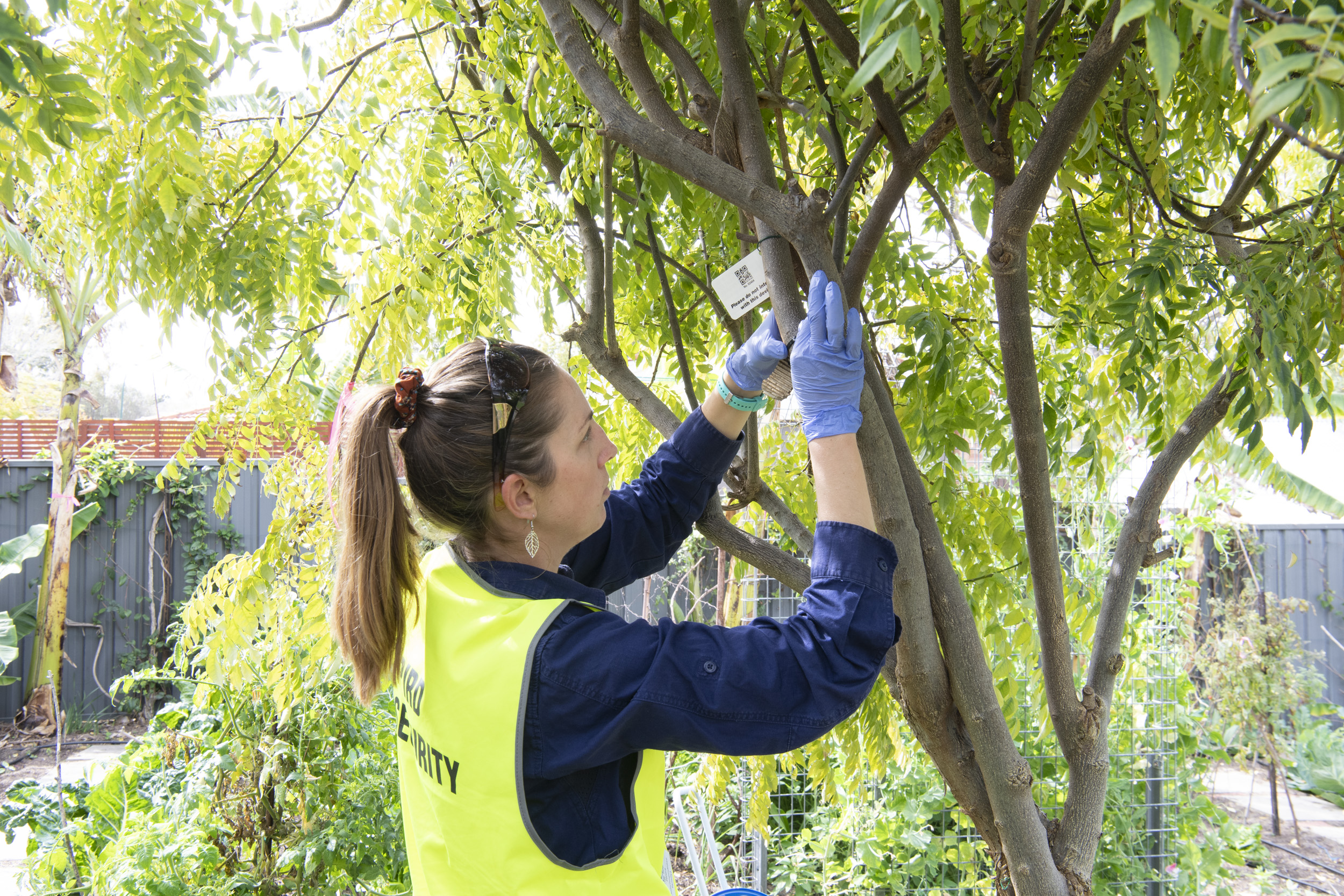
The detection of one male Qfly was made via surveillance traps, as part of DPIRD’s early warning biosecurity system.
A biosecurity response to protect the State’s valuable agriculture sector and home gardens from the pest has been underway since March when Qfly was discovered in Bayswater, which has now been controlled.
Qfly is one of the most serious horticulture pests, which has more than 300 fruit and fruiting vegetables host plants.
A Quarantine Area is being reinstated, covering Perth, Belmont, Gosnells, Kalamunda, Vincent, Joondalup, Swan, Wanneroo, Melville, Canning, Bayswater, South Perth, Subiaco, Stirling, Nedlands, Bassendean, Belmont, Claremont, Victoria Park, Cambridge and Mundaring.
Additional traps have been installed around the detection area to support DPIRD’s ongoing response and progress towards Area Freedom.
Chief Plant Biosecurity Officer Vincent Lanoiselet said while residents in the Quarantine Area would not be subject to movement conditions, good garden hygiene was essential to aid the response.
“The department thanks residents, businesses and industry for their ongoing support for the response against this damaging pest,” Dr Lanoiselet said.
“We encourage residents to maintain good garden hygiene and pick up and dispose of any fallen fruit every three days to reduce the Qfly risk.”
DPIRD will continue to assist Swan Valley growers to satisfy biosecurity protocols as they get produce to market.
For updated information visit the Qfly biosecurity response DPIRD webpage www.agric.wa.gov.au/qflyupdate.
Reports of suspected Qfly should be made to DPIRD’s Pest and Disease Information Service on 9368 3080, email padis@dpird.wa.gov.au or via the MyPestGuide Reporter app.
 Print this page
