


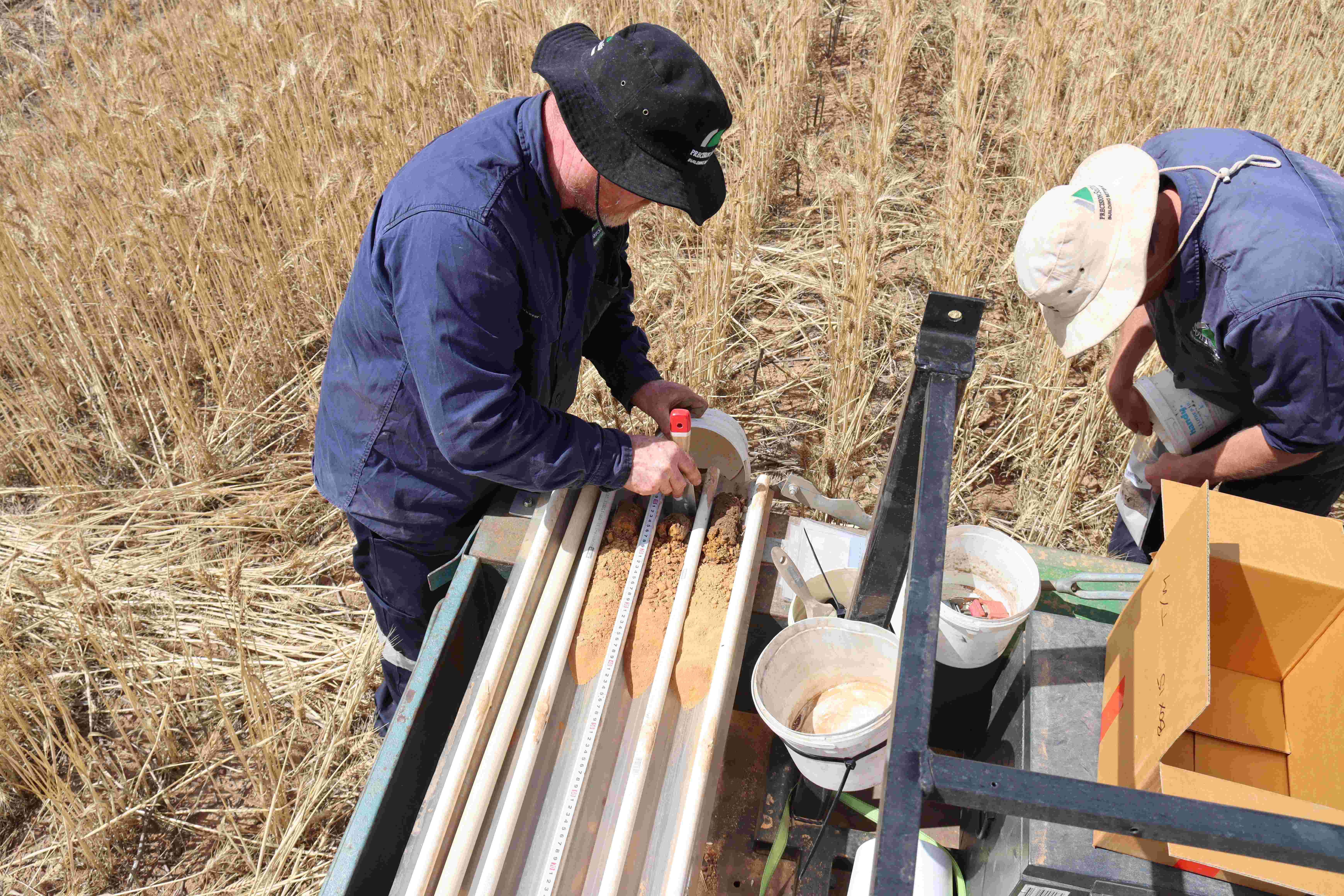
The depth of world-class soils research undertaken by the Department of Primary Industries and Regional Development (DPIRD) will be showcased at a national conference in Perth next week.
Department scientists will profile work spanning broadacre production systems, soil and land conservation and agricultural resource management at the 2026 Soil Science Australia gathering of scientists, policy makers, industry and community members.
Executive Director Broadacre Systems Kaara Klepper said DPIRD’s soil research programs were driven by best management practices for agricultural production and soil resource conservation – supporting the enduring prosperity of Western Australia’s primary industries.
“DPIRD pursues proactive research that helps land managers and businesses adapt to an ever changing resource and operating environment,” Dr Klepper said.
“The department has a long legacy of working alongside land managers to build foundational knowledge of our soil, plant and water systems to help achieve productive potential, while protecting and conserving resources for future generations.
“Our program of speakers at the conference reflects the diversity of the department’s research investments and how new technologies and innovations are supporting scientific advances in land resource management.”
The WA Soil Health Strategy 2021-31 is integral to the department’s soils activities and prioritising research investments.
Soil and Land Conservation Commissioner Melanie Strawbridge said DPIRD’s agriculture resource management projects collectively supported land managers’ efforts to improve soil condition, while maintaining productive and resilient farming systems.
“Across the strategy, the strongest emphasis remains on helping landholders make informed decisions through access to research, practical demonstrations and decision-support tools,” Dr Strawbridge said.
“This reflects the strategy's recognition that lasting improvements in soil condition depend on knowledge being translated into action on the ground.”
The 2026 Soil Science Australia conference program includes 20 presentations from DPIRD staff, across multiple soil science disciplines.
DPIRD presentations will explore how satellite and spatial products are being used to track ground cover, erosion risk and soil water stress, alongside on-ground observations to inform regional intelligence and advice on dry season management strategies.
There will be an explanation on how historical surveys are being revisited and combined with modern data and digital soil mapping to improve landscape condition assessments and inform land management.
State-of-the-art technologies will also be profiled, such as gamma-ray spectrometry used to identify soil type and plant habitats to map and assess soil properties, landform variations and agricultural capacity to update valuable soils databases and resources.
Dr Klepper said the department’s research had been pivotal in helping overcome significant soil constraints in WA’s Wheatbelt to boost grains productivity, resulting in recent year-on-year record grains harvests.
“Soil profile re-engineering, soil amelioration and improved nutrient management have been transformative in helping grain growers to optimise water and nutrient use and manage weeds,” she said.
“Soil amelioration together with complementary research on liming, fertiliser, clay-addition, crop rotations and herbicide use have helped growers maximise return on significant investments in soil improvement.”
DPIRD’s investment in soil science has an eye on the future, as a drying climate focuses attention on impacts of climate change and pathways to climate resilience, including enhanced capture and use of rainfall.
“Alongside the department’s climate resilience program, soil modelling, landscape mapping and spatiotemporal drought stress monitoring are supporting initiatives that help businesses become more resilient,” Dr Strawbridge said.
Other work on evaluating emissions from WA crop residue decomposition will be shared at the conference, which is providing valuable data to a national research program to guide business decisions and public policy.
Department scientists will also present at conference tours to discuss soils on the Swan Coastal Plain and in the Avon Valley, while an additional tour will view mine land restoration, waste recovery and soil amendments near Pinjarra.
DPIRD will also field teams in the 2026 Soil Judging Competition.
For more information on DPIRD’s soil science priorities, research and advice can be found on the Soil research webpage.
