


Research has revealed the optimal combination of forage species to establish a year-round feed supply for sheep and cattle – helping livestock producers improve carrying capacity, cut supplementary feeding costs and boost margins.
The five year FEED365 research project, led by the Department of Primary Industries and Regional Development (DPIRD) with co-investment from Meat and Livestock Australia (MLA), will assist producers to build climate and business resilience.
Four suitable forage systems were identified, after evaluating 49 forage mixtures, including annual and perennial grasses, legumes and herbs, winter and summer crops and shrubs.
The optimal combination was comprised of strategically grazing crops and perennial and annual pastures – providing sufficient feed for 12 months, without the need for supplementary feeding.
The strategy increased carrying capacity from the typical nine dry sheep equivalent per hectare during winter and spring – requiring supplementary feeding and available crop stubbles over summer and autumn – to 10 DSE/ha all year round, without the need for additional feed.
DPIRD research scientist Daniel Real said the research would assist producers to align forage supplies with livestock nutrition requirements, reducing feed gaps during high-risk periods of the year.
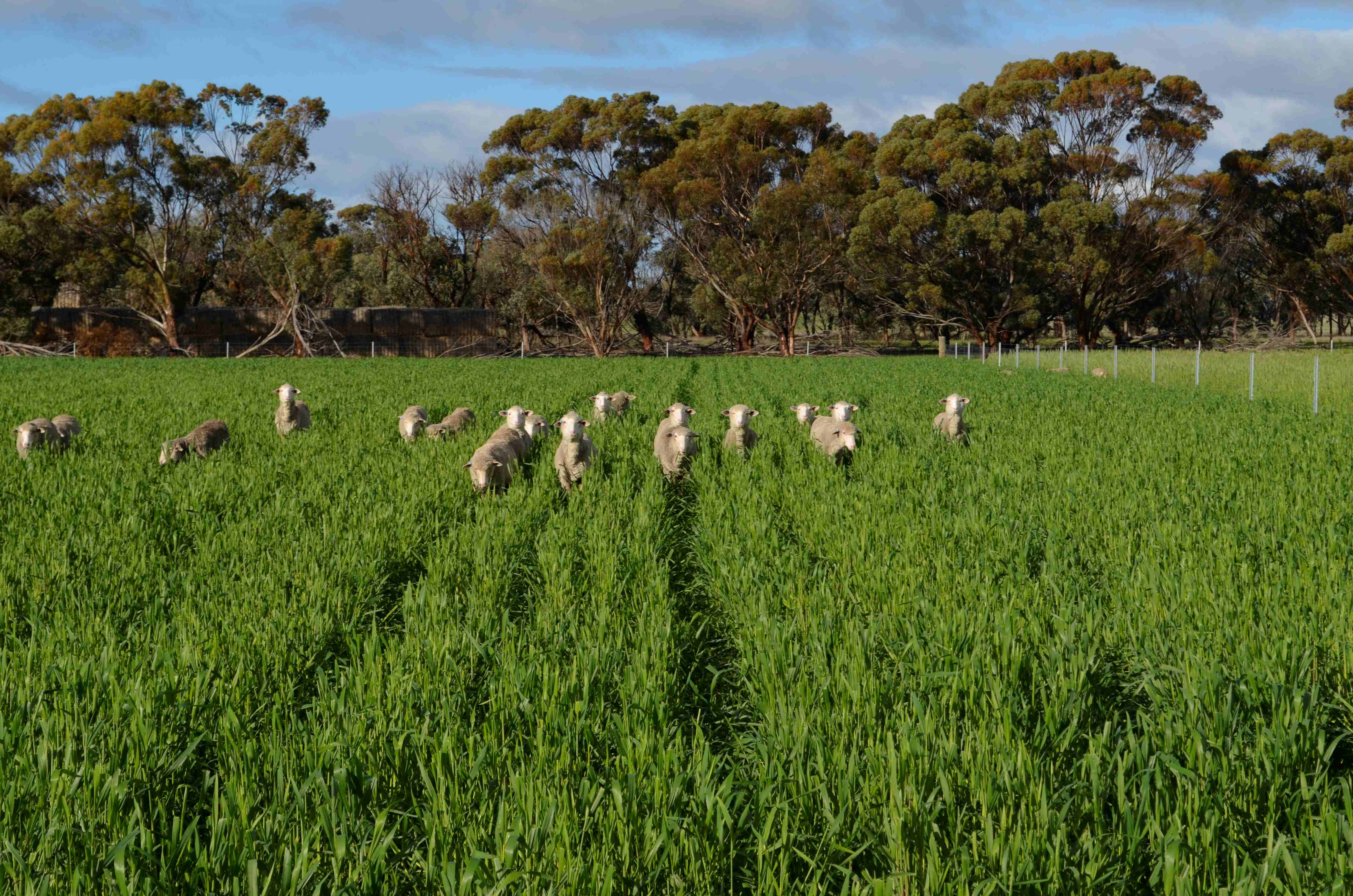
“The recommended sequence involved grazing a green cereal crop for three to four weeks in June and July, depending on rainfall, then a mixture of annual forages from August to October,” Dr Real said.
“This was followed by perennial pasture mixtures from November to mid-December, an unharvested cereal crop from mid-December to April and finishing the cycle by grazing the same perennial pasture mixtures again in April to May.
“The system was comprised of an awnless triticale dry standing crop (34.7 per cent), tall wheatgrass and subclover (30.4pc), lucerne and cocksfoot (24.8pc) and a forage brassica-triticale-cereal rye mixture (10pc).
“Species components may change according to soil type and location but the principal of integrating a range of annual and perennial pastures with grazed cereal crops should hold-up.
“This approach reduces seasonal feed gaps, supports consistent animal performance across key production phases and lowers reliance on grain and conserved fodder during high cost feeding periods.”
The research drew on field trials at DPIRD’s Katanning Research Station and six grower group demonstration sites.
The sites were hosted by the Merredin and Districts Farm Improvement Group, Stirlings to Coast Farmers, WA Regenerative Livestock Producers, the West Midlands Group, ASHEEP & BEEF and the Wagin Woodanilling Landcare Zone.
The field trials at Katanning Research Station were grazed by Merino sheep, which were assessed for weight and condition score responses to the available feed, to determine the value of the forage systems.
“These outcomes enhance business resilience to seasonal variability and drought, while supporting improved pasture condition,” Dr Real said.
“At an industry level, Feed365 contributes to building a more robust feedbase system, providing strategies for consistent feed supplies and offering alternatives to help producers adapt to the ever changing operating environment.”
MLA Project Manager – Adoption Southern and Western Production Systems, Mitchell Plumbe, said the FEED365 project had delivered practical insights that would help producers strengthen their feedbase and business resilience.
“FEED365 has generated valuable, systems‑based evidence that helps producers better align forage supply with livestock demand across the year,” Mr Plumbe said.
“These findings provide a clearer blueprint for building more reliable, productive feedbase systems that can lift carrying capacity, reduce reliance on supplementary feeding and improve whole‑farm profitability.
“Importantly, the project offers producers flexible principles they can adapt to their own environments, supporting more confident decision‑making in the face of seasonal variability.”
For more information on the FEED365 project visit the SheepLinks Program page on the DPIRD website.
Register for an upcoming Producer Demonstration Site (PDS) Updates FEED365 webinar on Thursday, 11 June 2026 on the MLA website by searching for ‘feed365 webinar’.
