


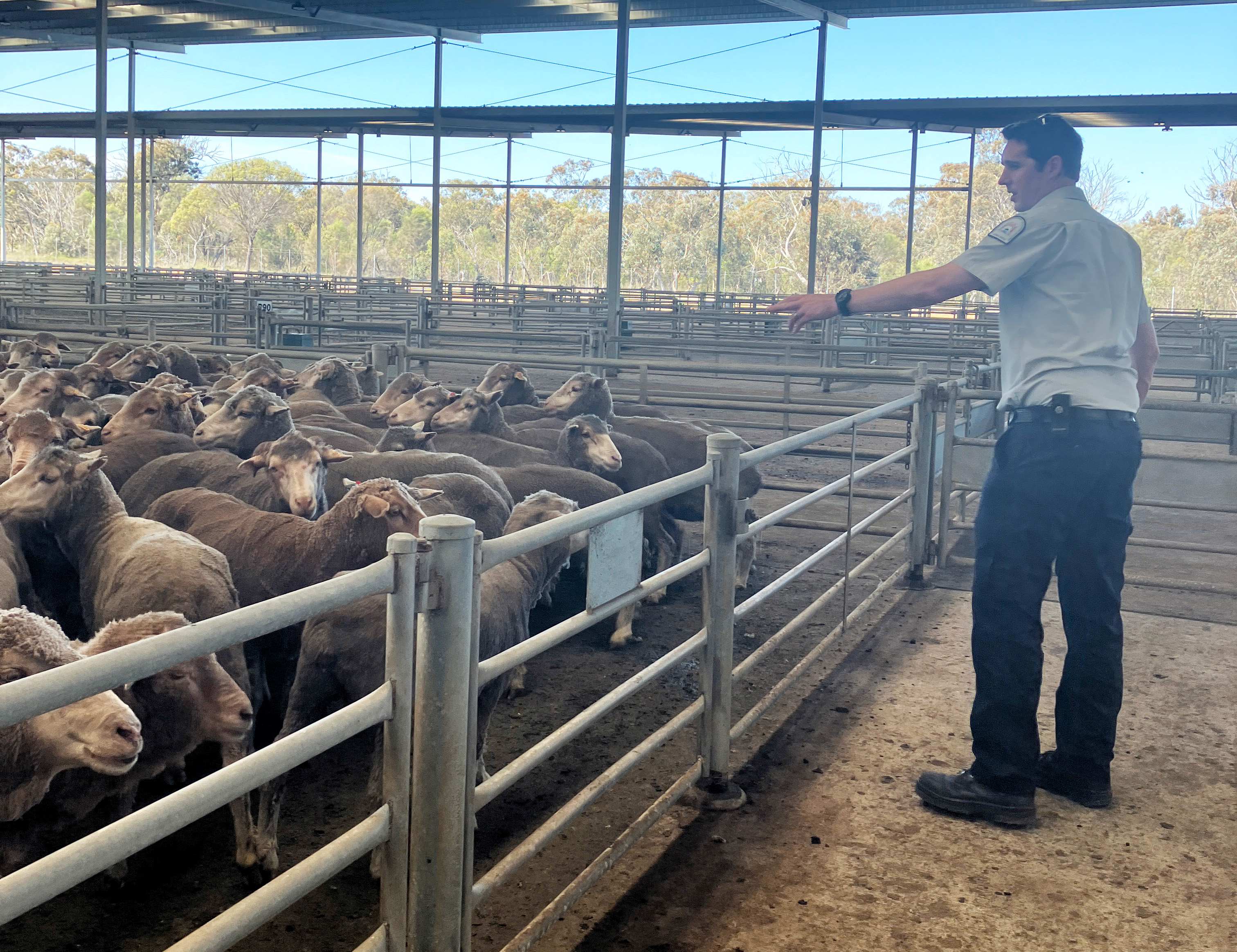
Department of Primary Industries and Regional Development (DPIRD) inspectors recently attended the Katanning sheep saleyards.
About 30 trucks and 11,000 sheep were inspected to ensure they met the requirements of the Animal Welfare Regulations 2020, with only minor infractions recorded for inadequate non-slip flooring in a truck.
Department staff used the opportunity to raise awareness about regulation requirements via an information display and talking to saleyard visitors, which was well received.
DPIRD regional compliance director Noel Chambers said good animal husbandry practices were essential to maintain acceptable animal welfare.
“Livestock should not be loaded that have any pre-existing, painful conditions or can’t bear weight on all legs or are stressed,” he said.
“While in some areas the season has been tight, it is important for producers to plan and ensure that sheep are above body score condition 1.5 and beef cattle are above body score condition 1.
“If they cannot satisfy this requirement, consider supplementary feeding, agistment or other alternatives.”
People transporting livestock must ensure that the vehicle being used provides suitable conditions.
While livestock are being transported, consideration must be given to time off water depending on the class of the livestock and the duration of the intended journey.
Animals that do not meet regulation requirements may trigger an investigation that could result in legal penalties.
A factsheet on fit to load requirements for sheep and cattle and a link to Meat and Livestock Australia’s Fit to Load Guide can be found on the DPIRD website by searching for ‘animal welfare livestock’.
 Print this page
