


Research to combat an increasingly challenging weed in Western Australia’s broadacre cropping systems has been highlighted at a leading grains conference in Perth.
Department of Primary Industries and Regional Development (DPIRD) research scientist Arslan Peerzada said button grass (Dactyloctenium radulans) was of growing interest to grain growers, particularly in the northern grainbelt.
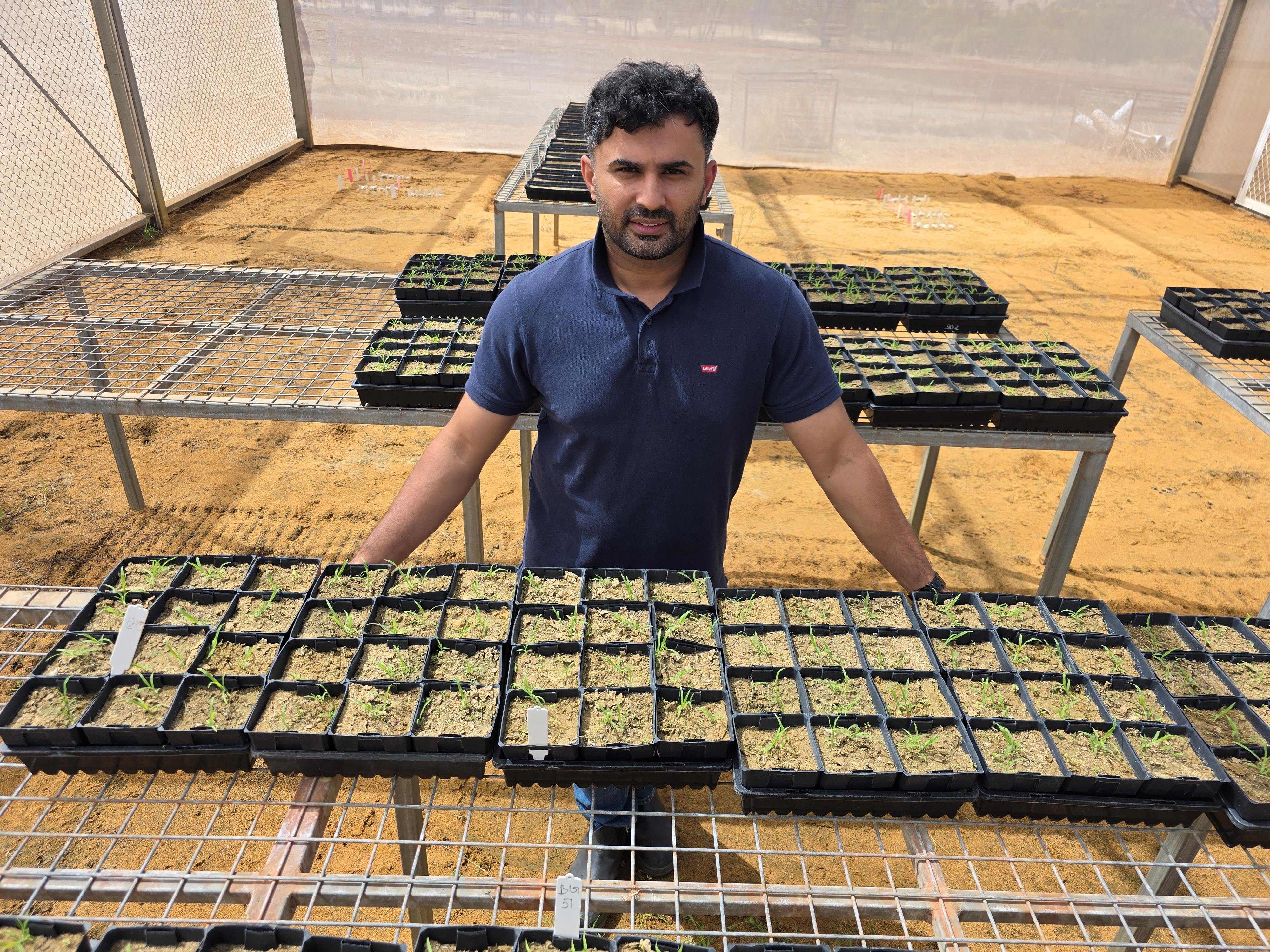
Dr Peerzada discussed screenhouse and field trials evaluating control options for the weed in summer fallows at the recent Grains Research and Development Corporation (GRDC) Grains Research Update in Perth.
“Button grass ranked as the second most damaging and third most common summer fallow weed in WA’s northern grainbelt according to the 2025 GRDC report, Impact of Weeds on Australian Grain and Cotton Production,” Dr Peerzada said.
“As a native summer annual weed, button grass germinates rapidly following summer rain, develops sprawling tillers and produces up to 15,000 seeds per plant.”
Researchers conducted screenhouse trials to test herbicide susceptibility and field trials at Pindar and Wubin during the summer fallow period to compare various control methods, including single application, double-knock strategies, and mowing as simulated grazing.
The DPIRD research trials, undertaken during the 2024-25 season, were supported by a collaborative project between GRDC and University of Queensland.
“The results showed variable levels of susceptibility to commonly used herbicides, especially under hot and dry conditions,” Dr Peerzada said.
“Field trials showed that glyphosate plus 2,4-D, followed by paraquat/amitrole, produced the most effective suppression, but full control of mature plants was challenging.
“However, the rapid growth of button grass makes it difficult to target all plants at the seedling stage.
“To avoid seed setting and lower the persistence of button grass populations, early intervention where possible, well-timed spraying and double-knock strategies are critical.”
 Print this page
