


The Department of Primary Industries and Regional Development’s (DPIRD’s) recommendation comes after unusually widespread rainfall across the Wheatbelt during harvest, particularly in the northern agricultural region.
Pre-harvest sprouting reduces end use quality and acceptance into premium milling grades.
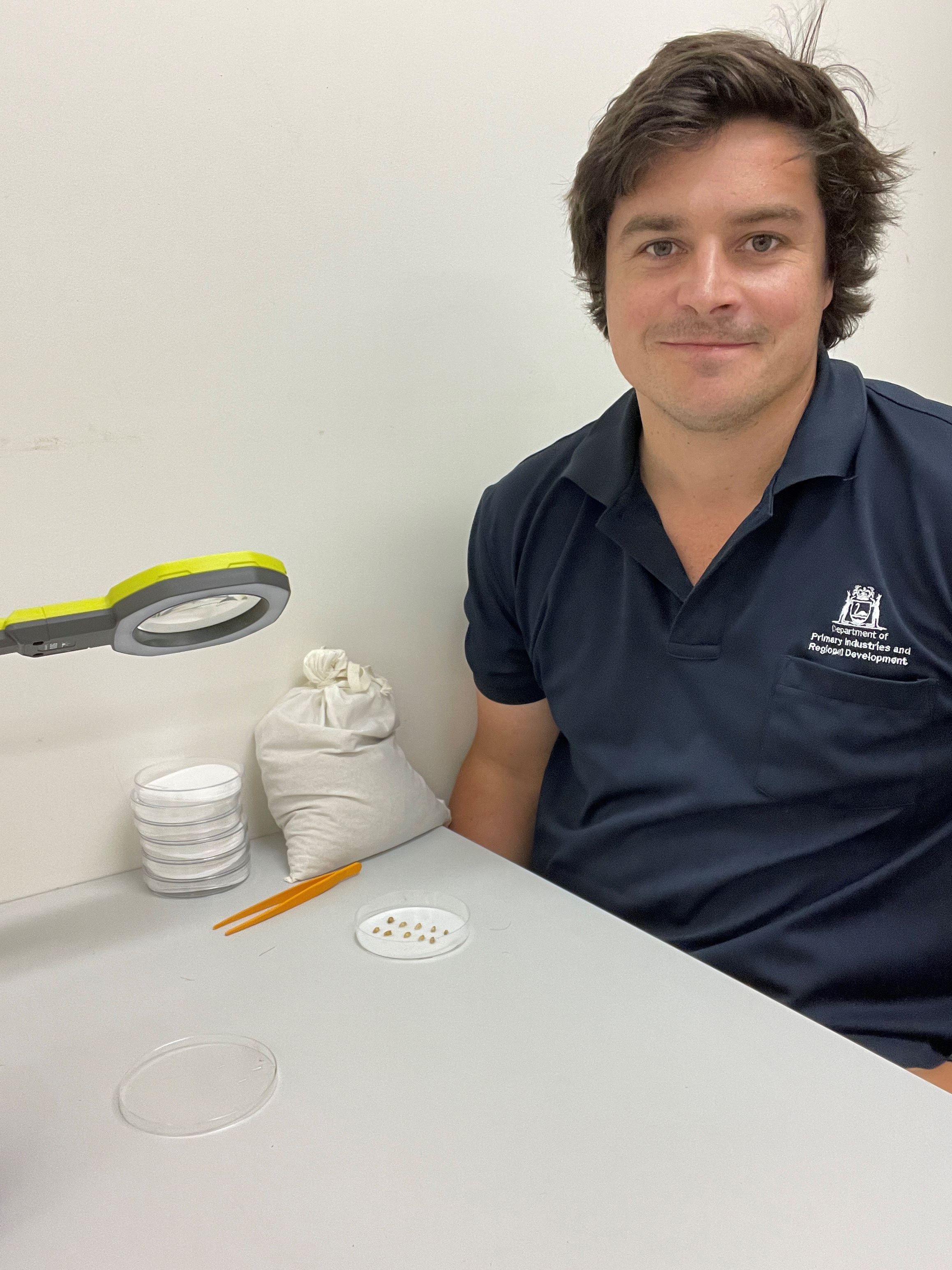
Research scientist Jeremy Curry said storage conditions significantly influenced seed longevity and crop performance.
“Sprouting affected grain is more liable to lose viability and vigour during storage,” he said.
“Reductions in seed vigour precede losses of viability so retaining the highest quality seed and maintaining quality through to next year’s seeding through best practice storage is essential to give next year’s crop the best chance of emerging well.
“The drier and cooler the grain is stored, the less deterioration will occur.
“Grain is best stored dry, with less than 12 per cent moisture, in a facility that is as cool as possible to minimise deterioration.”
Growers are encouraged to test seed for germination viability and vigour, before treating and commencing seeding next season.
“Seed quality may continue to change so testing nearer to seeding gives the best indication of the current quality of that seed,” Mr Curry said.
“Differences in seed vigour and viability are most evident under marginal seedbed conditions, so good quality seed will give the crop the best chance of timely establishment and good early growth.
“Where they can, we recommend growers retain seed that is less affected by pre-harvest sprouting for next year to help retain vigour and viability.”
Although wheat varieties differ for their susceptibility to pre-harvest sprouting, the risk changes throughout the harvest period.
Mr Curry said it was important to harvest rain affected-grain as soon as possible to prevent any further deterioration in quality.
“The Falling Number Index ratings, published in the Crop Sowing Guide, are based on differences observed in the pre-harvest sprouting risk of wheat varieties in the short term, following maturation,” Mr Curry said.
“As time passes, grain dormancy wears off. This means that should grain get wet enough, it can start to germinate quite quickly and the differences between varieties may diminish – as they all trend towards susceptibility.
“At this late stage in the season, grain dormancy is likely to have declined to low levels for most crops so getting the crop out of the paddock is the only sure way to protect it from any further losses in quality.
“It may be prudent to move on to other farm blocks or varieties that have maintained quality to ensure higher value grain is harvested and delivered, before returning to the lower quality and lower value areas.”
For more information on harvesting and storing sprouted grain visit the 'Wheat grain quality' webpage.
 Print this page
