


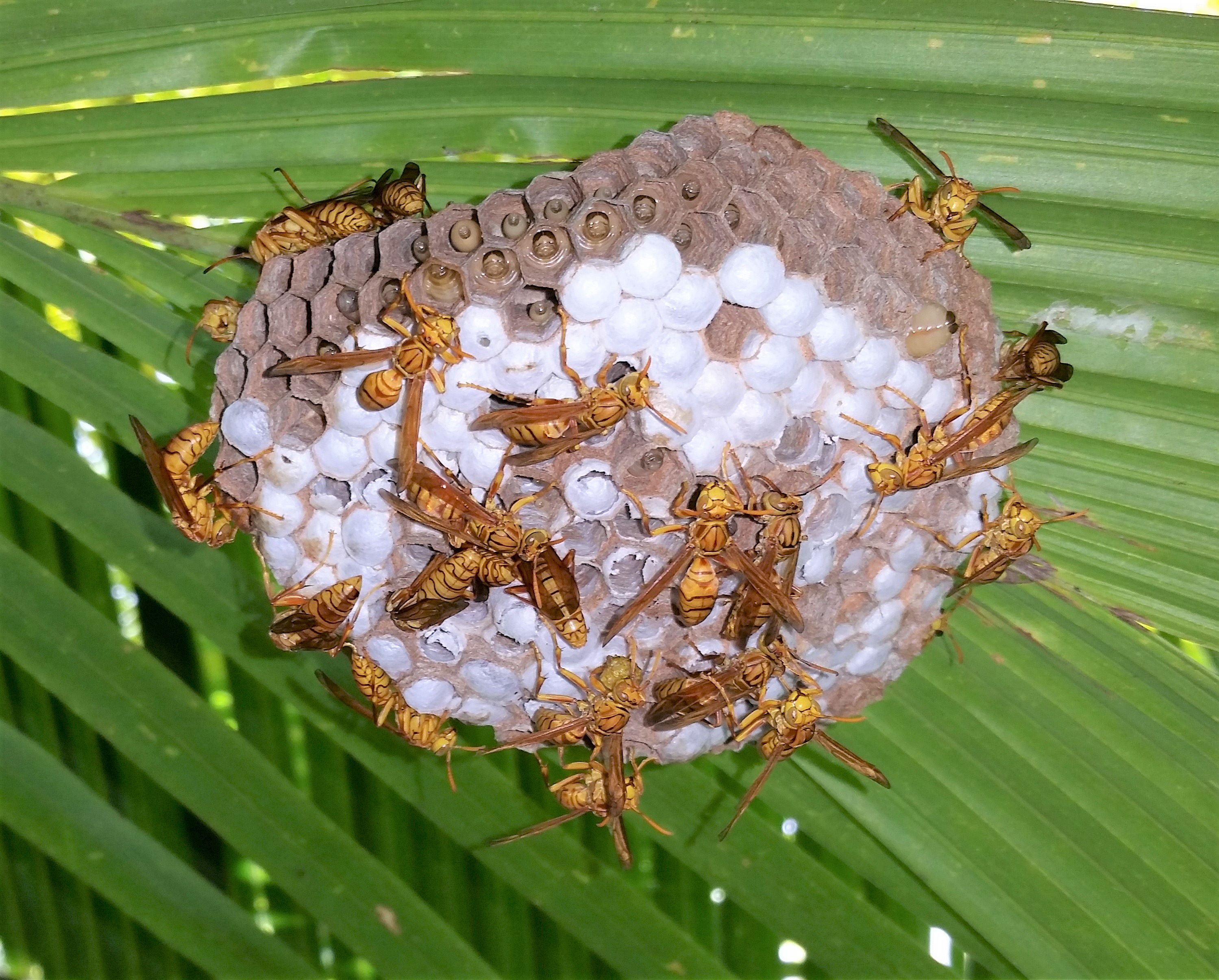
Department of Primary Industries and Regional Development (DPIRD) officers are trialling new techniques to supress the population of Macao paper wasp (Polistes olivaceus), an exotic pest from Asia that has become established on the islands.
The trial is part of the Australian Government Department of Infrastructure, Transport, Regional Development, Communications, Sport and the Arts’ ongoing management program for the islands, designed and delivered by DPIRD.
DPIRD biosecurity officer Cai Christian said the department was trialling a ‘trojan horse’ treatment method.
“Macao paper wasp is an aggressive, predatory pest that delivers a painful sting to humans and animals, in addition to disrupting biodiversity by competing for resources and depleting caterpillars, flies and spiders,” he said.
“Controlling this pest has been difficult, as Macao paper wasps are not scavengers and do not respond well to lures, which means we are totally reliant on visual surveillance to find and destroy nests.
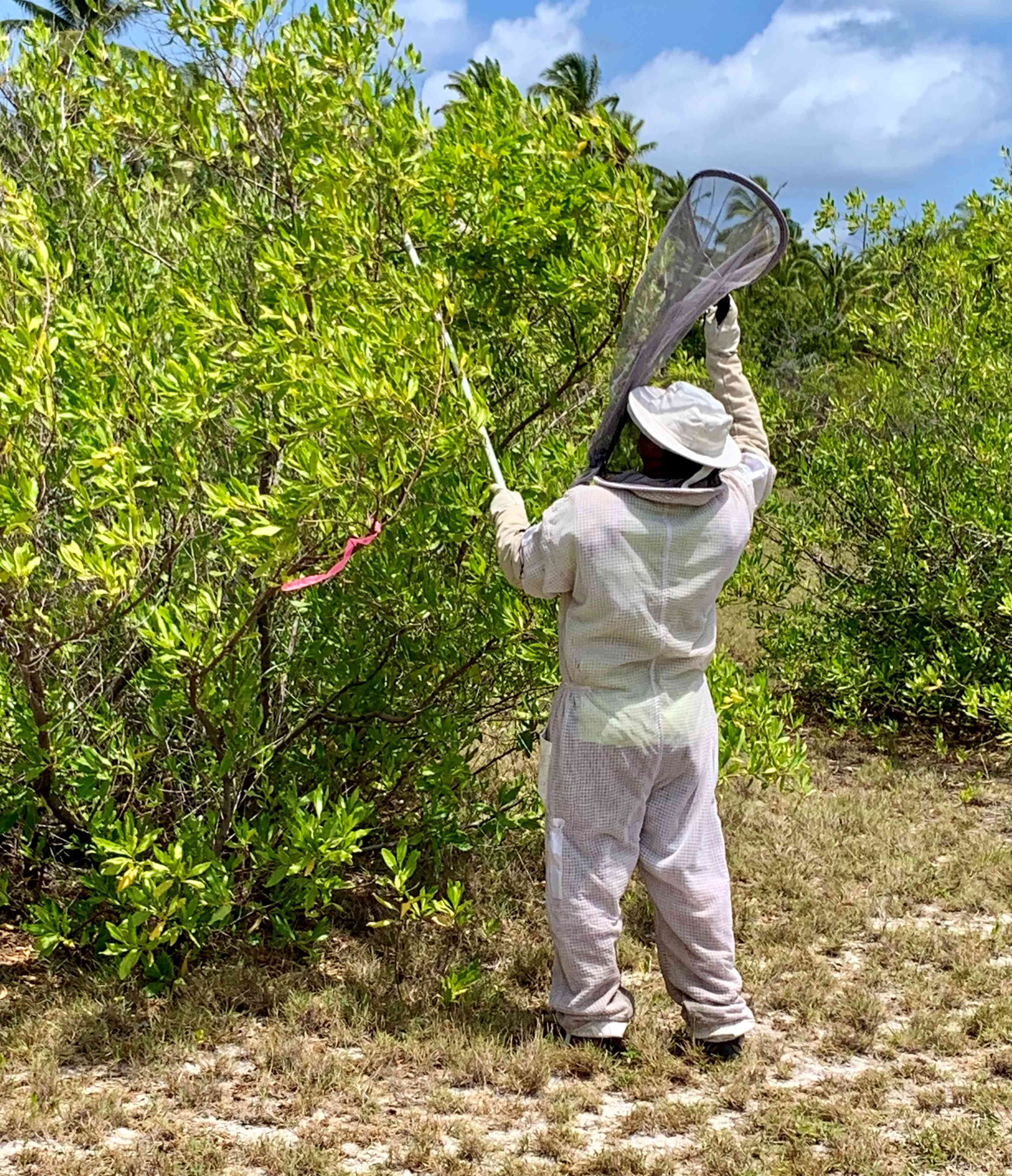
“To overcome this challenge, we are examining a ‘trojan horse’ technique, which involves coating a wasp with a fine dust of pesticide so it can return to the nest and transfer it to the entire colony.
“Developing an indirect treatment method like this negates the need to locate nests –as the wasps do that work for us – so we can focus our time and effort on capturing wasps on the wing as they forage for resources.”
“Early trial findings have been promising but further investigation is required before it can be applied more widely.”
If the ‘trojan horse’ methodology proves successful, the technique may have the potential to be applied to control other social flying pests.
Residents and visitors to the Cocos (Keeling) Islands are urged to take extra care during the wasp’s active period – between November and March and to not disturb Macao paper wasps or their nests.
Report sightings to the shire rangers and, if stung, please record it on the stings register on the shire’s Facebook page.
Macao paper wasp looks similar to native Christmas Island paper wasp (Polistes balder) but can be distinguished by its larger body, wavy bands on its abdomen and larger nests.
The pest can grow up to 26 millimetres long and is deep yellow in colour, with yellow antennae and legs.
It constructs papery honeycomb nests in trees and on infrastructure, such as houses and shipping containers.
If stung by a Macao paper wasp, clean the area with soap and water, apply a cold pack, avoid scratching and, if necessary, take painkillers and antihistamines as per label recommendations.
Report sightings of suspect Macao paper wasp on the Cocos (Keeling) Islands to the shire ranger on (08) 9162 7602 or email ranger@cocos.wa.gov.au. Report any observations on Christmas Island to DPIRD’s Pest and Disease Information Service on 9368 3080 or padis@dpird.wa.gov.au.
To find out more, visit DPIRD’s new Instagram account.
 Print this page
