


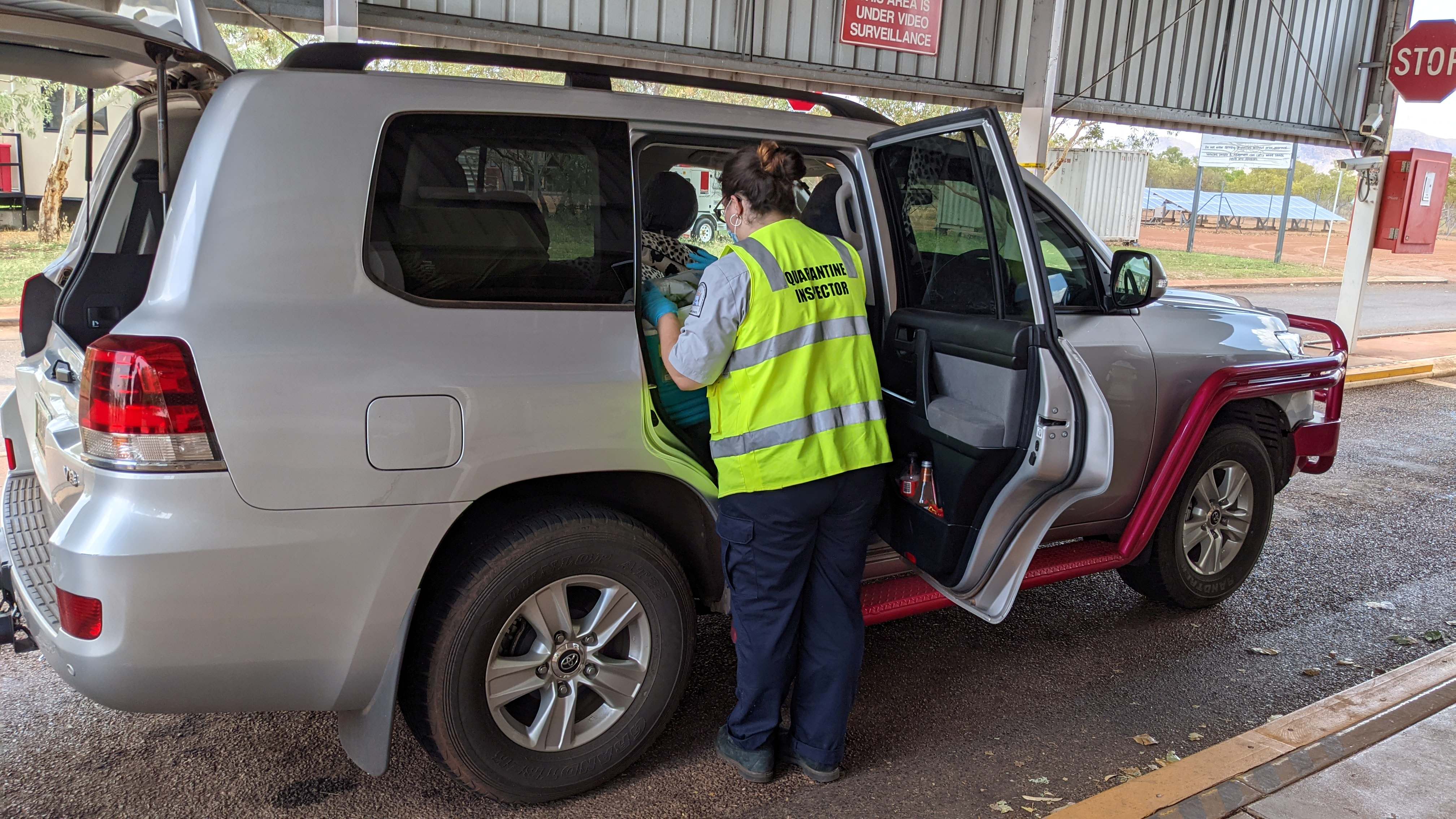
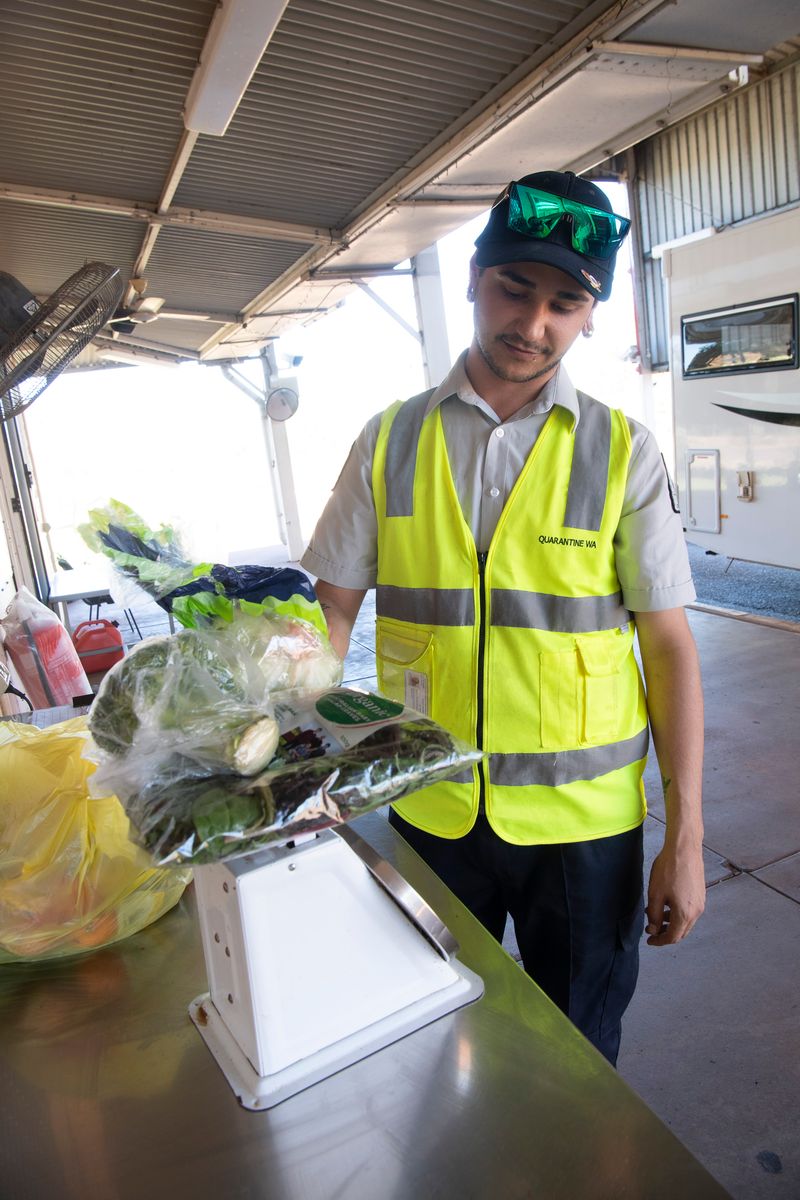
Quarantine WA inspectors and detector dogs were at the frontline of biosecurity defences last financial year, carrying out more than 3.5 million screenings and inspections to help keep invasive pests and diseases out of Western Australia.
In 2024-25, the Department of Primary Industries and Regional Development’s (DPIRD) quarantine team undertook more than 3.16 million screenings of airline passengers, parcels, trucks, commercial trailers and rail-sea containers.
This included 682,561 interstate airline passengers, and over two million parcels at mail centres across the metropolitan area.
More than 150,000 private vehicles at the WA/NT and WA/SA road checkpoints, almost 130,000 lines of imported plant material and machinery, and 27,000 interstate livestock were also inspected.
This work resulted in a total of 58,697 kilograms of quarantine risk material, including 3,595 kilograms of honey, being surrendered at airports and road checkpoints.
A total of 82 significant pests and 87 prohibited organisms were intercepted during these activities.
DPIRD Quarantine Director Greg Pickles said effective border biosecurity played a critical role in protecting the State’s vital primary industries and environment.
“Western Australia’s agriculture, aquaculture and fisheries industries are worth more than $11 billion,” Mr Pickles said.
“It’s important that we have robust and rigorous biosecurity measures in place to mitigate biosecurity risks, exotic pests, diseases and harmful weeds that can enter the State. These measures protect our valuable primary industries as well as our environment and people.
“Inspections at WA's borders are a key part of the prevention and early warning biosecurity and surveillance systems - as the early detection of any pest, weed or disease is critical to being able to contain and eradicate the threat.
 Print this page
