


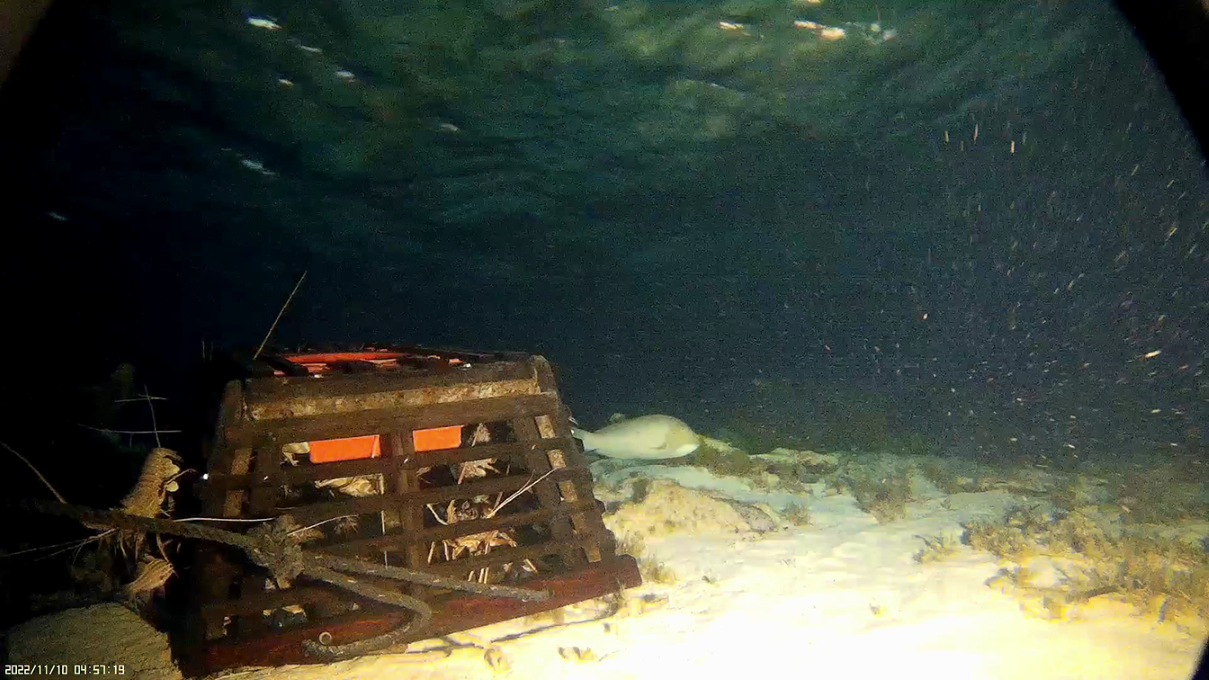
Novel ‘X-Cray’ vision is unearthing some fascinating data recorded via a camera in a lobster pot. The so-called PotBOTS are automated cameras used in fishing gear to provide an extraordinary fish-eye view of various species and variations in their common habitats.
Principal Research Scientist Simon de Lestang spearheads the Department of Primary Industries and Regional Development’s PotBOTS research project, aided by WA’s commercial fishers. The project is also gathering other valuable data including water temperature, depth and light attenuation.
Dr de Lestang said the PotBOTS provided a highly valuable way to track the impacts of climate change and movement of fish, as well as stock dynamics.
“There is a broad range of vision coming through, whether it’s dozens of lobsters spending a night under a ledge at the Abrolhos Islands or other amazing underwater scenes captured after a pot has been deployed by fishers,” he said.
“The full range of X-Cray vision can be seen here.”
Dr de Lestang said cameras of a different kind also provided valuable support for WA’s deep sea crab fishery.
Stereo cameras are set up to capture video footage of the onboard sorting station for deep sea crabs. This video data is analysed using special software that records the relative sizes of each crab.
This approach has the longer-term potential to reduce reliance on onboard monitoring and make a significant contribution to sustainable management of the fishery.
On WA’s northern coastline, cameras on Remote Operated Vehicles (ROVs) are also used by DPIRD researchers to safely collect survey data for stock assessments of the sea cucumber fishery.
DPIRD Principal Research Scientist Lachlan Strain said the data was pivotal in securing the recent sustainability recertification of WA’s sea cucumber fishery through the Marine Stewardship Certification process.
The fishery concentrates on two species of marine invertebrates - the Sandfish (Holothuria scabra) found in tropical waters and the Deepwater Redfish (Actinopyga echinites) found further south in the Pilbara region.
Dr Strain said ROVs were highly versatile and helped reduce the risks for research divers, especially where there were limitations to diving operations like depth, dive time, visibility or geographical areas.
“Some marine life found in WA’s north west waters can be hazardous to divers, like irukandji jellyfish, crocodiles and sharks,” he said.
“An ROV camera can give us a better view of our species and their habitat, while also ensuring the safety and wellbeing of researchers.”
 Print this page
