


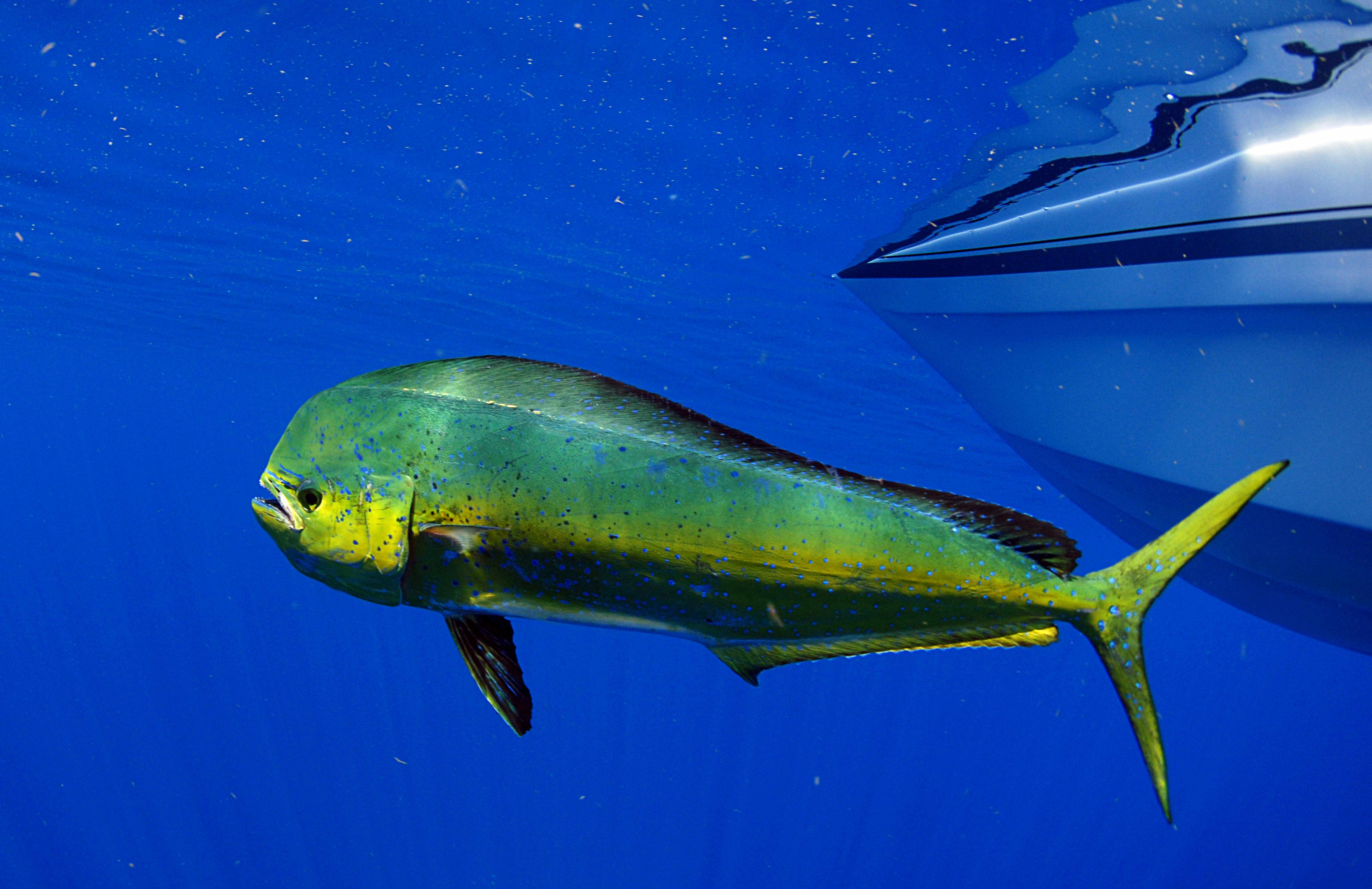
Research to track the movements of a popular sportsfish as part of the Fish Aggregating Devices (FADs) program is set to further enhance recreational fishing opportunities along the Western Australian coastline.
The State Government committed $1.9 million over two years (2026-27and 2027-28) for the FADs program to continue to encourage fishers to switch their fish and target large pelagic species like mahi mahi, tuna, wahoo and marlin.
As part of the program, new tagging research is targeting mahi mahi, commonly known as dolphinfish, providing valuable insights into the movement and behaviour of the fish to help refine when and where the FADs are deployed in the future to maximise recreational fishing opportunities.
National Science Week provides a great opportunity to highlight the Department of Primary Industries and Regional Development’s (DPIRD) fisheries science and research programs supporting the sustainable management of Western Australia’s fisheries.
DPIRD research scientist Peter Mitchell said fisheries researchers tagged mahi mahi off several metropolitan FADs between March and May this year.
“The fish were given acoustic and pop-up satellite tags, and while in the early stages, the tagging data collected so far shows that dolphinfish can travel significant distances, up to 600 km over three weeks, and spend most of their time near the water surface but periodically dive to depths of over 100 metres likely to feed,” he said.
“The FADs program continues to be very popular with fishers, with 48 devices deployed annually along the coast between Broome and Albany.
“The more we can learn about the movements and behaviours of fish like mahi mahi will help us to continue to refine the FADs program to maximise sport and game fishing opportunities for our receational fishing community.”
FADs consist of buoys or floats that are moored to the ocean floor using an anchor system and act as an aggregation point for baitfish, attracting large sport fishing species.
The 36 southern FADs are in the water between December and May, and in northern WA there are four seasonal buoys off Exmouth from March to November and eight reinforced devices in the water year-round off Broome and Dampier.
The dolphinfish tagging program will continue for 2026-27 season to gather more data to be considered for future FAD deployments.
For more information the FADs program and locations of current active FADS visit the DPIRD website.
