


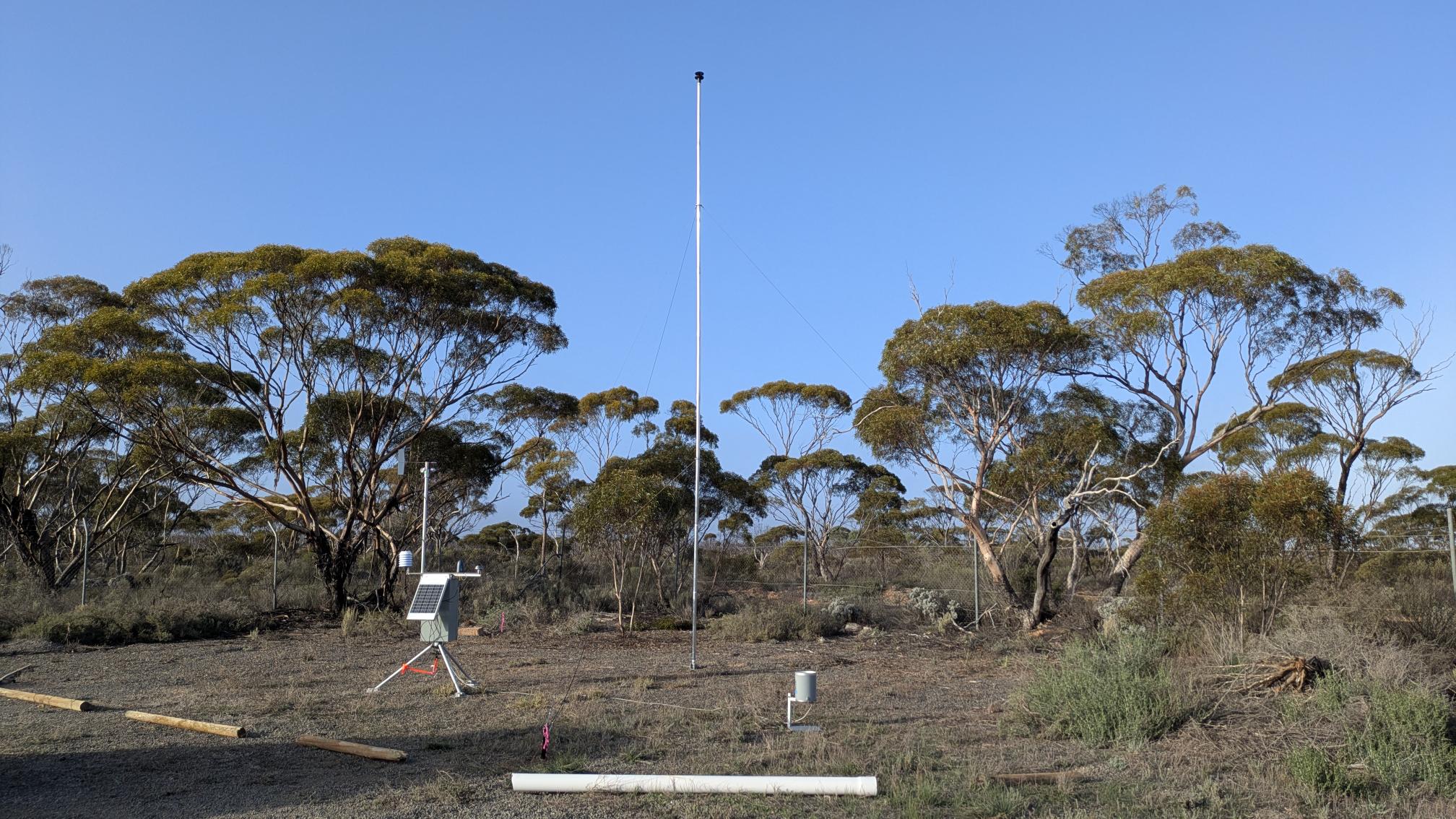
Vital weather information is now readily accessible for the Royal Flying Doctor Service airstrip at Balladonia following the installation of new automated weather stations in the Southern Rangelands.
The Balladonia site is one of four new weather stations recently added to the Department of Primary Industries and Regional Development’s (DPIRD) Statewide network of 191 weather stations.
The other three assets are located at Sandstone, Kumarina, between Meekatharra and Newman, and Minilya Crossing, north of Carnarvon.
DPIRD research officer Ian Foster said the locations of the new weather stations were chosen to fill identified gaps in coverage determined in collaboration with the Department of Fire and Emergency Services (DFES).
“All four of the new automated weather stations will help fill those important data gaps to better manage weather risks to support pastoralists and emergency services,” Dr Foster said.
“The Balladonia site in particular fills a long-standing need for DFES to have visibility of weather conditions in the region.”
Installed by DFES, the weather stations are part of DPIRD’s Southern Rangelands Revitalisation Program helping to build climate and business resilience in WA’s pastoral industry.
“Real time data from the weather stations will be available for free for rangelands pastoralists, residents, consultants and others via DPIRD’s online weather webpages and our weather app,” Dr Foster said.
Data includes air temperature, humidity, rainfall, solar radiation, wind speed and direction, as well as evapotranspiration and dew point temperature.
“Agricultural production has become increasingly reliant on the use of credible weather data to optimise productivity and profitability,” Dr Foster said.
“Farmers have been using automated weather data for some time to aid decision making and now pastoralists have access to reliable data to develop and refine livestock and rangelands management strategies.”
The DPIRD’s weather data can be accessed for free online.
