


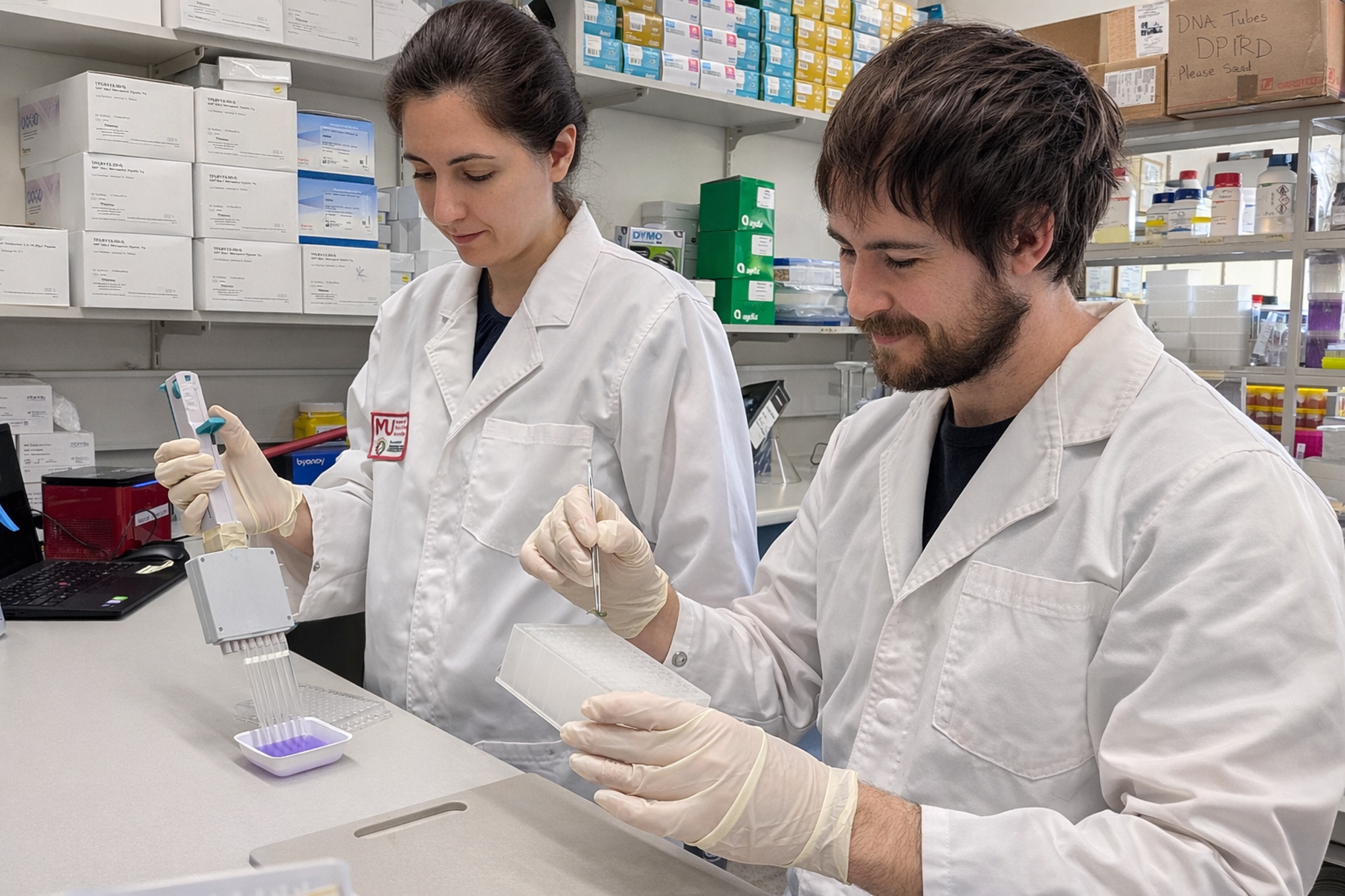
Western Australian pulse growers are encouraged to take action now to protect their 2026 crops by taking advantage of an offer for seed testing at no cost for high risk viruses that could decrease yields, seed quality and profits.
The limited offer is available via the Department of Primary Industries and Regional Development (DPIRD) as part of a collaborative national project with the Grains Research and Development Corporation.
Up to 40 seed samples from WA will be tested for cucumber mosaic virus (CMV) in lupins or lentils and/or pea seed-borne mosaic virus (PSbMV) at no cost, with testing limited to two 400 gram seed lots per grower.
This national service is also available to growers in South Australia, Victoria, Queensland and New South Wales.
DPIRD project lead Ben Congdon said the testing initiative not only alerted growers to any virus risks but the data would support the surveillance component of the research project.
“Testing seed lots for key viruses provides growers with a strong understanding of yield loss risk from seedborne viruses,” Dr Congdon said.
“It is also a really good way for us to assess the occurrence and degree of virus contamination across national seed stocks, allowing us identify future risks to crops impacted by these viruses."
Sowing pulse seed infected with CMV or PSbMV can result in infected seedlings being scattered randomly within the crop.
Aphids can then pick up the virus from the infected plants and spread it to nearby healthy plants, leading to reduced plant health and yields, as well as further virus infection in the harvested seed.
Previous DPIRD trials have shown viruses, like CMV and PSbMV, can cause major yield losses – sometimes exceeding 50 per cent.
Research has identified PSbMV losses in field peas can occur, despite a lack of visual crop symptoms.
“For seed-borne viruses, the most important management strategy is to sow clean seed – whether it is commercially produced seed or seed growers have grown themselves – because once the crop is sown, these viruses are almost impossible to manage,” Dr Congdon said.
“By measuring the percentage of infected seed, growers can make informed decisions about the seed lot to manage the risk.”
In addition to the seed lot data, researchers on the project have tested hundreds of crops across the country, which will be used to understand the prevalence, genetic diversity and potential impact of viruses across different regions, crops and seasons.
The broad scope, five-year project also includes research to better understand the impact of different viruses and develop improved management tactics, including insecticide applications and durable host resistance.
“This project will expand our knowledge of grain crop viruses, which will ultimately enable us to develop improved strategies to manage them effectively,” Dr Congdon said.
GRDC manager diseases Alan Little said Australian grain growers faced virus threats that could be invisible in their early stages and symptoms are often mistaken for other stresses.
"By delivering reliable data on virus prevalence, seed infection and insect movement, this project will give growers timely warning signals and practical control options so they can prevent infections, rather than chase them,” Dr Little said.
To submit lupin, lentil and field pea samples to DPIRD and take advantage of the seed testing offer email DPIRD research scientist Dr Nazanin Nazeri nazanin.nazeri@dpird.wa.gov.au to request a seed testing form. Testing results will be confidential.
For more information about the ‘Effective virus management in grain crops’ project visit the GRDC website.
