


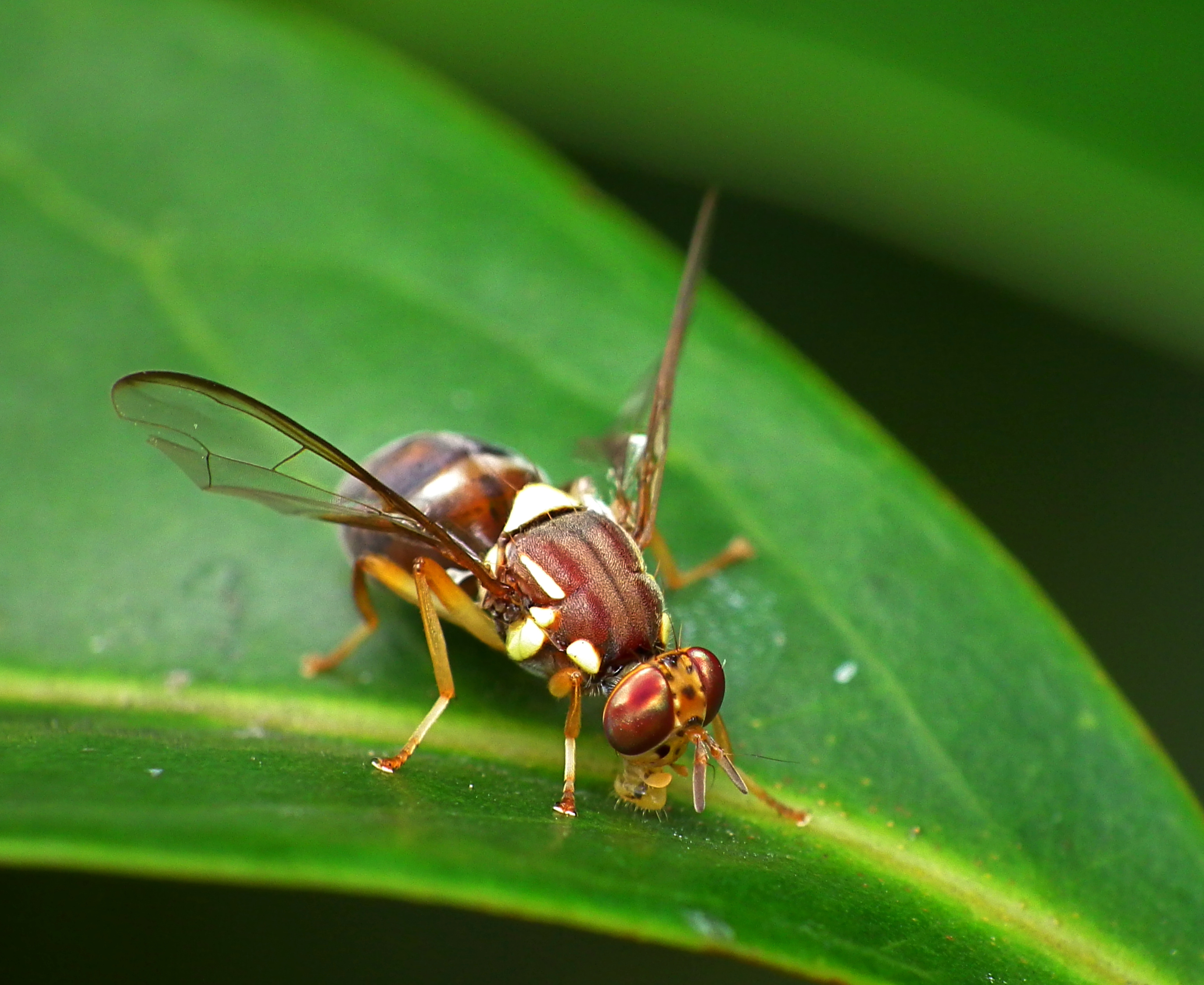
A Quarantine Area has been declared today for South Perth suburbs to help eradicate Queensland fruit fly (Qfly) and stop the pest from spreading.
The move comes after the destructive fruit fly was detected in the Department of Primary Industries and Regional Development’s (DPIRD) early-warning surveillance traps in South Perth and Como.
DPIRD Chief Plant Biosecurity Officer Vincent Lanoiselet said extra trapping had helped define the Quarantine Area.
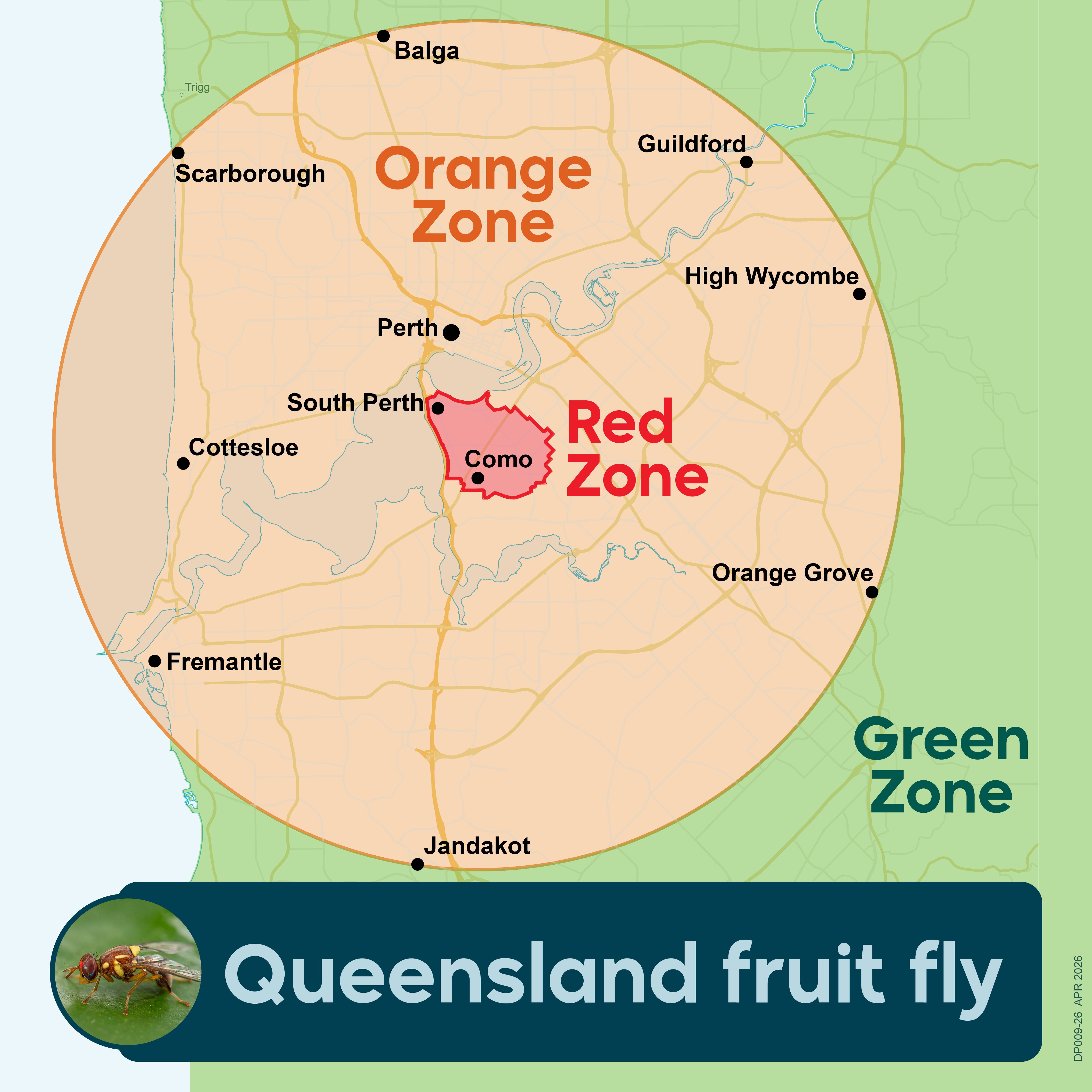
Dr Lanoiselet said a Quarantine Area Red Zone covered more than 7,000 properties in South Perth, Como, Kensington, Bentley and East Victoria Park – within a 1.5 km radius of the Qfly outbreak.
Residents and businesses in the Red Zone are required to pick all ripe and ripening fruit and fruiting vegetables from Qfly host plants as well as fallen fruit.
Any fruit that is not eaten or processed must be solarised - secured in a black plastic bag in the sun for seven days - before being placed in the general waste bin, not the food organics, garden organics (FOGO) bin.
Home grown host fruit and fruiting vegetables must not be moved within or outside of the Red Zone. Only cooked, frozen dried or preserved fruit can be moved.
An Orange Zone is also in place covering a broader 15 km radius from the Qfly infestation to provide a buffer and prevent further spread of the pest.
Host fruit and fruiting vegetables must not be moved outside of the Orange Zone unless treated.
An interactive Quarantine Area map, list of affected plants and information on movement, treatment and disposal requirements is available on the DPIRD website.
Dr Lanoiselet said DPIRD’s response team was in the field undertaking inspections and applying registered organic baits to trees on residential and commercial properties.
“DPIRD is working with residents, industry and businesses to make them aware of the important quarantine measures to help us eradicate Qfly,” Dr Lanoiselet said.
“We are calling for the support of everyone in the Quarantine Red Zone to pick ripe and ripening fruit and not move fruit to help break the pest’s life cycle and stop it from spreading to other suburbs and our horticultural areas.
“Working together – industry, government and community – gives us the best chance of eradicating this pest as quickly as possible.”
Qfly is a significant pest of horticulture and home gardens that impacts more than 300 types of fruit, including fruiting vegetables such as tomato, chilli and capsicum.
The community is encouraged to look for and report suspect Qfly, which are six to eight millimetres long, with a red-brownish torso and yellow patches, dark brown abdomen and clear wings.
Reports of suspected Qfly, including maggots in fruit, can be made via the MyPestGuide Reporter app or DPIRD’s Pest and Disease Information Service padis@dpird.wa.gov.au
 Print this page
