


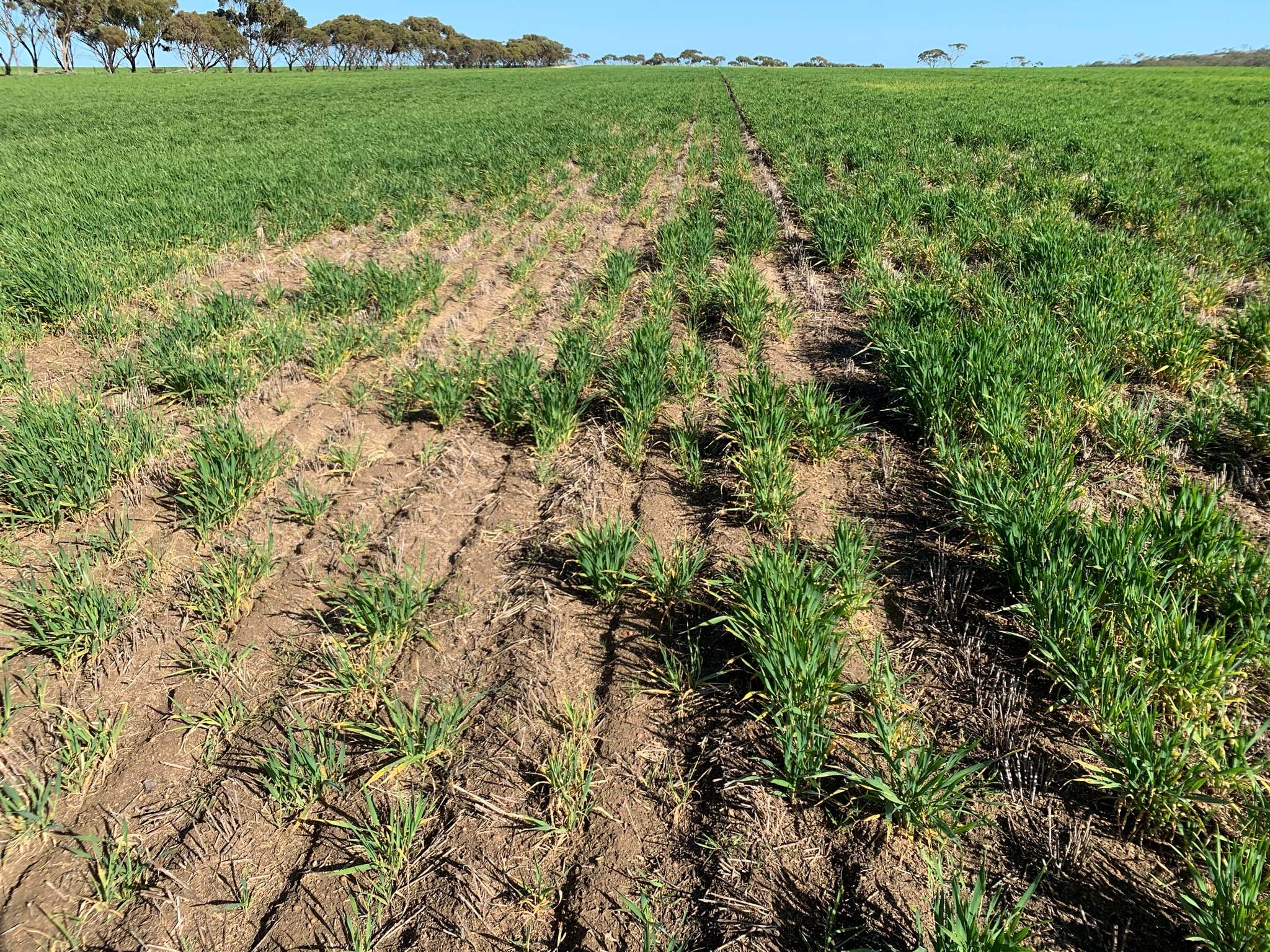
Research is underway to help cereal and lupin growers in Western Australia’s south east tackle increasing populations of pest scarab beetle larvae, better known as cockchafers, to protect crop yields and profits.
The Department of Primary Industries and Regional Development (DPIRD) is leading a joint $1.5 million investment to deliver evidence-based tools to help growers battle the pest, with co-investment from the Grains Research and Development Corporation (GRDC).
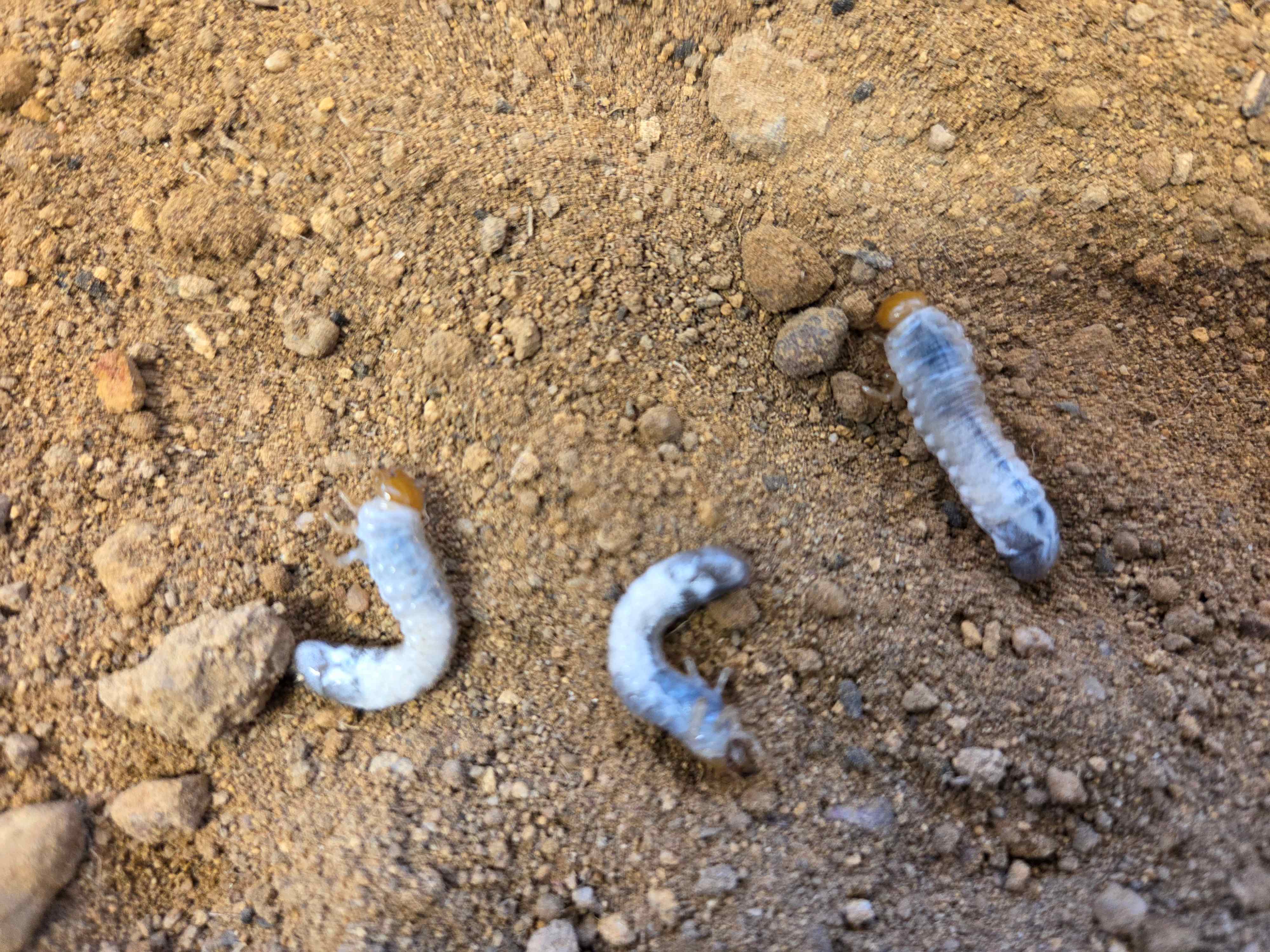
These larvae from the Melolonthinae family, also known as curl grubs, are responsible for increasing reports of isolated crop damage in and around the Lakes district.
A new ‘unknown species’ of the beetle has been detected in barley crops in the area in recent years – nearly 30 years after the notorious Harrismith cockchafer outbreak.
Similar to the late 1990s outbreak, the cockchafers do not respond well to foliar insecticides, as the pest feeds on roots so remains untouchable underground, while the most effective insecticide from that era is no longer commercially available.
This season, the pest has targeted barley, wheat, oat and lupin seedlings, resulting in yield losses last season of 5-6 per cent and, in some cases, crop losses of more than 50 per cent from persistent larval feeding on roots.
DPIRD research scientist Dusty Severtson asked growers to submit reports of beetles and damage to the department’s PestFacts service to help identify the beetle species and to map its distribution.
“Department researchers are working with Murdoch University to DNA sequence samples to identify the species – or perhaps multiple species – at a molecular level,” Dr Severtson said.
“This will give us a better understanding of the number of species we are dealing with and to characterise or barcode new or unknown species being found in crops.
“Cockchafers actively feed on crop roots from June to September.
“While detections are typically isolated and sporadic, there have been more than a dozen reports so far this year from the Lakes District all surviving various rates of foliar insecticides – a slight increase on last year.
“We encourage growers to report observations of suspected cockchafers causing crop plant damage and send photographs or samples to PestFacts to aid this important research.”
Identification is an important step in developing effective control measures, as cockchafers are difficult to control due to their subterranean behaviour and the diversity of species – each with its own distinct life cycle and treatment responses.
GRDC Crop Protection Manager – West Jonas Hodgson said management of the pest had been raised at recent GRDC National Grower Network (NGN) forums and was a high priority for growers in the Lakes district.
“Scarab infestations have been an ongoing concern for growers, particularly in the Lakes and Kondinin areas, where root and crown feeding has led to significant crop damage and failures,” he said.
“The need to develop a management package was clearly evident during the western spring panel tour in 2024.”
The three year project will include a series of glasshouse and field trials to evaluate species specific chemical and cultural control measures, including insecticides and biological controls.
Researchers will examine agronomic strategies, including sowing rate, crop species, crop rotation and potential soil amelioration measures.
Drone imagery assessments will be used to map crop losses to inform investments in short and long term crop management strategies and their costs.
The work forms part of the National Grains Diagnostic and Surveillance initiative, a $42 million national GRDC initiative, led by DPIRD in WA, to rapidly detect and accurately diagnose exotic pests and plant diseases.
“By linking species-level insights with actionable control measures, this project will give growers integrated, evidence-based tools to mitigate scarab damage, enhance crop protection and reduce reliance on ineffective chemical treatments,” Mr Hodgson said.
“Ultimately, these efforts will support more sustainable and effective pest management across WA's agricultural region.”
Cockchafer and beetle reports can be made by downloading DPIRD’s free PestFacts WA Reporter app or emailing a photograph and details to pestfactswa@dpird.wa.gov.au.
 Print this page
