


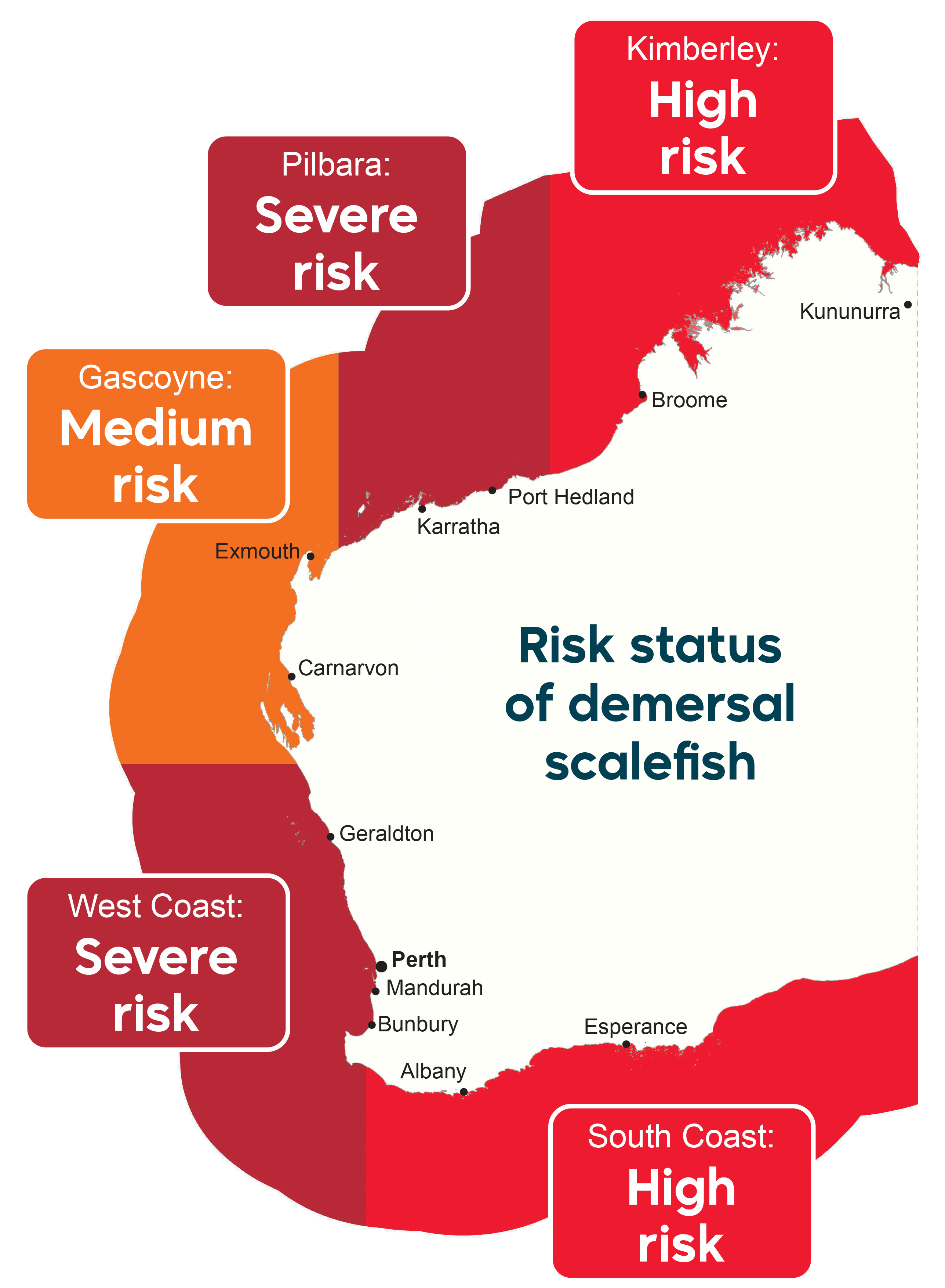
The future of the State’s demersal scalefish species, including the iconic WA dhufish, is at risk after the latest scientific assessments indicated depleted stocks along much of the Western Australian coast.
The Department of Primary Industries and Regional Development’s (DPIRD) latest stock assessments for the Kimberley, Pilbara, West Coast and South Coast demersal resources show fishing pressure on a number of demersal species across the State is too high.
DPIRD Fisheries and Aquaculture Executive Director Nathan Harrison said Western Australia was committed to sustainable fisheries management backed by science.
“The systems we have in place, including periodic stock assessments, closely monitor the State’s fish stocks and guide management action when needed,” Mr Harrison said.
“To support the stock assessments, DPIRD conducts a statewide Recreational Boat Fishing survey (iSurvey) every two to three years in collaboration with Edith Cowan University (ECU) and Recfishwest.
“The iSurvey collects information from boat-based recreational fishers about what species they catch, size of the fish and from where along the Western Australia coast the fish were caught.
“The recreational fishing data collected from the 2023-24 survey, along with commercial and charter catch data, was vital for DPIRD fisheries scientists to measure the health of demersal stocks across the State.”
Mr Harrison said the stock assessment methods used to determine the health of demersal species in WA had been independently reviewed by an international expert which confirmed DPIRD’s assessments of sustainability risk to Western Australia’s demersal species.
“WA dhufish and pink snapper in the west coast, and red emperor in the Pilbara are all assessed as at severe risk of further depletion.
“Kimberley red emperor, Pilbara goldband snapper and South Coast pink snapper, bight redfish and Western blue groper are all assessed as at high risk.”
In 2023, management measures were introduced for the West Coast bioregion to reduce the commercial and recreational catch of demersal fish, balancing the interests of fishers and coastal communities with the recovery of stocks.
Mr Harrison said the measures had been successful in part to reduce catches, but not to the level required for WA dhufish and pink snapper to recover to sustainable levels.
“To safeguard the future of these highly valued demersal species along the entire WA coast further management action is required,” he said.
“We know strong management does work to recover fisheries, and the Gascoyne oceanic pink snapper fishery is a great example. Thanks to a recovery plan which significantly reduced fishing quotas and introduced spawning closures, we have been able to rebuild the stock.”
The WA Government will be holding a demersal scalefish science and management forum on October 20 with key stakeholders to discuss the results of the stock assessments and explore future management strategies.
There is also an opportunity for the broader community to provide feedback on the status of WA’s demersal scalefish stocks and how to ensure there are fish for the future.
To view the latest stock assessments and information on the Recreational Boat Fishing survey and provide feedback visit https://www.dpird.wa.gov.au/demersal-scalefish-resources
 Print this page
