


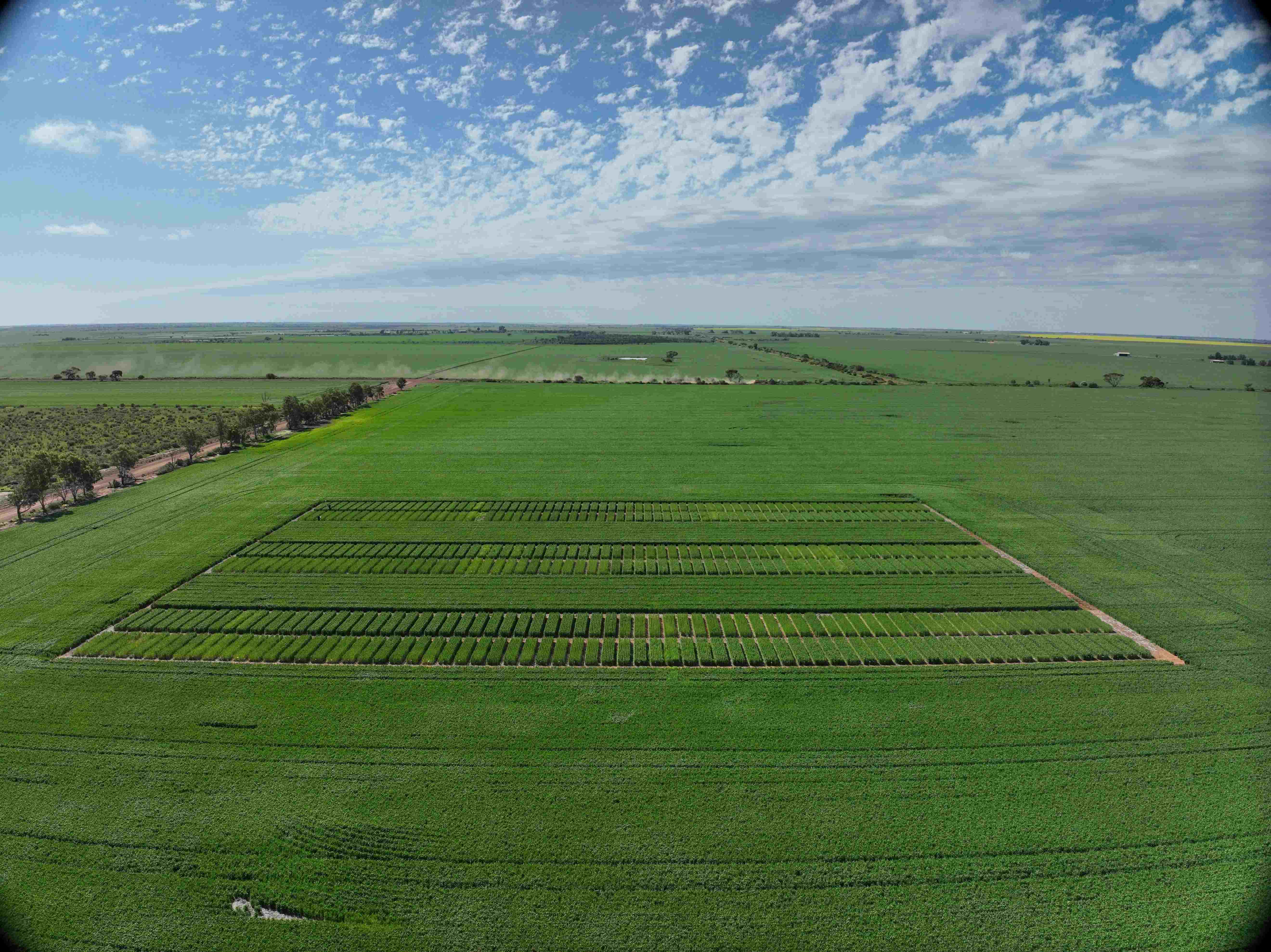
New trials comparing crop performance at different sowing times are set to provide Western Australian grain growers with opportunities to optimise their seeding programs and support more resilient and profitable cropping systems.
The Department of Primary Industries and Regional Development (DPIRD) has established early sowing trials at Lake Grace and Merredin, evaluating a mix of cereals, canola, legumes and vetch.
These two-year trials form part of DPIRD’s Western Australian Farming Systems project, co-invested with the Grains Research and Development Corporation (GRDC), and build on two years of previous research.
DPIRD research scientist Stephanie Boyce said the trials would assess the performance of a range of early sown crop species and compare them with crops sown later in the season.
“These trials are unique because there are many studies of sowing time effects on each crop species in separate trials, but none of which directly compare between species within the same trial,” Ms Boyce said.
“These trials are part of a broader series within the WA Farming Systems project, which is centred around four-year, large-scale rotational trials.”
At Lake Grace, early crops were sown on 11 April 2025 following an early break to the season and later crops sown on 3 June.
At Merredin, early crops were sown on 15 April 2025, followed by later-sown crops on 20 May, both established with sufficient irrigation to ensure germination, after a drier start to the season.
A range of crop species were planted in both trials, including four varieties each of wheat, barley, oats and canola, along with eight legume species.
The trials will measure a range of performance indicators, including yield, biomass production, nitrogen fixation and rotational value.
Ms Boyce said the 2025 research builds on a previous time-of-sowing by species trial conducted at Chapman Valley during the 2023 and 2024 seasons.
“Across both sets of trials, the first year aims to assess the relative yield of different crop species, helping growers make more informed decisions about changing species based on sowing opportunities,” she said.
“The second year evaluates the impact and legacy effects of the species grown in the previous year — particularly the legumes — which is critical for understanding the benefits of more diverse rotations.”
In 2023, the site in Chapman Valley received only 171mm of rainfall in the growing season. Despite this, the trial delivered valuable data.
In 2024, wheat was planted across all plots to measure the legacy effects of the different species grown in 2023. Wheat yields increased on legume or fallow stubble compared to cereal stubble.
“Over the two-year trial at Chapman Valley, rotations including legumes attained the highest gross margins,” Ms Boyce said
“Along with this higher revenue, the biological benefits of including legumes in rotations are undeniable. This experiment validates the value of legume inclusion in crop rotations.”
The findings from Chapman Valley mark the beginning of a broader effort to develop resilient, sustainable farming systems that address both environmental and economic challenges.
“This season, at Merredin and Lake Grace, we’ll be watching closely to see if early sowing gives legumes the chance to fix more nitrogen and build more biomass, which could benefit following crops even further,” Ms Boyce said.
Insights from these trials aim to help growers better align sowing time and crop choice with seasonal conditions and long-term profitability.
“The trials also explore the rotational impacts of legumes — information that’s vital when planning more diverse cropping systems,” Ms Boyce said.
More information is available on the WA Farming Systems project webpage.
 Print this page
