


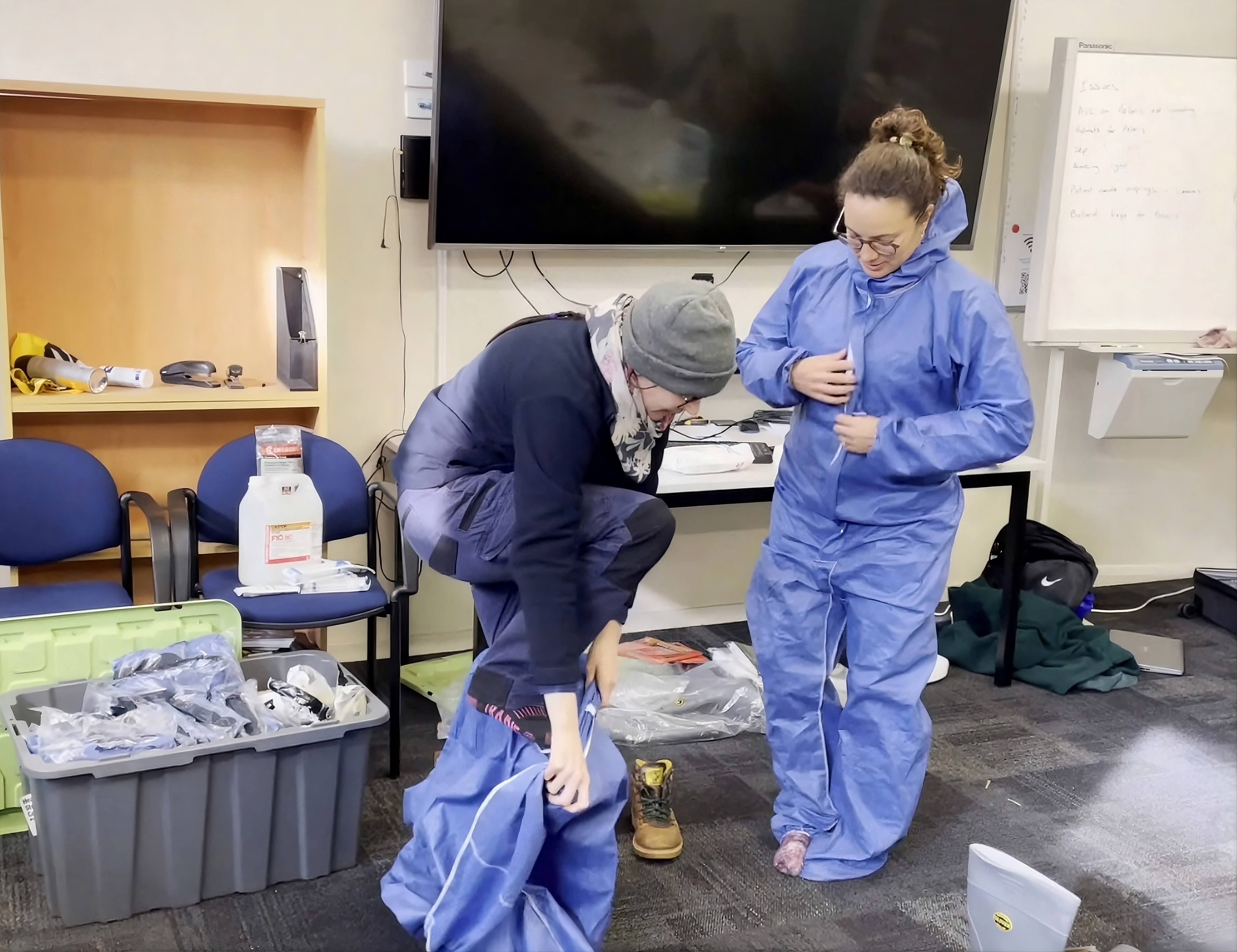
The Department of Primary Industries and Regional Development (DPIRD) is continuing to strengthen Western Australia’s surveillance network for H5 bird flu, with additional sample collection training delivered across the State.
The training for DPIRD and Department of Biodiversity, Conservation and Attractions (DBCA) staff covers the use of personal protective equipment, collecting, preparing and labelling samples for transport and the safe disposal of carcasses.
More than 90 staff have already completed the latest rounds of training in Perth, Esperance, Bunbury, Geraldton and Northam, with more scheduled for Albany and Geraldton in coming weeks.
This builds on training delivered in 2025 and earlier this year to ensure personnel are familiar with biosecurity requirements, personal protective equipment and wildlife sampling procedures.
An online e-learning training program is also being finalised and will soon be made available to further expand the State’s surveillance capability.
This week, evidence of local transmission of H5 bird flu was identified among Australian greater crested terns in South Australia.
In line with overseas experience, further spread in wild birds is not unexpected with this H5 strain known to cause large numbers of deaths in wild birds and some mammals.
DPIRD H5 bird flu Incident Controller Mia Carbon said the program ensured there were skilled personnel available throughout Western Australia to respond to suspect cases of H5 bird flu.
Dr Carbon said the training built on the department’s work over the past two years to prepare for H5 bird flu and supported the State’s surveillance efforts.
“There has been a tremendous response from the community to report dead or sick birds to the Emergency Animal Disease (EAD) hotline,” Dr Carbon said.
“Since the first confirmed detection of H5 bird flu on 19 June, WA has recorded more than 2300 reports to the EAD hotline. These reports are all assessed according to disease risk and trained staff collect samples for testing.
“We encourage the community to remain vigilant and continue to record their observations and report to the hotline on1800 675 888.”
More information is available at birdflu.wa.gov.au
