


Background
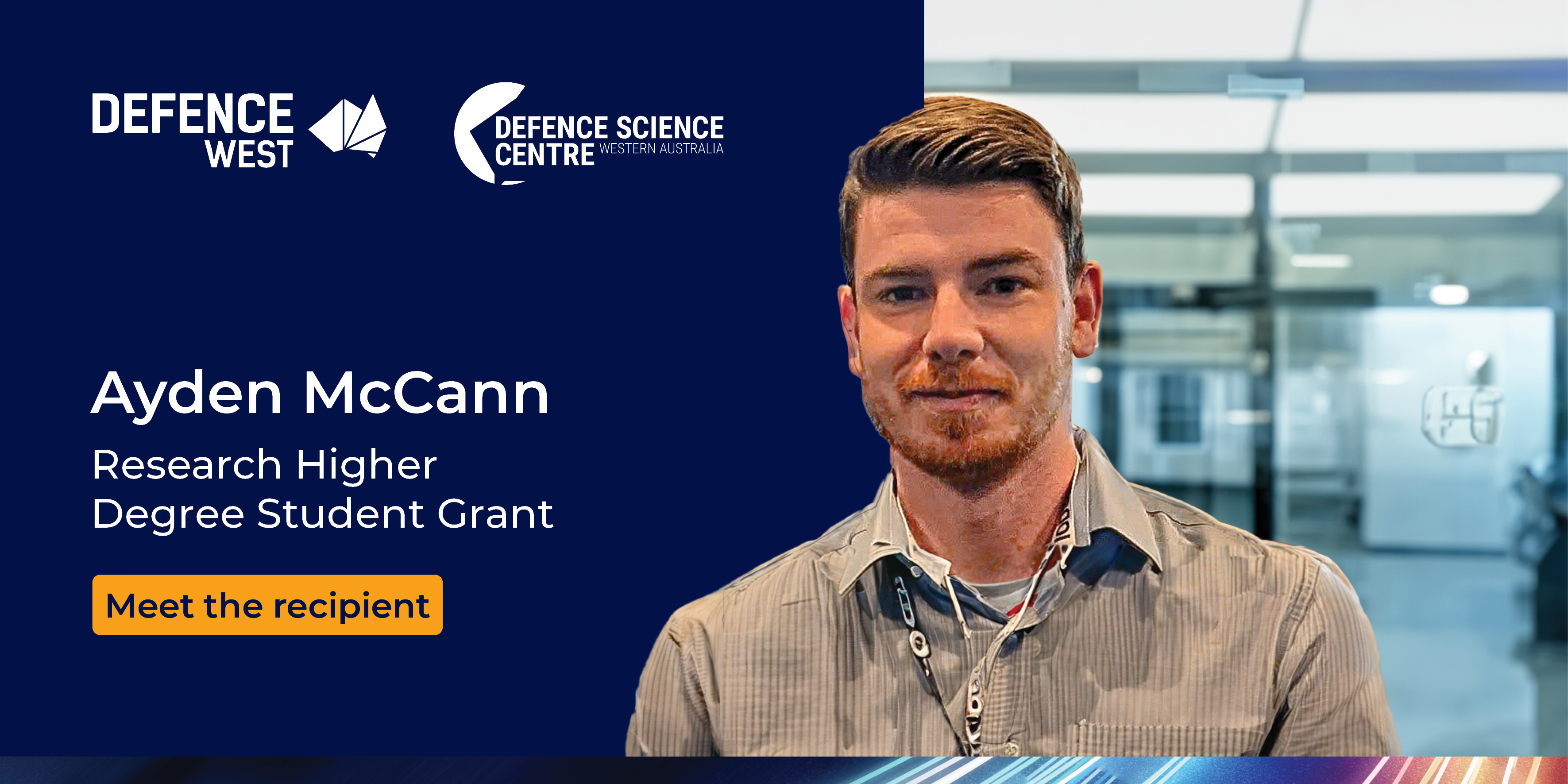
A UWA Masters student has contributed to the development of free-space optical communications technology. Simultaneously he improved the security of global communications systems, thanks to a Defence Science Centre (DSC) Research Higher Degree Student Grant (RHDSG).
Ayden McCann, who was awarded a $10,000 RHDSG from the DSC in 2021, is a part of the Astrophotonics group at the International Centre for Radio Astronomy Research (ICRAR) at UWA.
The DSC RHDSG provides funding to students working on collaborative Defence relevant projects and/or undertaking defence industry placements as part of their study.
The optical communications system, which could achieve a 1000 times increase in data rate, utilises satellites to overcome the bandwidth limitations of ground-based radio signals.
“Around 60% of over 5000 satellites currently in orbit are used primarily for communications purposes, ranging across military, government and commercial operators,” Ayden said.
“The advent of free-space optical communications promises to revolutionise data rates but is also not without its challenges.”
Approach
Translated from previous work developing a system for the Square Kilometre Array (SKA) radio telescope, the Astrophotonics group at ICRAR are developing optical communications systems that can suppress the effects of turbulence, which has previously prevented the uptake of these systems.
The work will ultimately utilise the Western Australian Optical Ground Station (WAOGS), the first station in the Southern Hemisphere, to receive and transmit optical satellite signals.
Ayden’s project successfully demonstrated a precursor system's ability to precisely track airborne targets, suppress the effects of turbulence and maintain a robust communications link between satellite and ground station.
Outcome
“The technologies developed and proved in this project will have applications for secure, high-speed laser communications and position, navigation and timing for Defence, as well as major impacts in a huge range of industries reliant on high volume or time-critical data downlinked from spacecraft,” Ayden said.
As part of his RHDSG experience, Ayden attended the 2022 Australian Defence Science Technology and Research (ADSTAR) Summit, Sydney and the Indian Ocean Defence and Security Conference (IODSC), Perth.
“The DSC-supported places at both ADSTAR and IODSC have benefited my research group in terms of exposure as well as my own professional development,” Ayden said.
“Having the opportunity to talk to defence industry professionals about the research the group is conducting and what we hope to achieve was a unique and valuable experience.”
Looking to the future, Ayden said he plans to continue his research in space communications and pursue a PhD with ICRAR Astrophotonics on the development of mobile optical ground stations.
Round 5 of the Research Higher Degree Student Grant is now open. Submit your application now!
 Print this page
