


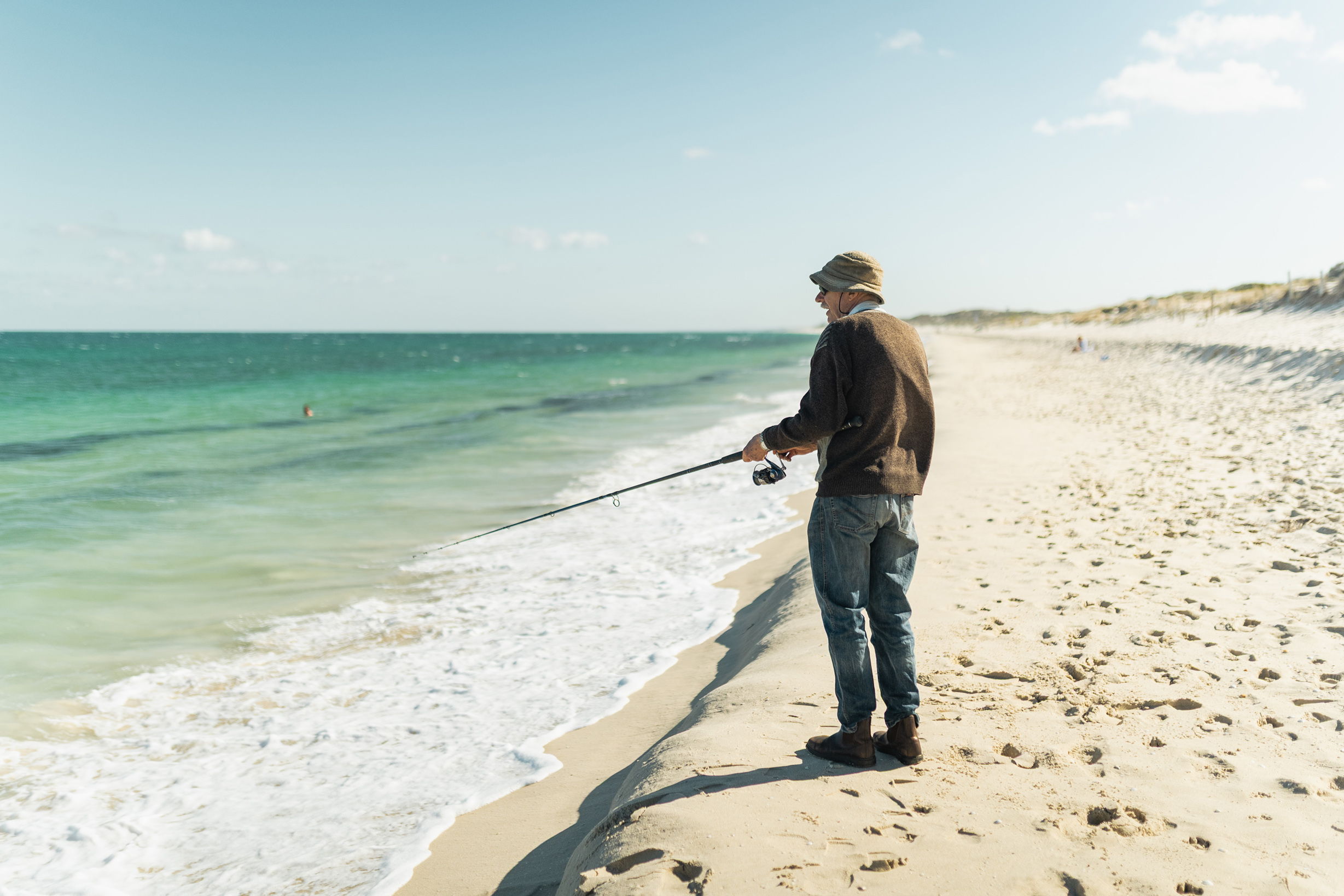
The Department of Primary Industries and Regional Development (DPIRD) program is celebrating the milestone and looking for more fishers to contribute their citizen science to support the State’s sustainable fisheries.
DPIRD scientists have received data from 556 fishers undertaking a total of 19,431 fishing trips, reporting on more than 150,000 individual fish and invertebrates.
DPIRD senior technical officer Amber Quinn said for the past two decades, volunteer recreational fishers have played an instrumental role in collecting fish data from along WA’s coastline to ensure fish and their habitats were being well managed.
“WA has a vast coastline and inland waterway system, and studying fish over such a huge area is challenging,” Mrs Quinn said.
“Recreational fishers can gather large volumes of data over a much broader area than could be gathered by scientists alone.
“The program collects data on all species, habitat types and bioregions, generating community involvement all over the State.
“This information from our citizen scientists is used to improve our understanding of fish populations, movement, growth, and mortality.”
DPIRD also has the Send us your Skeletons program where citizen scientists donate fish frames to the department to allow fish scientists to gather important biological information such as the age of fish, their size at maturity and growth rates.
Mrs Quinn said regional and seasonal catch data had improved the quality of stock assessments for various recreational species including Australian herring, black bream, blue swimmer crab, yellowfin whiting, spangled emperor and tailor.
The data revealed the top species caught by Research Angler Program fishers over the past two-decades was the Australian herring, with more than 36,000 fish recorded, of which approximately 90 per cent were kept.
Blue swimmer crab was the second most caught species and the most commonly reported invertebrate, with black bream, an estuarine species popular among bait and lure fishers, being the third most caught species overall.
Mrs Quinn said the Research Angler Program would not have reached the 21-year milestone without the strong support of WA fishers.
Melville resident Brian Heterick joined the Research Angler Program in 2006 and hasn’t looked back.
“I am a scientist, so I love to identify things and I also have a passion for all things fish – and not just catching them,” Mr Heterick said.
“Being part of the Research Angler Program is great for a number of reasons – it provides a great social outlet with many retirees and keen anglers taking part so there’s a lot of camaraderie, knowledge sharing and friendly competition among us.
“I am very happy to give back to the community and be part of something which is helping with the sustainability of fish stocks in Western Australia.”
Mrs Quinn said the research team was currently looking to improve and modernise the program and was exploring the potential for electronic reporting in addition to the current paper logbooks.
The refinements are expected to improve the efficiency of reporting and allow researchers to access and analyse data more quickly.
For further information on the Research Angler Program is available online or to join email Research.survey@dpird.wa.gov.au. <\/strong>
 Print this page
