


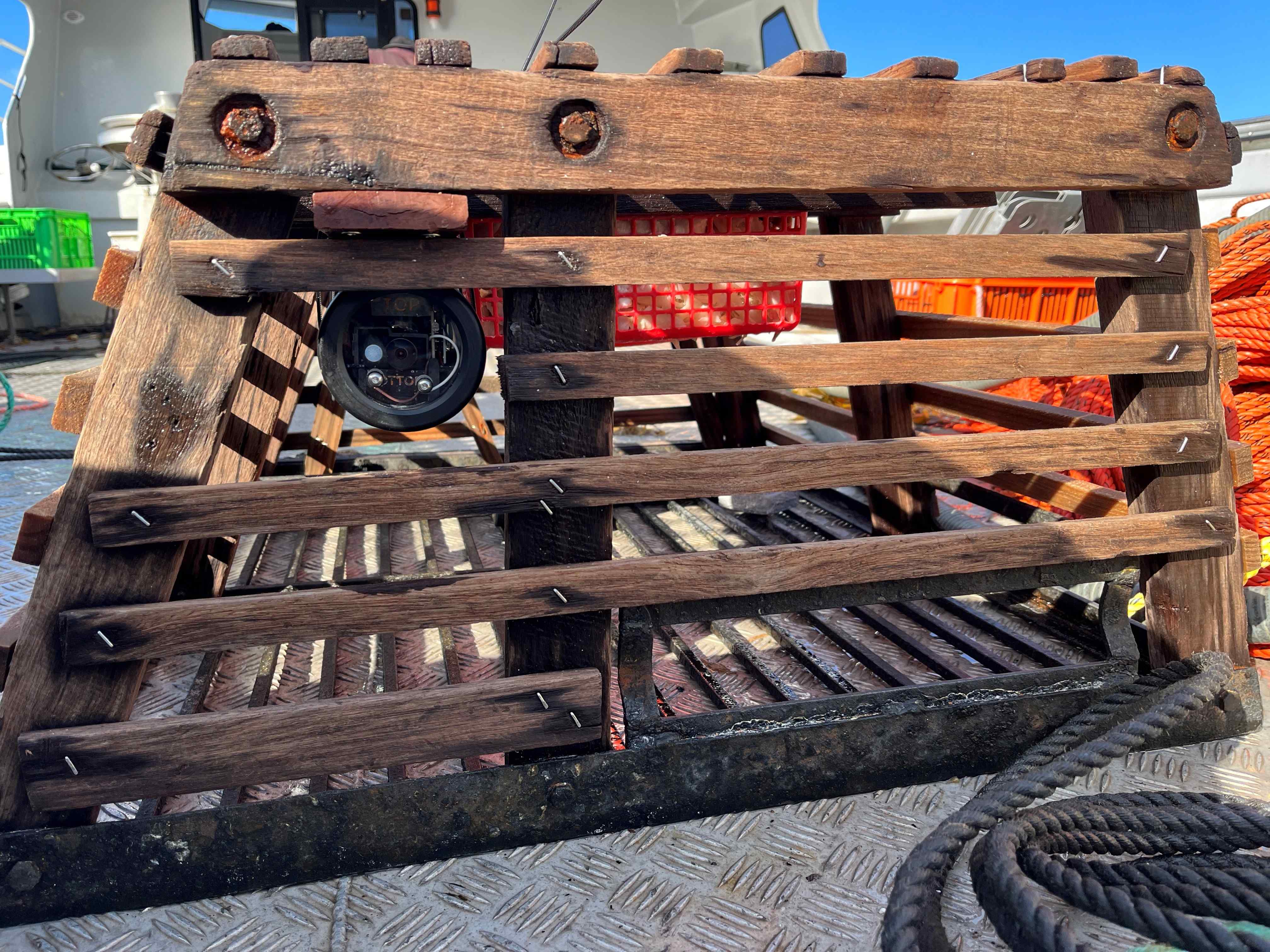
Two Esperance-based fishing vessels will ultimately have the high definition PotBOT cameras in their lobster pots that, when fishing, will provide an extraordinary view of various marine species and their ocean habitats.
The Southern Rock Lobster, Crystal, Giant and Champagne crabs are the species targeted off WA’s South Coast, so this extension of the X-Cray vision project will be important to investigate differences between the West Coast fishery for Western Rock Lobster that extends from Cape Leeuwin to North West Cape.
Department of Primary Industries and Regional Development (DPIRD) scientists can then review what the PotBOTs catch on camera, while the pots are fishing for lobsters and crabs, and upload location specific ocean floor vision to help them track the impacts of climate change and the movement of fish.
Principal Research Scientist Simon de Lestang said DPIRD’s PotBOTS research project was also gathering other valuable data including water temperature, depth and light attenuation.
“PotBOTS are providing a highly valuable way for us to view and understand stock dynamics, and it will be interesting to see what variations the new cameras off the South Coast will highlight,” Dr de Lestang said.
“As we’ve seen on the West Coast the sea floor environments can vary significantly.
“Along with the help of rock lobster fishers on both the West and now South coasts of WA, the project is supported by the Fisheries Research and Development Corporation (FRDC).
“FRDC’s help is enabling us to find out more about rock lobster recruitment, the distribution of fish fauna in response to warmer waters and the annual lobster whites migration, as well as when and what causes the timing of the whites moult.”
The PotBots research is also being done in collaboration with the University of WA’s Oceans Institute and the Western Rock Lobster council.
The X-Cray Vision is available online here and covers shallow water surveys close to the coast, as well as cameras in commercial lobster pots and those in deep sea crab pots.
On the X-Cray website, there is also detailed information on the life cycle of rock lobsters from the larval stage to juveniles, whites and adult lobsters and even the knowledge gaps about them, which the fisheries scientists are working to understand.
 Print this page
