


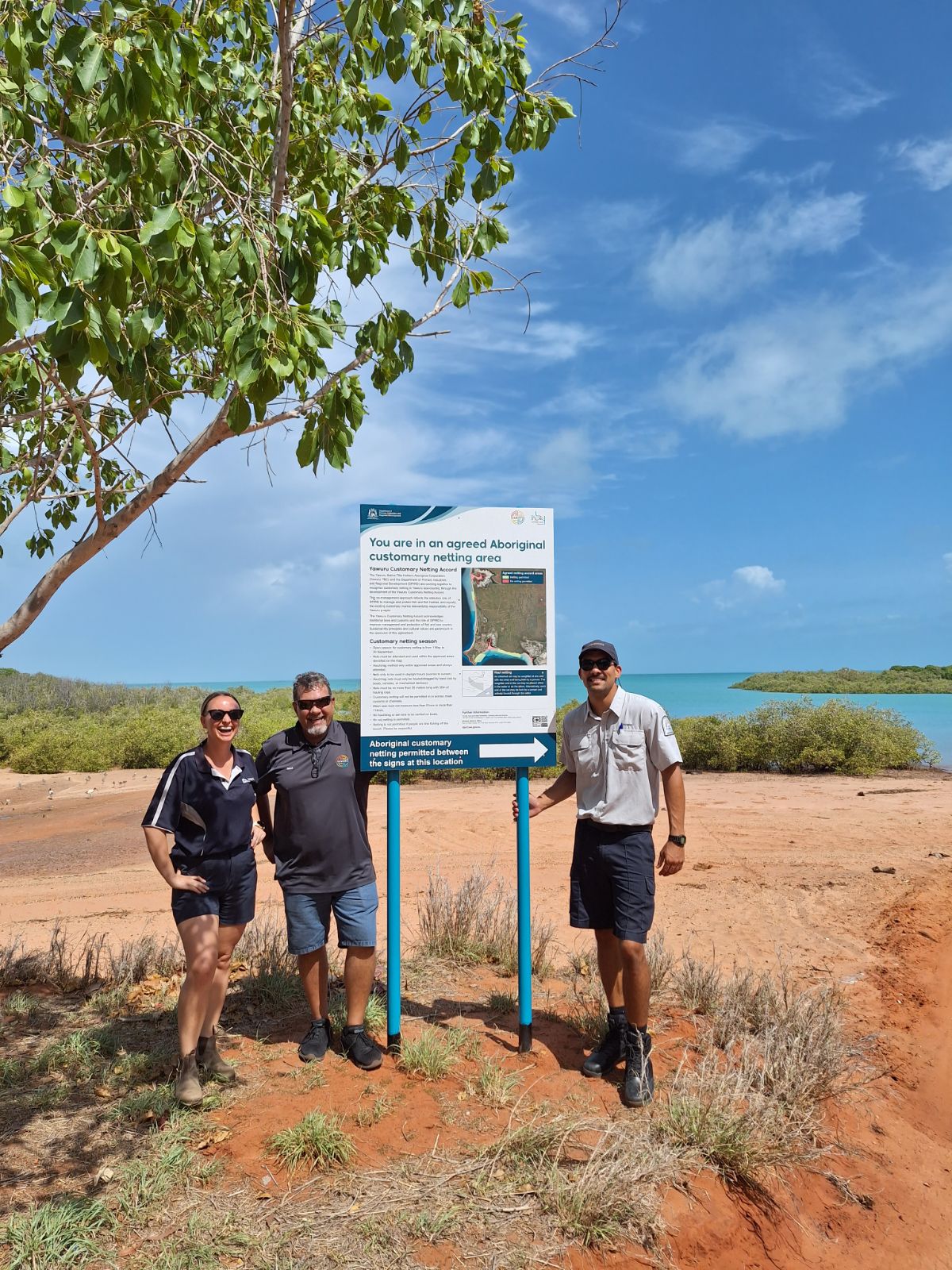
The new Accord is the first of its kind in Western Australia and has been co-designed by Yawuru and DPIRD to recognise unique customary fishing rights, as well as the common responsibilities of both parties to look after fish resources.
This Accord is focussed on customary netting in Yawuru Sea Country and delivers a combination of gear controls, designated netting areas and seasons that are consistent with cultural management practices in Yawuru’s Sea Country Management Plan.
DPIRD Principal Fisheries Management Officer Ben Fraser said the Accord was the result of a co-design process and was based on the shared responsibilities of Yawuru and DPIRD to look after the fish.
“Benefits of the Accord include clarity about rules that apply to customary netting in Yawuru Sea Country, improved relationships from working together and the contribution of traditional knowledge to joint research on fish stocks in Roebuck Bay,” Mr Fraser said.
Last year a netting research project involving DPIRD fisheries scientists, Yawuru Traditional Owners and rangers looked at key fish species in Roebuck Bay that may be impacted by netting.
Information from previous and planned joint research activities will inform Yawuru and DPIRD when it comes time to review the arrangements contained in the pilot Accord.
Yawuru Environmental Services Assistant Manager Dean Mathews said the Accord would allow seasonal netting, which remained particularly important for Yawuru at certain times of the year, when Walga Walga (blue-nose salmon) and Gulban (mullet) are in season.
“The combination of rules we have agreed to means customary netters can sustainably target the fish we enjoy, by using nets in areas and at times where impacts on juvenile fish and vulnerable species are minimised,” Mr Mathews said.
Signs have been erected in locations where customary netting is permitted to help explain the rules that apply, including a season that runs from May to September.
More information about the pilot netting arrangements is available on the Yawuru website or by contacting the DPIRD office in Broome.
 Print this page
