21/7/06
The Carpenter Government has joined other States and Territories in forming an alliance that will strengthen Western Australia's position in the Federation.
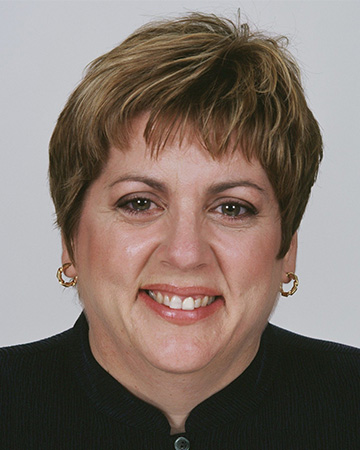
Speaking on behalf of the Premier, Minister Assisting the Minister for Federal Affairs Margaret Quirk said that every State and Territory was today announcing the formation of a new Council for the Australian Federation.
Ms Quirk said the historic formation of the new council - the first of its kind since Federation was formed in 1901 - would regenerate the political strength of our States and Territories.
"This new council will recognise that Australia is a continent, not just a country," she said.
"While recent COAG meetings have become co-operative and productive, we believe the establishment of this new Council for the Australian Federation will make it work even better.
"The council, which will meet two or three times a year, will become a clearing house for ideas and policy formulation.
"The reality is that the current arrangements for discussion, information-sharing, strategic negotiation and achieving consensus among States and Territories, are not well organised.
"This council is designed to give these important functions a formal structure, under a small secretariat based in Canberra, the cost of which will be shared among the States and Territories."
Members of the council would be each State and Territory leader, regardless of party political status.
In brief, the functions of the council would:
- find the best common position among States and Territories of COAG-based agreements with the Commonwealth;
- where appropriate, reach joint agreements on cross-jurisdictional issues where a Commonwealth imprimatur is unnecessary, or has not been forthcoming;
- develop better procedures for the States and Territories to share and exchange information and identify best practice policy and programs; and
- anticipate future developments within the Federal system, including decisions by the Commonwealth Government that might have a significant impact on the States and Territories.
The chairmanship of the council would rotate between Premiers and Chief Ministers on an annual basis.
"All States and Territories have agreed that while we support the national economy and a united Australian identity, the role of the Federation was never designed to diminish self-government at the State level," Ms Quirk said.
"This is not a case of the States and Territories ganging up on the Commonwealth but an acknowledgement that, in the second century of our Federation, there are increasingly complex matters on the agenda."
The Minister said the inspiration for the council's formation came from a recent meeting in Montreal, Canada.
Ms Quirk attended the meeting on behalf of the Premier, along with South Australian Premier Mike Rann, Victorian Premier Steve Bracks and representatives of other States and Territories.
"There, we were able to see first-hand the workings of Canada's Council of the Federation, formed in December 2003," she said.
"Canada's Federation Council, which comprises the 13 Canadian Provincial and Territorial Premiers, crosses party-political differences and unites to strengthen interprovincial co-operation, and exercise leadership on issues of importance to Canadians.
"Of all of the countries in the Commonwealth, Australia has most in common with Canada and we can learn a great deal from each other.
"This is why members of Canada's Council of the Federation have been invited to a meeting with Australia's Council of Federation in Adelaide in 2008."
Minister's office: (08) 9213 7000