3/11/06
A world-renowned Western Australian doctor has been recognised for his outstanding work in addressing one of the biggest killers of people in the developed world.
Professor Graeme Hankey, one of the world's leading doctors in stroke research, has taken out the highest honour at this year's Premier's Science Award tonight (November 3).
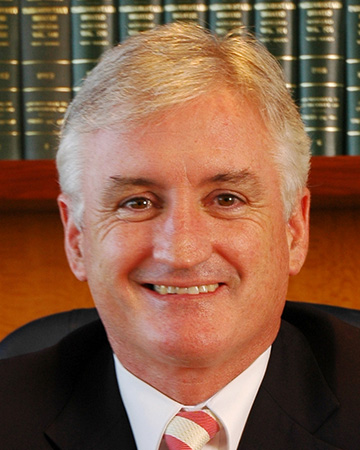
Professor Hankey, a consultant neurologist and head of the Stroke Unit at Royal Perth Hospital and clinical professor at the School of Medicine and Pharmacology at The University of Western Australia, has won the Premier's Prize for Achievement in Science.
Premier Alan Carpenter said Professor Hankey had devoted his life to finding better ways to diagnose, prevent and treat strokes.
"Professor Hankey is known around the globe as being at the forefront of treatment of stroke patients," Mr Carpenter said.
"His work is extremely significant, given that stroke is the third biggest killer and leading cause of severe disability in the developed world, affecting 17 million people.
"In Australia alone, more than 100 people a day have a stroke - a third of them will die and another third are going to be disabled."
Since 1999, Professor Hankey has led one of the world's most comprehensive clinical trials. Taking in a network of clinicians and research patients in 100 medical centres in 20 countries, the VITAmins TO Prevent Stroke (VITATOPS) trial is the only study comparing the effect of B-vitamin supplements with a placebo in preventing a recurrence of stroke.
The professor is also involved with the Perth Community Stroke Study which tracked a group of stroke survivors for more than a decade. It is one of only two such studies in the world.
For someone who almost did not study medicine and who could have given it up to focus on a promising football career, Professor Hankey has made a remarkable contribution to a devastating medical condition.
The professor said the tragedy of stroke was that it affected people suddenly.
"It is like being hit by a thunderbolt and a family loses a loved one and an income," he said.
"My patients give me new ideas every day; they make me think 'this is what we must do better'."
The Premier's Science Awards give the State's science community the opportunity to publicly celebrate, encourage and reward the best WA scientists, science teachers and science communicators. The awards are run by the Department of Industry and Resources through its Office of Science, Technology and Innovation in conjunction with Scitech.
The other category winners in the Premier's Science Awards are:
Premier's Prize for Early Career Achievement in Science 2006 -
Professor Mark Cassidy
By the age of 33, Professor Mark Cassidy has become a full professor at The University of Western Australia and director of the world-class Centre for Offshore Foundation Systems. Also a Rhodes Scholar, Professor Cassidy has built an international reputation in the field of offshore geotechnical engineering. His leading role in the Western Australian Energy Research Alliance pilot project and $1.4million in research grants show his firm commitment to the development of WA science.
Premier's Prize for Excellence in Science Teaching: Tertiary 2006 -
Christine Howitt
Christine Howitt is a lecturer in Primary Science Teacher Education at Curtin University of Technology. Her boundless passion for teaching science is evident in her innovative and refreshing curriculum. As a dedicated educator, she instils enthusiasm in her students and provides future generations with a better understanding of scientific processes and a positive attitude towards science.
Premier's Prize for Excellence in Science Teaching: Secondary 2006 -
Alison Siciliano
At Christmas Island's District High School, Alison Siciliano ensures science is taught throughout the school in a meaningful way. With a large student population of Chinese and Malay immigrants, she has been instrumental in creating a strategic plan for science teaching from Kindergarten to Year 10, catering for English as a Second Language learners.
Joint Winner Premier's Prize for Excellence in Science Teaching: Primary 2006 -Monique Hill
Monique Hill's dedication to science and the environment manifests itself in everything she does at Rossmoyne Primary School. She actively encourages students to experience real life science situations. She is involved in Primary Connections, a federally funded Science Literacy Program. Her efforts have elevated the status of science at the school.
Joint Winner Premier's Prize for Excellence in Science Teaching: Primary 2006 - Penny Kelliher
Penny Kelliher believes that no child should be excluded from learning and has applied this to her role as a science specialist and deputy principal at Leeming Primary School. She has developed a cross-curricular program for students with learning and behaviour management difficulties such as ADHD. As a result of this hands-on program these students have engaged science learning and returned to their classrooms.
Premier's Prize for Excellence in Science Communication 2006 - Fremantle Light and Sound Discovery Centre - Richard Rennie
Since 2003, Fremantle Light and Sound Discovery Centre has been communicating science from the WA Museum's Fremantle History facility. The centre demonstrates science concepts through a collection of rare and historic light and sound technologies and gadgets. The centre offers 25 educational programs for all learning levels, professional development for teachers and support for special events. Founder Richard Rennie has 37 years' experience as a science teacher, and uses his skills to inspire young people and young teachers alike and performs his role as a volunteer.
Premier's office: 9222 9475