Albany's residency museum given interim heritage listing
12/6/96 Albany's Residency Museum, which provides an important link with the town's convict era, is to be placed on the State Government's interim register of heritage places.
12/6/96
Albany's Residency Museum, which provides an important link with the town's convict era, is to be placed on the State Government's interim register of heritage places.
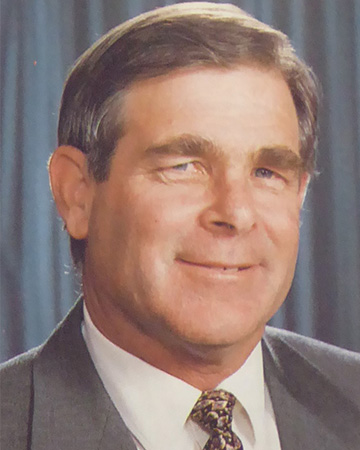
Heritage Minister Richard Lewis said the building's high heritage and historic values deserved recognition and the listing followed a recommendation from the Heritage Council of Western Australia.
Mr Lewis said the Residency Museum was home to Albany's Resident Magistrates for 80 years.
"The Residency Museum reflects the rich history and development of the town and is highly valued by the local community," he said.
The Minister said in March 1852, a convict depot was erected on the site of Major Edmund Lockyer's first landing at Albany.
From 1854 to 1856, the depot comprised convict cells, barracks, commissariat store, administration block and superintendent's residence.
The convict depot was closed in 1872 and the barracks and store were converted into a home for Albany's Resident Magistrates.
"The buildings were used for this purpose for 80 years," Mr Lewis said.
"It was one of the focal points of the town's social life and was used for functions such as balls, weddings, tennis and tea parties.
"In the 19th century, the position of magistrate was one of social eminence. As such, Residency Museum was built to reflect the status of the magistrate."
Mr Lewis said the residency was closed in 1953 and for many years was used variously as a school hostel, a naval depot and training facility.
In 1975, after renovations, Residency Museum was opened as the first branch of the Western Australian Museum outside of the metropolitan area.
"The Residency Museum has been the site of a number of significant events since then," Mr Lewis said.
"The Queen visited Residency Museum in 1977 and Major Lockyer Park was the starting point for the baton relay to Brisbane in the 1982 Commonwealth Games.
"The museum also acquired the Mills Collection of Chinese Porcelain, which is regarded as a major asset.
"The building has also been restored with the asbestos roof replaced with shingles."
A single-storey masonry building with a timber-framed roof, Residency Museum is located on the west side of Residency Road, south of the railway line.
Built in Victorian/Georgian style, it has remained relatively unaltered and as such has high aesthetic value.
Mr Lewis said residencies of that age were also comparatively rare in WA.
Media contact: Bronwyn Hillman 222 9595 or 221 1377