Published
6 November 1998
Ministers

6/11/98
Thousands of Western Australian students will sit down on Monday to start their Tertiary Entrance Examinations, with some taking the exams in places as far away as Germany and Jordan.
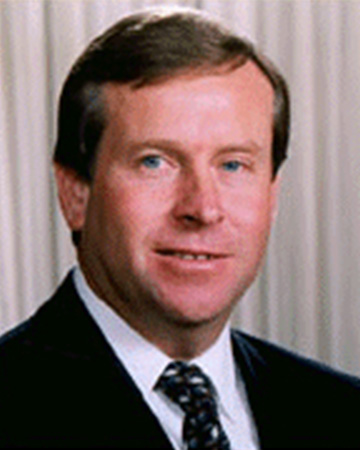
Education Minister Colin Barnett today gave his best wishes to the students for the 13-day exam period, ending on Wednesday, November 25. He said he was very confident that students in both Government and non-Government schools would continue to perform well, as they had done in the past.
Mr Barnett said more than 13,000 students would sit the exams in more than 150 exam centres, mostly in WA. The number of students sitting the exams had increased this year by 2,000, with the main reason being that students were taking two or three TEE subjects in conjunction with vocational and other school-based subjects.
"Our TEE students are scattered not only around WA but in other parts of the country and also in overseas locations such as Malaysia, Indonesia, California, Japan and Thailand," the Minister said.
English remains the most popular subject this year with 8,442 students planning to sit the exam. Discrete and applicable mathematics come in second and third with 6,522 and 5199 students respectively.
Other popular subjects include Geography with 4,606 students and Human Biology with 4,577.
At the other end of the scale, four students are sitting the Japanese advanced subject in its first year as a TEE subject and 12 students are sitting modern Greek in its second year.
There are also a number of 'firsts' in this year's exams.
"Students will sit one fewer exam this year than in previous years with the Australian Scaling Test (AST), which all students previously sat to assist with the scaling of marks, replaced by a process known as the Average Marks Scaling (AMS) system," Mr Barnett said.
"A series of trials on WA's 1995, 1996 and 1997 TEE results showed that the AMS system achieves almost identical results to the AST.
"The advantage of the AMS, however, is that it saves students the stress and effort of sitting an additional exam and it saves taxpayers the substantial cost of administering the exam."
For the first time, graphics calculators will be allowed in the maths, chemistry and physics exams, with maths students also allowed take minimal notes into their exam. The introduction of graphics calculators is aimed at ensuring that students are able to adapt to the tools of the future. It is expected that in the next five to 10 years, computers and the Internet will also be commonplace.
In the language area, students studying German will, for the first time, be able to take dictionaries into their exam. Dictionaries are already allowed in Indonesian, Chinese and Modern Greek. Next year, dictionaries will also be used in French, Italian and Japanese exams.
"These changes are in line with education trends that aim to take the focus away from the facts a student can memorise, to being able to access, analyse and use knowledge," Mr Barnett said.
The TEE is administered by the Curriculum Council of WA. The organisation of the exams is a massive exercise.
Over the next 13 days more than 58,000 exam papers will be distributed in 32 subjects. The writing of the exam papers has involved more than 100 people over the past 10 months. Over 550 people are involved in the supervision of the examinations and more than 600 teachers and university lecturers are involved in the marking of the exams.
Marking of papers will be complete in mid-December and results available on the TISC phone line, 1901 191 091, from December 28.
"All year 12 students, regardless of whether or not they have applied for university, are able to ring the TISC line to find out their subject grades, results, TEE scores and their eligibility for university," the Minister said.
"The phone line will require students to input personal identification data before they receive any results and will allow everyone to access their results at the same time, rather than having to wait for details in the mail, which for students in regional areas takes longer than those in the city."
Mr Barnett said that the TEE examination period could be particularly stressful for students and parents.
"The whole of the family feels the strains and the anxieties during the exam period. My advice is for everyone to have a good night's sleep, to eat well and be prepared, and make sure everything you need for the exam is ready to go in plenty of time," he said.
Media contact: Justine Whittome, Office of the Minister for Education, (08) 9222 9699 Paul Albert, Curriculum Council of WA, (08) 9273 6300