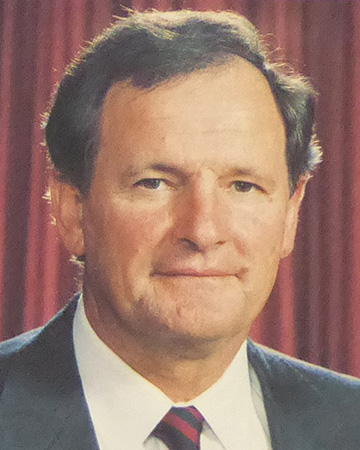
Board appointments to Wheatbelt Development Commission
8/4/94Deputy Premier and Minister for Commerce and Trade Hendy Cowan today announced board appointments to the newly constituted Wheatbelt Development Commission.
8/4/94
Deputy Premier and Minister for Commerce and Trade Hendy Cowan today announced board appointments to the newly constituted Wheatbelt Development Commission.
The new board's chairman is Mr John Parry, the Mayor of Narrogin.
His deputy will be Mr Ted Rowley, regional manager of the Department of Agriculture, from Northam.
Mr Cowan said that Western Australia would have a new, more broadly representative, regional development structure under arrangements which came into effect today.
From today, non-metropolitan WA would be covered by a network of nine regional development commissions, each with their own newly appointed boards of management.
"Making regional development more community-driven was a major element of this Government's election platform and we now have in place the means to realise this goal," Mr Cowan said.
"From today, all existing statutory regional development authorities and commissions will be re-formed as commissions and will have the same legislative structure."
He said there were three categories of board appointments - those nominated as community representatives, local government representatives and ministerial appointments.
Board members of the Wheatbelt Development Commission are:
· Mr John Parry (Ministerial) and Mr Ted Rowley (Ministerial).
· Mr Jim Lee, health services manager, of Dalwallinu (Community).
· Cr Mervyn Collinson, fisherman, of Jurien (Community).
· Ms Judy Rutherford, journalist and farmer, of Bruce Rock (Community).
· Cr Sylvia Brandenburg, farmer of Lake King (Local Government).
· Cr Colin Adams, farmer, of Moora (Local Government).
· Cr Ken Nilsson, mine manager, of Bullfinch (Local Government).
· Cr Ivo Davies, farmer, of Wyalkatchem (Ministerial).
Mr Cowan said that provision was made for ministerial appointments to ensure representation on the boards was as broadly-based as possible, without becoming too cumbersome.
In some cases, people serving as community representatives might also be involved in local government.
This meant that on an overall statewide basis, 52 per cent of available positions had gone to people with some connection to local government.
"One of the main differences between the new commissions and those which preceded them is the greater voice given to local government," Mr Cowan said.
"The new structure will give local communities a greater say as to the type of development they want to attract to their areas.
"I have also made it very clear to the commissions that their major focus is to be on economic development of their regions, rather than social issues which are best left to the appropriate Government departments.
"The new commissions should go a long way to ensuring that communities themselves - rather than Government bureaucrats - guide the development course for their particular region.
"It is not my intention to create a large new bureaucracy and I urge all interested members of the community to approach development commissions with their views and proposals for future development. The commissions belong to them."
Media contact: Peter Jackson 222 9595