Published
22 September 1993
Ministers

22/9/93
The State Government has unveiled a package of major transport and planning initiatives aimed at ensuring Perth's continuing development as a vibrant and diverse capital city.
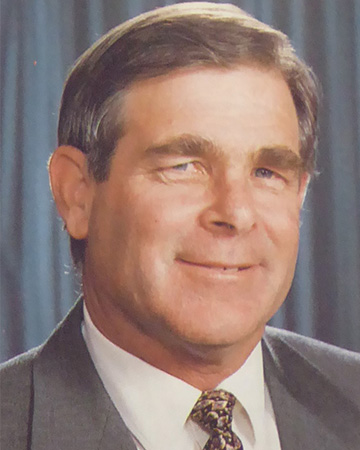
Planning Minister Richard Lewis today released the Burswood Bridge and Road Study which details a range of planning and transport measures the State Government will consider implementing to cope with Perth's future traffic needs.
The report warns that in the future Perth city risks becoming choked by increasing traffic, unless changes are made to the present road transport system.
The study states that unless new roads are built in the next few years, more than 130,000 vehicles will use the causeway by the year 2021.
The study strongly recommends the construction of an east-west road link north of the city and the building of a new third major river crossing east of Perth.
The report recommends the State Government consider two bypass options connecting Great Eastern Highway and Orrong Road in Rivervale to the Mitchell Freeway in Leederville.
Releasing the report in Perth today, Planning Minister Richard Lewis said the State Government would consider both options and was keen for the public to debate the choices.
The two bypass options are:
· the construction of a $235 million twin tunnel connection with three lanes in each direction that would extend from Stirling Street to west of Beaufort Street and from Lake Street to Fitzgerald Street; and,
· a $155 million above-ground connection, again with three lanes in each direction, that would extend from the Mitchell Freeway in Leederville, along Newcastle Street, eventually connecting with Orrong Road and Great Eastern Highway in Rivervale.
Mr Lewis said the State Government accepted the need for a third city river crossing and a better city bypass and access facilities north of the city.
"Traffic within the Perth central area must be restricted if we want to put life back into the city," he said.
However, Mr Lewis said the two bypass options were part of a total package of measures aimed at improving the Perth central city area and the metropolitan region.
He said the report also recommended a number of other solutions to some of Perth's most pressing transport and planning issues, such as:
· limiting all-day commuter car parking in the central city area;
· a new inner city mass transit public transport system, such as electric buses;
· the introduction of new traffic management measures on city streets; and
· the introduction of dedicated bus lanes on the Causeway.
"This study is not just about a new bypass road and bridge north of the city," he said.
"It is about guaranteeing the accessibility and long-term future of Perth so that it continues to grow as the financial, entertainment and cultural centre of the State."
Mr Lewis said the report complemented the recently released findings by eminent Danish planner Professor Jan Gehl, whose principal recommendation was also to redirect through traffic from the central city area.
"By building the bridge and the bypass we will take this traffic off city streets, creating a more attractive place for pedestrians and encourage the use of public transport," Mr Lewis said.
"For example, if we can lessen the traffic on Riverside Drive, which the report says we can, then the public will again have access to the city's foreshore."
Mr Lewis said that the report was now available for public comment and that Government would not make a final decision on either of the bypass options before all submissions and comments had been considered.
A model of the proposals will be on display at the Perth GPO from today.
Media contact: Paul Plowman 222 9595 or 221 1377