Published
20 November 1996
Ministers

20/11/96
The Coalition has today reaffirmed its commitment to improving the educational opportunities and achievements for Aboriginal students in Western Australia.
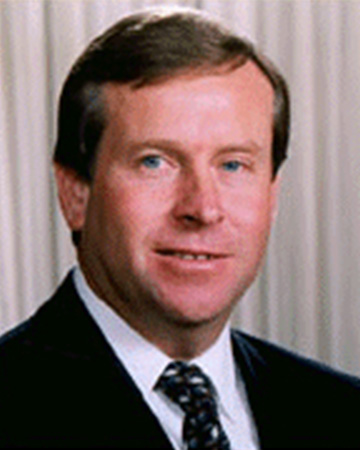
Releasing the Aboriginal Education policy today, Education Minister Colin Barnett said the Coalition Government would continue to place high priority on improving educational standards among Aboriginal students.
Mr Barnett said current standards of Aboriginal education in Western Australia were unacceptable to the Coalition, despite more than $540 million being directed into the education of Aboriginal students in WA by State and Federal Governments since 1990.
The Coalition Government would redistribute existing funds into areas concentrating on early childhood education, post-compulsory education and those programs which realised real improvements in the educational outcomes of Aboriginal students. More of a focus on teaching and curriculum would also be given.
"The Coalition Government recognises that educational achievement is a pre-requisite for improved socio-economic conditions for Aboriginal children," the Minister said.
"The new strategies the Coalition Government will implement will be practical, achievable and developed in conjunction with Aboriginal people to focus on improvements in attendance rates and educational outcomes. There will also be a strong focus on integrating Aboriginal culture and customs into schools in co-operation with local communities."
A Coalition Government will:
· from 1997, make available to all schools an Aboriginal studies program for kindergarten to year 10. This program will be optional but the Government will strongly encourage all schools to implement it in a way which most suits the needs of its students;
· develop a student monitoring system to track the movements of Aboriginal children in rural and remote areas to improve attendance rates and help provide continuity in education;
· transfer responsibility for Aboriginal pre-schools to the Education Department, where there is agreement with the local Aboriginal community;
· reallocate resources significantly increase the number of Aboriginal Education Workers (AEWs) in Government schools;
· encourage more Aboriginal people to become teachers by introducing a new career structure for AEWs to become fully qualified teachers;
· introduce a cross-cultural program for teachers, incorporating a core unit on Aboriginal culture which, through the input of local Aboriginal people, is adapted to reflect local culture and customs;
· through negotiation with WA's universities, require all Education Department teachers to undertake an Aboriginal Studies unit in pre-service teacher education courses;
· offer a designated number of scholarships each year to Aboriginal students completing year 12 to undertake undergraduate studies in teacher education, as part of a scholarship program to attract young, talented school-leavers to the teaching profession;
· increase the number of Aboriginal students completing and passing the TEE and entering higher education courses by progressively expanding the Aboriginal and Islander Tertiary Aspirations Program;
· work with Aboriginal communities to establish an Aboriginal systemic school in Perth, catering for Aboriginal students, offering programs from kindergarten to year 12 and focusing on Aboriginal studies, culture and language;
· work with local Aboriginal communities to examine the possibility of establishing week-day hostel accommodation for Aboriginal students, initially focusing on communities in Carnarvon and Geraldton, with the view to establishing hostels in other areas throughout the State where it is appropriate and wanted by local Aboriginal communities;
· make available to students, teachers and parents a CD-Rom information package on Otitis Media (commonly known as 'glue ear'), a condition which affects the educational performance of many Aboriginal children;
· implement an Aboriginal English project in conjunction with Edith Cowan University to examine the effectiveness of English programs undertaken by Aboriginal students;
· continue the Aboriginal Education and Training Awards of Excellence, inaugurated in 1995; and -
· promote school-business partnerships such as that established between the Government and Hamersley Iron in Karratha where Aboriginal children receive concentrated literacy and numeracy education in school and are provided with employment with Hamersley Iron on completing school.
Mr Barnett said the key to the Coalition's Aboriginal Education policy was that it had been designed in consultation with the Aboriginal Education and Training Council (AETC), the body established in 1995 to provide independent advice to the Minister for Education on all aspects of Aboriginal education.
The AETC provided a forum for Aboriginal people and their communities to provide policy advice on Aboriginal education and work at the highest level of policy development. It comprised cross-agency representatives and Aboriginal community members.
Mr Barnett said all new initiatives except Aboriginal hostels, scholarships for year 12 Aboriginal students and funding for Aboriginal pre-schools would be funded by a re-allocation of monies already in the Education Department's existing budget.
The Minister said he was confident that the Aboriginal Education initiatives of the Coalition would improve the current standards of Aboriginal education in WA.
"Only about 20 per cent of Aboriginal students in WA continue to year 12, compared with 72 per cent for non-Aboriginal students," he said.
"Approximately 20 per cent of six to 14-year-old Aboriginal children in WA are not attending an educational institution, while it is estimated that between 1,500 and 1,800 secondary-aged Aboriginal children in WA's remote areas are not attending school.
"These statistics are unacceptable. The Coalition is committed to working closely with Aboriginal communities, listening to their individual needs and situations, and together, improving the educational achievements of Aboriginal children."
Media contact: Justine Whittome (09) 222 9699