Findings of report on Perth population
4/1/94More than 73 per cent of the State's 1.
4/1/94
More than 73 per cent of the State's 1.6 million-strong population is opting for the benefits of city life and settling in Perth, according to a State Government report released today.
The figure is contained in the Department of Planning and Urban Development's Demographic Monitoring Report No 4, which plots the State's population changes from 1976 to 1991.
The report says that Perth's share of the population to 1991 of 1,188,762 has increased steadily from about 116,181 (40 per cent) in 1911 and 302,968 (60 per cent) in 1947.
Areas which have shown the greatest growth include the Northern corridor suburbs of Wanneroo and Stirling, the North-East corridor areas in the Shire of Swan and the South-West Corridor suburbs of Cockburn, Kwinana and Rockingham.
Despite Perth's growing dominance, the total population of the State's country regions approached almost 450,000 by 1991 and is expected to eclipse the half a million mark by the turn of the century.
The fastest-growing country regions between 1986 and 1991 were the South-West, including Mandurah and Bunbury. This was followed by the South-Eastern region taking in Kalgoorlie-Boulder.
The Midlands region, incorporating Northam and York, also showed a positive turn around, with significant increases in the number of people living in those areas.
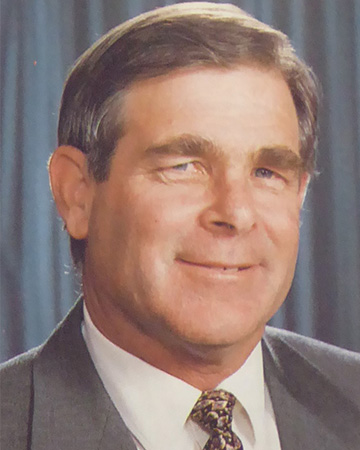
Planning Minister Richard Lewis said the population growth in the metropolitan area underlined the need for the Government's program of providing more housing land.
"With nearly 47 per cent of Perth's population living and working in the outer suburbs there is a real need to provide more zoned land for housing so that prices remain affordable," he said.
"The Government has almost completed all of its initial program that will see the creation of more than 90,000 new housing lots as well as more than 7,000 hectares set aside for conservation."
However, Mr Lewis said the change in population distribution had also revealed a need to look at long-term planning for the State's regional centres.
The Government was working on a Statewide planning strategy which would create new employment, housing, educational and recreational opportunities in regional areas.
"Although we have to accept that Perth is going to continue to grow, there is a clear need to establish strategies that will ease the pressure on the metropolitan region in the long term," he said.
"Part of that process will be a planning strategy which will make regional centres a more than attractive alternative to living in Perth."
Mr Lewis said the State planning strategy would be one of the principal tasks of the new Western Australian Planning Commission, which would be set up later this year.
Copies of the Demographic Monitoring Report are available from the Department of Planning and Urban Development at a cost of $10.
Media contact: Paul Plowman 222 9595