Interim Heritage Listing for Robb Jetty chimney
23/8/96 The State Government has moved to protect the sole remaining structure of the Robb Jetty abattoir.
23/8/96
The State Government has moved to protect the sole remaining structure of the Robb Jetty abattoir.
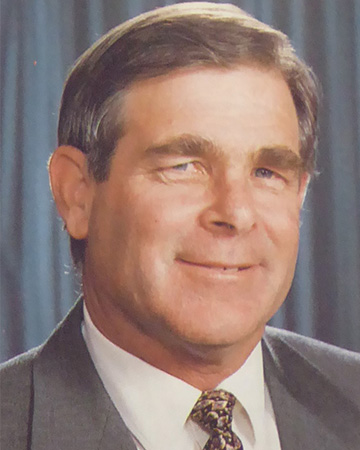
Heritage Minister Richard Lewis said the Robb Jetty chimney would be placed on the State Register of Heritage Places on an interim basis by the Heritage Council of Western Australia.
Mr Lewis said the chimney, built in 1919, was a significant landmark in the industrial area south of Fremantle.
He said it was also an important visual reminder of the former abattoir complex and contributed to the community's sense of place and history.
"Both as an industrial complex and a major source of employment, the former abattoir established an identity which the community closely associated with the South Fremantle area," Mr Lewis said.
"The abattoir, and the associated landing place for cattle and sheep from stations in the North, was for more than 100 years a significant part of the State's meat industry."
The State Government's recognition of the chimney's heritage values has been complemented by funding of $50,000 from Landcorp for restoration. Future maintenance will be carried out by the Cockburn City Council.
Mr Lewis said the coastal strip between Fremantle and Coogee had a long association with the meat industry, with abattoirs appearing as early as the 1850s to service the convict establishment at Fremantle Gaol.
"By the turn of the century the immediate area of Robb Jetty was home to the slaughterhouses of Forrest, Emanuel and Company, as well as Connor, Doherty and Durack," he said.
"These two companies were dubbed the 'Kimberley Meat Ring', because of their monopoly of metropolitan and Goldfields meat supplies.
"The animals were initially off-loaded into the water and forced to swim to shore, but later, when Robb Jetty was built, the stock were off-loaded on to the pier."
The Robb Jetty abattoir was built around 1919 and initially operated under the name 'Fremantle Freezing and Meat Works'.
The original buildings included a cold store, boiler house, engine room, by-products rendering room and administration office. The abattoir's capacity in the early years was limited, allowing it to slaughter only a few thousand lambs per year, compared with the thousands per day at the time of its closure.
In its early years, the abattoir also cold-stored potatoes and fruit, manufactured ice and carried out wool scouring.
Mr Lewis said that by 1940, the company was in financial strife and the Commonwealth Government stepped in to provide help.
By 1942 Robb Jetty had been unable to sort out its problems and the State Government bought it out, changing its company name to 'Western Australian Meat Preservers' and later 'Western Australian Meat Exporters'.
After the State takeover, the abattoir was diversified to include fruit storage and egg pulp, turtle and crayfish processing.
Despite numerous attempts at reviving the abattoir's competitiveness, it was closed in 1992 and two years later all plant and equipment was removed from the building.
Mr Lewis said the site had now been redeveloped and the chimney, which had been retained in its original position, would serve as a lasting reminder of the area's rich history.
"As the sole remaining structure of one of the State's major abattoirs and industrial complexes, the Robb Jetty chimney is worthy of recognition for its heritage values," he said.
Media contact : Bronwyn Hillman 222 9595, 221 1377