Legislation dealing with regional development
4/11/93Legislation paving the way for a new era in regional development in Western Australia has been outlined in State Parliament.
4/11/93
Legislation paving the way for a new era in regional development in Western Australia has been outlined in State Parliament.
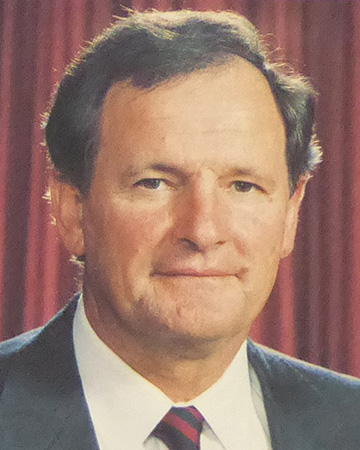
Deputy Premier and Minister for Commerce and Trade, Hendy Cowan, said that the Regional Development Commissions Bill would put all such statutory bodies on an equal legislative footing and help ensure that regional development was no longer pursued in an ad-hoc manner.
"Most importantly, the legislation will shift the emphasis in regional development decision-making away from the centralised bureaucracy to the regions themselves - in other words, regional development will become more community-driven," Mr Cowan said.
Delivering his second reading speech on the Bill in the Legislative Assembly today, Mr Cowan said that all areas of the State would in future be covered by a network of regional development commissions.
"Under previous arrangements, some parts of the State were represented by authorities, others by commissions and others by departments," he said.
"These various bodies will - upon passage of the Bill - all become commissions with the status of a body corporate with perpetual succession of board membership.
"That will have the effect of formally putting in place nine regional development commissions across the State - Gascoyne; Goldfields-Esperance; Great Southern; Kimberley; Mid-West; Peel; Pilbara; South-West and Wheatbelt."
Mr Cowan said it would be the role of the commissions to co-ordinate and promote the economic development of the regions they served. More specifically, their aim would be to:
· Maximise job creation opportunities in their region.
· Develop and broaden the economic base of their region.
· Identify infrastructure services needed to promote economic and social development in the region.
· Provide information and advice to promote business development.
· Seek to ensure the general standard of government services and access to them was comparable with the metropolitan area.
However, the legislation limits the powers of commissions in respect to business undertakings and land or property development and specifically removes the borrowing powers provided under existing legislation.
Mr Cowan said that with the Federal Government belatedly showing a greater interest in regional development it was important there was a more coherent and co-ordinated approach to regional development in Western Australia.
He said each commission would have its own director and board of up to nine members. There would be an equal ratio of members nominated by local government; the general community and members appointed at the Minister's discretion.
"The members appointed by the Minister will be chosen to ensure that the board membership represents the broadest possible cross section of regional interests," he explained.
"The board membership provisions underline the vital role played by local government in the development of regions. As well as having members nominated by local government, it could be anticipated that other members would have strong local government backgrounds as well.
"There has been extensive consultation with the WA Municipal Association and a large number of other organisations and individuals during the course of preparation of the legislation."
Mr Cowan also said there was provision in the legislation for establishment of a peak advisory body - to be known as the Regional Development Council - to advise the Minister on major regional development issues. The council would include the chairperson of each development commission.
Media contact: Peter Jackson 222 9595