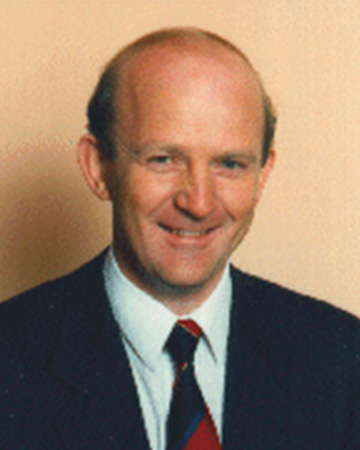
Minister announces increases in hospital funding
31/8/00 Health Minister John Day announced today increases in hospital funding of up to 8.
31/8/00
Health Minister John Day announced today increases in hospital funding of up to 8.75 per cent in metropolitan areas and 11 per cent in rural areas.
"Hospitals in the metro area will get an average increase of 4.2 per cent, while rural hospitals will receive an average 4.6 per cent boost," Mr Day said.
The Minister said this year's State health expenditure would be a record amount of $1.922 billion, an increase of $702 million since the Coalition Government was first elected in 1993.
The average annual increase in the health budget for each year of the Coalition Government was 7.2 per cent, compared with 3.8 per cent for the last three years of the Labor Government.
Mr Day said the Cabinet Budget Committee had agreed to make an additional $32 million available to further increase and improve health services in metropolitan and rural areas. This was part of a $118 million increase over 1999-2000, which included initiatives in the metropolitan and rural areas.
The Minister said a decision had also been taken by the State Government to meet the Fringe Benefits Tax costs associated with salary packaging in the public health services and the funding was being negotiated with the Commonwealth Government.
A total of $1,167.5 million has been allocated to metropolitan health services and $357.9 million to rural health services.
Mr Day said health was a key priority of the Coalition Government, and represented the largest share of total State expenditure.
"About a quarter of the State's budget is devoted to public health services for Western Australians," he said.
"This Government continues to spend more on health than any other State on a per capita basis - approximately $1,000 per person per year, according to the Grants Commission.
"Our focus is on all public hospitals and health services in WA, from the busiest city hospitals to community health services in remote areas.
"The additional metropolitan hospital funding will enable new developments and initiatives in areas such as public health and community health, hospital after care and hospital in the home."
This would include new public health units in the north and south metropolitan areas and increased speech therapy and language services, as well as specialist services for families and children.
"The Government recognises that to really improve the health of our community, we need to spread our focus beyond our hospitals, to the community sector and preventative programs," Mr Day said.
"Improvements in technology and health services mean many people are spending less time in hospital than they used to a decade ago, and need better access to health services closer to home."
A total funding allocation of $1,070.3 million will be provided to the Metropolitan Health Service (MHS). This will allow metropolitan hospital budgets to increase from between 2.6 per cent and 8.7 per cent over last financial year.
"The MHS is now in a position to provide enhanced services, particularly in patient after-care and improved discharge planning," the Minister said.
Mr Day said rural health was also a key State Government priority.
"The extra $13.3 million for rural health services is part of the Government's policy of providing health services closer to home for all Western Australians, no matter where they live," he said.
The Minister said rural health funding of $337.4 million for health service activity included a special pool of $11 million for some patients who might need to stay in hospital longer than the average length of stay.
A further $20.5 million, available for special repairs and equipment, wait list activity and minor capital works, was also included in the total rural allocation of $357.9 million.
The budget boost would enable increased funding for the Patient Assisted Transport scheme, additional services in coastal areas such as Kalbarri, Lancelin and Jurien, the operation of a satellite renal dialysis unit in Port Hedland and the establishment of a satellite service in Broome.
"The increased investment in rural health and the Central Wait List Bureau has also seen the beginnings of sustainable reconfiguration of the health system," the Minister said.
"Of great credit to the Central Wait List Bureau and the clinicians and managers involved are the increased number of rural patients receiving their operations closer to home, when only two years ago their only choice was to travel to Perth for these procedures."
Mr Day said the health system would also manage the impact of Commonwealth changes to Fringe Benefits Tax legislation, which would affect the salary packaging arrangements of many of the State's public health employees including doctors, nurses and allied health staff.
The Commonwealth Government is making $240.5 million available nationally over three years to compensate those States affected by the changes. The Health Department of WA is in the process of negotiating funding with the Commonwealth Department of Health and Aged Care.
The State Government will meet Fringe Benefits Tax costs arising from pre-existing salary packaging arrangements for the life of current industrial agreements.
Mr Day said the Government's commitment to public health services reinforced WA's enviable health position.
"Western Australians are among the healthiest people in Australia, and in the world," he said.
"We aim to continue and to improve on this reputation."
Media contact: Hugh Ryan 9213 6600
Details of health service allocations follow:
MHSB ALLOCATION TO HOSPITALS
Health Services | Initial Net Base | per cent Change on Previous Outturn |
| Fremantle | 138.7 | 3.14 per cent |
| KEMH/PMH | 142.7 | 4.47 per cent |
| Royal Perth Hospital & Inner City | 270.6 | 2.99 per cent |
| Sir Charles Gairdner Hospital | 192.5 | 3.89 per cent |
| Armadale | 35.2 | 8.75 per cent |
| Bentley | 41.0 | 4.51 per cent |
| Dental Services | 35.7 | 4.15 per cent |
| Graylands | 48.9 | 4.67 per cent |
| Kalamunda | 9.6 | 4.17 per cent |
| North Metropolitan | 46.9 | 2.60 per cent |
| Rockingham | 22.3 | 6.22 per cent |
| Swan | 39.8 | 4.90 per cent |
 | | |
ALLOCATIONS TO RURAL HEALTH SERVICES
Health Service Agreements with HDWA | 2000/01 | per cent Change on Previous Outturn |
| Avon | 10.4 | 4.00 per cent1 |
| Bunbury | 30.4 | 3.16 per cent |
| Central Great Southern | 8.7 | 11.17 per cent |
| Central Wheatbelt | 6.1 | 7.82 per cent |
| East Pilbara | 25.2 | 6.04 per cent |
| Eastern Wheatbelt | 9.4 | 6.94 per cent |
| Gascoyne | 14.9 | 3.09 per cent |
| Geraldton | 21.0 | 0.84 per cent2 |
| Harvey/Yarloop | 3.3 | 2.93 per cent |
| Kimberley | 47.0 | 3.43 per cent |
| Lower Great Southern | 27.4 | 3.79 per cent3 |
| Midwest | 8.8 | 37.03 per cent4 |
| Murchison | 3.0 | -0.59 per cent2 |
| Northern Goldfields | 34.2 | 3.27 per cent |
| Peel | 7.9 | -6.31 per cent5 |
| South East Coastal | 9.8 | 6.18 per cent |
| Upper Great Southern | 15.8 | 6.01 per cent |
| Vasse Leeuwin | 14.2 | 8.02 per cent6 |
| Warren Blackwood | 10.9 | 5.94 per cent |
| Wellington | 7.6 | 1.27 per cent |
| West Pilbara | 14.0 | 3.26 per cent |
| Western | 7.4 | 5.47 per cent7 |
| Other Non-recurrent funding | 20.5 | |
2 Mental health funds now held by Midwest Health Service as host.
3 Some Public Health Unit funds transferred to Vasse Leeuwin Health Service.
4 Host Health Service for mental health services in the Central Region.
5 Allocation not yet finalised.
6 Public Health unit funds transferred from Lower Great Southern Health Service.
7 Host Health Service for mental health services in the Coastal Region.