More than $20 billion to be spent on petroleum projects up to 2005
23/7/97 More than $20 billion is forecast to be spent on the development of major petroleum projects and expansion of existing projects in Western Australia between 1999 and 2005.
23/7/97
More than $20 billion is forecast to be spent on the development of major petroleum projects and expansion of existing projects in Western Australia between 1999 and 2005.
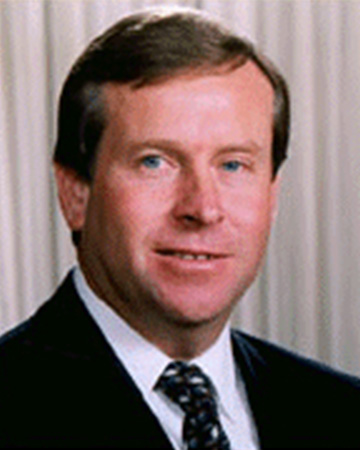
Resources Development Minister Colin Barnett said the figures were contained in the latest issue of one of the Department of Resources Development's flagship productions, the Western Australian Oil and Gas Review of June 1997.
"The expansion of Asian liquefied natural gas (LNG) markets, particularly in Japan and Korea, has created a major opportunity to capitalise on WA's excellent LNG production record," Mr Barnett said.
"In view of these major petroleum developments, Western Australia will become one of the leading LNG suppliers to the 'tiger' economies in Asia and the State's LNG production level could be between 20 and 25 million tonnes per annum by 2010."
The North West Shelf Gas Project (NWSGP) partners have plans to spend about $8 billion on expanding its LNG, condensate, LPG and DomGas (domestic gas) production facilities on the Burrup Peninsula.
This includes the construction of a second offshore trunkline, to be commissioned in mid-2000, and debottlenecking of the two existing DomGas plants, as well as expansion of LNG capacity from 7.5 to 14.5 million tonnes pa.
The NWSGP planned LNG expansion, involving the construction of two new LNG trains (trains four and five), is based on the expectation of signing a long-term agreement with its eight Japanese LNG buyers in 1998. Additional deliveries to Japan could begin in 2003 and would result in the NWGSP suppling up to 25 per cent of the Japanese LNG market.
WAPET's Gorgon project, with an initial seven million tonnes per annum of installed LNG capacity, could involve a capital cost of about $10 billion, depending on the field development method, offshore trunkline route and location of gas processing facilities.
"Petroleum continues to be the State's leading mineral resource sector in terms of production value and was worth almost $4.7 billion in 1996," Mr Barnett said.
"This trend should be maintained well into the new century as offshore explorers have recently completed major upgrades of proven natural gas and condensate reserves, particularly in the offshore North West Shelf Petroleum Province.
"Increased protection levels of oil and gas are expected to continue for the rest of this decade and early into the next."
Crude oil and condensate production levels are expected to approach 300,000 barrels per day in 1997. This level should be maintained as discoveries mature in producing projects.
"Strong growth in WA's natural gas market is expected over the next 10 years as the Government's energy market deregulation takes full effect," Mr Barnett said.
"With construction of the BHP DRI plant at Port Hedland due for completion next year, the iron ore industry will enter a new era based on significantly reduced power and natural gas prices.
"The proposed Kingstream DRI/steel project, to be located near Geraldton, is likely to be the State's second major iron ore processing project and will use significant amounts of gas."
Several companies are also evaluating downstream processing projects using natural gas, ethane and LPG as plant fuel of feedstocks.
Many of these projects have a high probability of reaching fruition and are expected to underpin a long period of sustained major investment in WA's petroleum, petrochemical and chemical industries.
The Western Australia Oil and Gas Review provides an extensive review of the State's oil and gas industry and contains key information on past and future petroleum production as well as proposed development.
Copies of the publication are available from the Department of Resources Development, 170 St George's Terrace, Perth.
Media contact: Peter Harris (08) 9222 9699