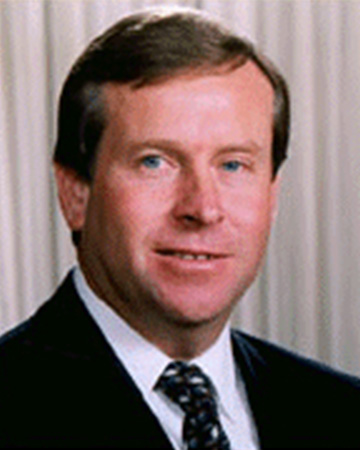
Official opening of Australia's first fused zirconia plant at Rockingham
28/4/95Another multi-million-dollar, value-adding mineral processing industry has been developed for Western Australia.
28/4/95
Another multi-million-dollar, value-adding mineral processing industry has been developed for Western Australia.
Resources Development Minister Colin Barnett today officially opened Australia's first fused zirconia plant at Rockingham.
The $9 million processing plant is set to produce fused zirconia for such uses as heat-resistant lining for furnaces, engineering parts and as a feedstock for advanced ceramics.
The plant, operated by Australian Fused Materials Pty Ltd (AFM), is an extension of the company's existing $14 million fused alumina plant in the East Rockingham Industrial Park.
Mr Barnett said the operation would annually produce 3,000 tonnes of fused zirconia to be exported mainly to East Asian markets, earning $8 million annually.
Fused zirconia was produced by heating to extreme temperatures the mineral zircon, extracted from mineral sands.
The Minister said the processing of this product would increase the product's value by eight to ten-fold.
Australian Fused Materials is a joint venture between Doral Mineral Industries Pty Ltd (a subsidiary of Devex), the Japan Abrasives Co and ACAP Australia Pty Ltd, jointly owned by Alcoa Australia and the Industrial Chemicals Division of the Aluminium Company of America.
"The decision to site this project in WA further underlines the State's enormous capacity in the field of mineral processing," Mr Barnett said.
"It is also a further example of Japan's increasing moves to establish manufacturing facilities nearer to the source of raw material."
Mr Barnett said Japan's swing towards offshore development was due to the country's extremely high operating costs, mainly due to the appreciation of the yen.
He said competitive costs in WA, as well as the offering of high-quality material, made WA a favourable choice for the development of such new industries.
WA produces about 40 per cent of the world's zircon and about 20 per cent of the world's alumina resources.
Mr Barnett said the Government had played a significant role in helping to attract the project by agreeing to provide the site for the plant for five years at no cost to the company.
As part of the agreement, the company had agreed to purchase the property at the market price after five years. A competitive electricity price had also been negotiated on a commercial basis for the project.
Mr Barnett said that the agreement allowed the initial costs of the project to be spread over the five years without a direct cost to the Government.
In return, the Government could expect direct revenue of more than $240,000 a year from the overall project through payroll tax and other Government charges.
About 15 full-time jobs had been created.
The Minister said that the project also provided a secondary industry by using the by-product from the fusing of zircon, silica fume, which would be marketed as a bonding agent in cement or as a filler in paints, plastics, and other porous materials.
About 1,600 tonnes of silica fume would be produced each year.
Media contact: Amanda O'Brien - 480 5968 (pgr).