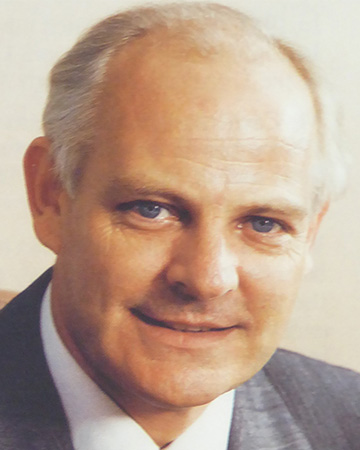
Official opening of Norseman centenary celebrations
5/8/94Mines Minister George Cash today officially opened the Centenary celebrations of the discovery of gold at Norseman.
5/8/94
Mines Minister George Cash today officially opened the Centenary celebrations of the discovery of gold at Norseman.
In August 1894, a horse struck it lucky for its owner, prospector Laurie Sinclair, when it uncovered a nugget while pawing at the ground.
The horse was called Norseman and the find occurred less than two kilometres from the town which now bears its name.
Mr Cash said while the first specks of gold were found in 1890, two years before the Coolgardie rush and three years before Paddy Hannan discovered Kalgoorlie, it was Sinclair's find which began the hunt for gold in the region in earnest.
"Today the region can boast a particularly productive history with the Central Norseman Gold Corporation standing as Australia's only continuous gold producing company since 1935," the Minister said.
"While other major areas such as Mt Magnet, Wiluna, Sons of Gwalia and even the famous Golden Mile have outstanding records of production over the last 100 years, the fact remains that each of these areas has been forced to cease production at some stage during the last 60 years."
Since its establishment in 1935, Central Norseman had produced four million ounces of gold, worth about $1,500 million on today's market.
Mr Cash said the average ore grade had been an impressive 12 grams per tonne.
"Few companies, if any, can match this performance," he said.
"On a cumulative basis the Norseman area ranks second only to the Golden Mile as the biggest gold producing centre in Western Australia.
"This is despite the mine life of Central Norseman rarely being proven beyond four years, as the gold is trapped in fairly rich but patchy reef systems."
Mr Cash said the future for Norseman as a gold-producing centre looked bright, with the newest orebody on its doorstep now being accessed by the Bullen decline, about 100 metres below the Central Norseman mill, which began production in 1993.
He said Lake Cowan, north of Norseman, had also recently proven fertile ground for Central Norseman.
Using special all-terrain vehicles imported from Sweden the company discovered what it called the Golden Rainbow - a corridor 25 kilometres long and three kilometres wide which linked the Cobbler, Swordfish, Harlequin, Sailfish and Talbot Island prospects.
"The first four of these are gold discoveries while Talbot Island is a nickel anomaly," Mr Cash said.
"The $10 million Harlequin prospect will be the first developed. It holds probable ore reserves of 310,000 tonnes which average nearly 15 grams to the tonne and production is expected to begin a year from now."
Mr Cash said Samantha Gold NL was another company holding extensive tenements in the district and which used Norseman as its main residential base.
"Its most significant holding is the exciting Chalice ore body near Higginsville," he said.
"This prospect holds ore reserves of a probable three million tonnes averaging 6.12 grams per tonne - an estimated 600,000 ounces."
Mr Cash said another reason for Norseman to be optimistic about its future was that, despite fears over land access and threats by some companies to channel their risk capital overseas, WA continued to be the most popular target for mineral exploration in Australia.
"Companies are spending about $350 million a year searching for minerals in WA, which equates to about 55 per cent of the total exploration expenditure for Australia," he said.
The Minister said the trend appeared to be continuing, with the latest figures issued by the Australian Bureau of Statistics showing a 30 per cent increase in mineral exploration expenditure in WA for the December 1993 quarter compared with same period the previous year.
"The Coalition Government is helping to further exploration in WA," he said.
"It is clear that increasingly sophisticated geochemical, geophysical and geological techniques are needed to locate orebodies lying under considerable soil cover.
"This also includes lake beds - a feature common to the Norseman area."
Mr Cash said Government assistance included:
· funds allocated to the Department of Minerals and Energy for an expanded geochemical mapping program employing 14 contract professionals and technical staff;
· additional funds for airborne geophysical mapping; and -
· the recent development by DOME of a number of specialist maps including those which concentrated on bedrock geology rather than rocks appearing at ground level.
Norseman's centenary celebrations will continue over the next 10 days.
Media contact: Caroline Lacy 222 9595