Port Hedland plays pivotal role in Pilbara development
16/8/93Port Hedland plays a pivotal role in the development of the Pilbara.
16/8/93
Port Hedland plays a pivotal role in the development of the Pilbara.
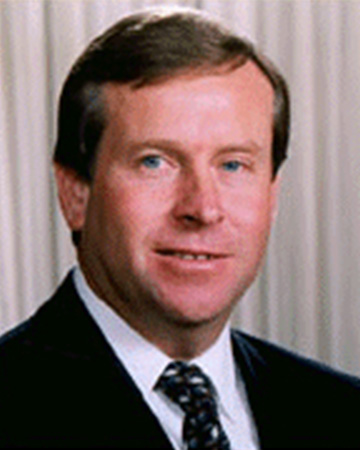
Resources Development Minister Colin Barnett, while addressing the Port Hedland Chamber of Commerce Business of the Year Awards this weekend, said the capital expenditure created by a steady stream of resource projects involving Port Hedland should not be underestimated.
"Nowhere else in the world are resources and energy issues as mutually dependent as in the North-West of Western Australia," Mr Barnett said.
"While the North-West Shelf project has gained international credit, it was the iron ore industry which steered North-West development in the 1960s and 1970s.
"Alumina then took the lead in the late 1970s and 1980s. It will be the oil and gas industry, flanked by iron ore production, which will be the driving force of the 1990s and beyond.
"WA exports more than 100 million tonnes of iron ore at a value of $3 billion each year, of which Port Hedland is responsible for about $1 billion."
Mr Barnett said that despite recent price reductions, the outlook of the iron ore industry was promising due to the product quality and premium services centred around Port Hedland.
"The quality of the iron ore has also been enhanced by blending to meet buyer specifications," he said.
He said Pilbara iron ore had an iron content of between 62 and 65 per cent compared with the iron ore content of between 25-35 per cent in China.
"The Pilbara region has 300 years' supply or iron ore at current production levels and could sustain a further 30,000 years of supply of lower grade ore," Mr Barnett said.
"The existing shipping and rail infrastructure is world-class and provides the Pilbara with a competitive shipping advantage of $5 to $6 per tonne compared with overseas competitors. This advantage is significant considering 80 per cent of iron ore exports are directed to North-East Asia.
"The demand for steel in the Asia Pacific region is expected to increase by 40 per cent by the year 2000 with the bulk of that growth occurring as a result of the rapid economic growth in China."
Mr Barnett said there was scope for further processing in the Pilbara. A number of feasibility studies were being undertaken in the area of direct-reduced iron (DRI). CRA had recently completed a demonstration plant using hi-smelt technology.
"One issue which will impact on the development of further processing opportunities will be the availability and cost of energy," he said.
"The Gas to the Goldfields pipeline project will provide an impetus to development along its path.
"There is a potential for energy prices to be significantly reduced allowing existing export industries to be more competitive and encouraging new processing projects close to raw material sources."
Mr Barnett expected the gas pipeline from Dampier to Port Hedland would be constructed either directly as part of the Gas to the Goldfields project or as an extension to the 1200km pipeline.
He also said the Government would consider indemnifying both pipelines from Mabo-style claims.
Mr Barnett said he was hopeful the BHP Pilbara energy project would proceed.
He said the Coalition Government was prepared to honour the Cabinet decision of the previous Government with respect to processing obligations under the Mount Newman Agreement.
Media contact: Carolyn Vicars 222 9686