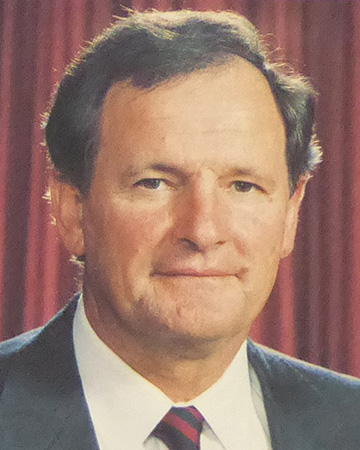
Recognition of regions a key factor in regional dev. policy
29/11/96 Recognising the vital contribution of the regions to Western Australia's growth is one of the key underlying themes of the Coalition Government's Regional Development policy unveiled by Deputy Premier Hendy Cowan in Collie today.
29/11/96
Recognising the vital contribution of the regions to Western Australia's growth is one of the key underlying themes of the Coalition Government's Regional Development policy unveiled by Deputy Premier Hendy Cowan in Collie today.
Mr Cowan said that as well as providing the stimulus for diversified economic growth in the regions, the Coalition would continue to improve the standard of Government services for people living outside the metropolitan area.
There had been a fundamental shift in the future outlook for regional areas during the Coalition's first four years.
"When we were elected to government in 1993, the major issues for regional communities related to heading off possible closures of schools and hospitals," the Deputy Premier said.
"There was a very strong sense in much of regional WA that it was being excluded from the State's prosperity.
"Four years on, the issues relate not to rural decline but to dealing with growth-related pressures, such as housing, industrial land and other infrastructure."
Mr Cowan said a shining example of the Coalition's commitment to regional development was the construction of the $575 million, 300-megawatt power station in Collie which was on schedule for completion in 1998.
"That project alone has created 500 jobs in the construction stage and is expected to create as many as 3000 direct and indirect jobs as well as providing a catalyst for other local industry," he said.
"As with 12 other towns, Collie has also been enhanced by Project Mainstreet, a Government-supported program aimed at revitalising and promoting town centres."
Mr Cowan said that to encourage more major investment in regional WA, the Coalition would amend the Investment Incentive Program to increase significantly the incentive for overseas and interstate companies to locate their businesses in regional WA. It would also develop a special program to assist companies to relocate from Perth.
However, Mr Cowan said that regional development went far beyond the major industrial and resource developments. Small business and service industries would also provide employment opportunities.
He said that in its second term the Coalition Government would:
· retain the uniform electricity tariff for residential and small business consumers in regional WA;
· maintain funding for the Regional Headworks Scheme for commercial and industrial development at $5 million per annum for the term of government;
· appoint regional trade officers, attached to Regional Development Commissions, in the Kimberley, Goldfields and Agricultural regions;
· conduct more 'red tape' forums in regional areas to identify problems involved in meeting government regulations;
· boost the presence of the Small Business Development Corporation (SBDC) in regional areas to improve delivery of business programs; and -
· change the SBDC board structure so as to include at least two members with experience in operating small businesses in regional or rural areas and at least two women.
Mr Cowan said that provision of adequate housing in regional areas was an important factor influencing decisions by prospective business operators.
The Coalition Government would:
· establish a pilot project in which private sector investment in quality staff housing for businesses in regional towns is encouraged by the State underwriting a long-term lease of 10 years at commercial rates;
· invite offers for the purchase of appropriate Government Employees' Housing Authority properties in major towns to finance development of housing in other areas where demand for employee housing cannot be met; and-
· convene a Small Town Home Ownership Forum with banks and other lending institutions to improve awareness of the needs of rural customers and develop strategies to meet those needs.
Mr Cowan said the Government would spend $4 million over four years to help local governments improve basic tourism amenities and a further $4 million to encourage them to acquire, restore or maintain heritage buildings.
The Government remained committed to improving the delivery of its services in regional areas and to decentralising some of its operations.
It aimed to have an extra 250 positions in the regions during the next term. This was on top of existing staff movements to the regions already undertaken by Agriculture WA and divisions of Westrail, Main Roads, the Water Corporation and CALM.
The Coalition would also:
· require all State Government agencies to take all reasonable steps to provide services equitably to all Western Australians regardless of where they live;
· require all Government agencies and other agencies delivering government services to publish a Regional Access Equity Plan to improve service delivery;
· establish a Community Service Audit to measure the performance of State Government agencies in improving the equitable delivery of government services;
· conduct an audit of welfare services in regional WA to help close any gap in availability of quality services between the city and the country;
· provide $1.28 million over four years to expand the University Rural Surgical Services, an airborne service based at the University of WA which enables specialists to visit rural communities;
· increase funding for training of country doctors and provision of locums for country doctors and other health workers; and-
· further develop Multi Purpose Health Services throughout country WA.
Mr Cowan said that for regional development to be orderly and effective, proper planning was essential. This was an area that had been neglected in the past, but great progress had been made in the past four years with major input from regional development commissions.
The Coalition would further progress regional strategies as outlined in the State Planning Strategy and prepare statutory region plans to ensure growth of major regional centres was co-ordinated to maximise servicing and recreational infrastructure.
Mr Cowan said that community leadership would be a vital factor ensuring regional communities realised their full potential.
He said "2029" committees would be established in all regions to assist long-term planning. Membership would be restricted to people under 35.
The recently established WA Rural Leadership Program and Rural Women's Network would be developed further.
Media contact: Peter Jackson 222 9595