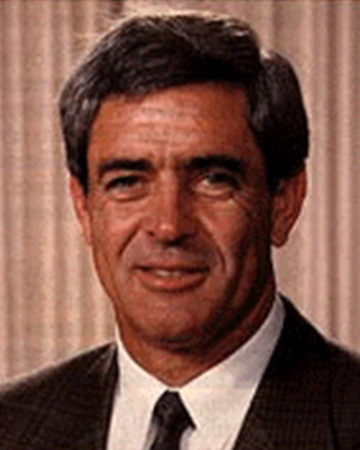
Report aimed at developing WA beef cattle industry
6/4/95A report aimed at promoting the development and increasing the profitability of the Western Australian beef cattle industry was released today by Primary Industry Minister Monty House.
6/4/95
A report aimed at promoting the development and increasing the profitability of the Western Australian beef cattle industry was released today by Primary Industry Minister Monty House.
The report, 'Meeting Beef Markets in the 21st Century' prepared by the Minister's Beef Industry Strategy Group, examines key issues and suggests strategies to help the industry consolidate its position in the local market and seize export opportunities in rapidly expanding export markets.
It will be discussed with cattle producers, processors and exporters at a series of regional meetings in the coming weeks to finalise industry-wide strategies.
"The aim is to stimulate industry consultation with the Beef Strategy Group and develop a workable blueprint for future industry growth and prosperity," Mr House said.
"The WA beef cattle industry will only expand if all sectors work together for mutual profit with strategies to boost integration between the production, processing and marketing sectors."
Mr House said the WA beef industry had traditionally concentrated on servicing a static local market and mainly exported to the lower value manufacturing grade market in the United States.
"Meanwhile on our regional doorstep there has been rapid expansion in South East Asian markets where demand for imported beef is expected to treble over the next decade," he said.
"Factors contributing to this growth are improving standards of living, increasing spending power and government programs to encourage the population to eat more protein based food.
"The Beef Strategy Group has identified significant domestic and export market opportunities but we will only capitalise on these by developing a more integrated industry, producing more consistent and higher quality beef, and meeting tight product specifications."
Of the 100,000 tonnes of beef produced in WA annually, about 45 per cent goes to domestic markets.
Some $85 million worth of beef was exported in 1993-94, most to a declining United States market with increasing amounts to steadily expanding markets in Malaysia, Taiwan, Canada, Indonesia and Japan.
About 20 per cent of cattle produced in WA are shipped as live animals for feedlotting and salughter to booming markets in Indonesia, Philippines and Malaysia.
The report suggests strategic directions for the industry and addresses six main issues: market focus, efficiency and cost reduction, industry integration, quality, export markets, and resource management.
It suggests a series of pilot projects to improve market focus and communication flows between industry participants as many market segments lacked clear information about the customer and their requirements.
It proposes strategies to improve integration by encouraging all sectors to work together to produce and deliver products which met customer specifications.
The report highlights that beef production costs need to be reduced and processing efficiency improved to remain competitive on the export market.
This could involve locating the breeding herd in lower capital cost areas such as the pastoral region, south coastal areas and the Midwest, wider adoption of new animal production techniques, and assisting processors reduce current high slaughter and inspection costs.
Incentives were needed to reward producers who delivered consistent, high quality beef and live cattle to customers on a year round basis.
The report also suggests the further development of niche markets where WA beef had a comparative advantage based on location, ability to meet specialised requirements and provide guaranteed service to customers in Japan, Indonesia, Malaysia and Taiwan.
Beef producers would be sent details of the report and urged, along with cattle industry participants, to attend a series of country industry meetings to discuss issues and finalise strategies.
The regional meetings include:
April 10 - 8.30 am - Badgingarra Department of Agriculture Research Station;
April 21-23 - as part of the Kimberley pastoral field days;
April 24 - 7.30 pm Esperance Agricultural Centre;
April 26 - 7.00 pm Department of Agriculture, Bunbury;
April 27 - 9.30 am Manjimup Community Centre;
April 27 - 7.30 pm Frost Pavilion, Mt Barker;
May 6 - Boodarie Station, Port Hedland;
Geraldton date and venue to be announced.
Beef Strategy Group members would also be available to meet with industry groups to ensure full industry involvement before finalising a blueprint document in late May.
Media Contact: Will Henwood 481 2044 or 222 9595
Beef Strategy Group: Graham Anderson (Chairman) (09) 250 2434
Trevor Boughton (executive officer) (09) 322 7141