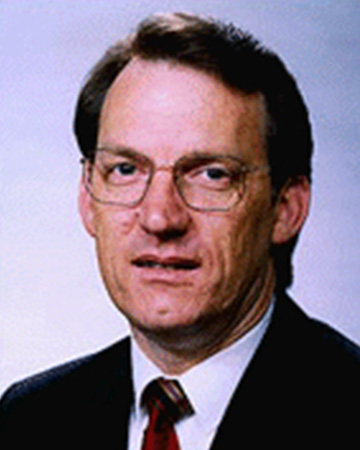
Published
21 September 1995
Ministers

21/9/95
The State Government's second wave of industrial relations reforms would result in a simpler, more efficient and less antagonistic system, Labour Relations Minister Graham Kierath said today.
The Minister, who tabled his much-awaited legislation in State Parliament today, hailed the changes saying they would lift Western Australia's workplace practices into the 1990s.
They repealed antiquated, century-old statutes and underpinned the democratic rights and freedom of choice of both workers and employers.
"This legislation is not a head-kicking exercise, but it will make unions more accountable and the ordinary members will have a bigger say in what goes on," Mr Kierath said.
"It is called old-fashioned democracy.
"Unions will have to adopt more modern financial accounting principles and practices, including proper audits.
"Political donations can only be made if the members say so."
Mr Kierath said that the most dynamic change would be secret ballots on any proposed strikes or other industrial action.
In the past, a show of hands at a mass meeting usually produced a result in keeping with what the union leaders wanted.
In public, workers were reluctant to be seen at odds with the union even though they disagreed.
Secret ballots would ensure a proper, democratic vote.
A union which takes industrial action without first holding a ballot can be fined up to $5,000.
"Under the new system an individual worker can call for a ballot," Mr Kierath said.
"So, too, can the union itself, the employer or organisation of employers, the WA Industrial Relations Commission or the Minister of the day.
"And there can be no fudging - all ballots will be held under the jurisdiction of the commission."
The Minister said that other reforms included.-
· reinforcement of the direct employer-employee relationship introduced under the first wave's Workplace Agreements;
· dispute resolution procedures incorporated in all awards and the obligation on employers to collect union dues removed;
· rationalising Federal/State award coverage. Union members would have a choce between State and Federal awards for the first time;
· streamlining and modernising other industrial relations legislation, rationalising court procedures;
· giving employees the right to direct superannuation contributions to the fund of their choice; and -
· amending the Minimum Conditions of Employment Act 1993 to include provisions to remove employees' rights to pro-rata annual leave if they were dismissed for misconduct or left employment unlawfully.
Mr Kierath said that the second wave would build on the already successful legislation which ushered in the new era of Workplace Agreements.
"That was the first stream in establishing the new order of industrial relations," he said.
"It is an order which has freed-up the workplace forever.
"Our reforms have been praised by independent economic analysts across Australia.
"They have given workers a new deal to make much more money and to have flexibility in their hours of work and other conditions.
"They have been given genuine freedom of choice and protection against coercion to join unions.
"The no ticket, no start signs have gone."
The Minister said that while unions had always been key players in the industrial relations system, their outdated approach was a major obstacle to an efficient and productive workplace.
"That is why the rights of union officials to enter workplaces on irrelevant issues will be restricted and the collection of union dues will now be dealt with on an enterprise-by-enterprise basis," Mr Kierath said.
"In its Union 2000 statement, even the pro-socialist Evatt Foundation warns unions they have to modernise or perish.
"The union movement has already been seriously eroded in this State because it has declined to give workers a role in the decision-making process and failed to offer services and incentives to make itself more acceptable.
"Workplace agreements are attractive to young workers and women who now form 42 per cent of all employees.
"These people are disillusioned with the old guard.
"Although there has been some effort by unions to become relevant it has been too little, too late.
"It is our reforms which will lead WA into the new century.
"The State's current prosperity is testimony to the change of culture in a workplace where rewards are better than at any time in our history."
Media contact: Caroline Lacy 222 9595