Three of York's most historic buildings placed on Heritage Register
21/3/96 The State Government has moved to protect the heritage value of three of York's most historic buildings.
21/3/96
The State Government has moved to protect the heritage value of three of York's most historic buildings.
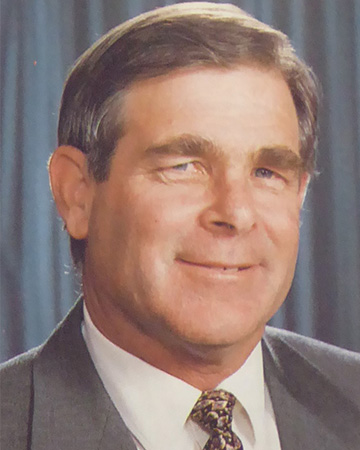
Heritage Minister Richard Lewis said York's historic church, hall and rectory, known as the Holy Trinity Group, had been placed on the Register of Heritage Places on an interim basis.
Mr Lewis said the Residency Museum and the York Post Office had been permanently placed on the Register.
"The Holy Trinity Group, built in Newcastle Street between 1853 and 1861, is closely associated with the first Governors of the Colony and with the establishment of the Anglican faith in Western Australia," he said.
"The buildings are a York landmark and form a unique precinct of mid-19th century ecclesiastical buildings.
"The Holy Trinity Group is highly valued by the Anglican community, as it comprises one of their earliest places of worship in WA.
"It is also prized by the York community for its association with the settlers of the Avon Valley and their descendants, as it reveals much about the early development of York and its importance as the first inland town following the settlement of the Swan River Colony."
Mr Lewis said the first formal Anglican services in York were most likely held in 1840 in the early police barracks.
"The Church of the Holy Trinity was in use by early 1856 when the Archdeacon of Adelaide, Mathew Hale, stopped at York on his way to be consecrated as the first Bishop of Perth," he said.
"The attached hall, originally built in 1861 in Avon Terrace as the Church of St John, was dismantled in 1905 and re-erected at the Holy Trinity site.
"The rectory was built in 1875 on the appointment of the Reverend George Rought Howard as rector of York. The 1853 kitchen of the original house was retained and survives today."
Mr Lewis said the church was damaged in the Meckering earthquake of October, 1968. The bell tower was so badly cracked that the church was closed until it could be made safe.
He said the Holy Trinity Group was a well-executed piece of 19th century architecture, using handmade bricks and natural materials to create a harmonious group of buildings.
"The church and hall are simple examples of the Victorian Romanesque style, with the rectory being Victorian Rustic Gothic in style," the Minister said.
"Together, they are an uncommon group of mid-19th century church buildings, demonstrating a distinctive religious custom and way of life."
The residency museum was built in the 1850s as an office and residence for the second Government Resident, Captain R G Meares and his family.
Meares resigned as Government Resident in 1859, when the magisterial duties were transferred to Northam. However, the residency continued to be occupied until about 1901.
Shortly afterwards, it was adapted for use as a maternity hospital and remained so until the early 1940s.
In 1972 it was opened as the first regional museum in WA and remains a well-known tourist attraction.
Built of local clay bricks in the Victorian Georgian style, the museum is in good condition and has a high degree of integrity and authenticity.
Mr Lewis said the York Post Office, in Avon Terrace, was one of the earliest civic buildings in York which continued to be used for its original purpose.
"In fact, there has been a post office on the site since 1866, making it the longest continuous use for post office facilities in WA," he said.
"The current York Post Office was built in response to the town's growing importance as a rural centre.
"In particular, it was built because York was the town and railway centre closest to the Yilgarn goldfields in the initial period of the gold boom years."
A two-storey rough cut stone and brick structure with an iron roof, the post office was designed in the Federation Arts and Crafts style by noted Government architect George Temple-Poole.
"The York Post Office is a well-preserved example which is representative of the civic buildings built by the State Government in the gold boom years," Mr Lewis said.
"It demonstrates the way of life for postmasters and their families and contributes to the York community's sense of history.
"The building is in sound condition and has a high degree of authenticity".
Media contact Bronwyn Hillman 222 9595 or 221 1377