Published
25 October 2002
Ministers

25/10/02
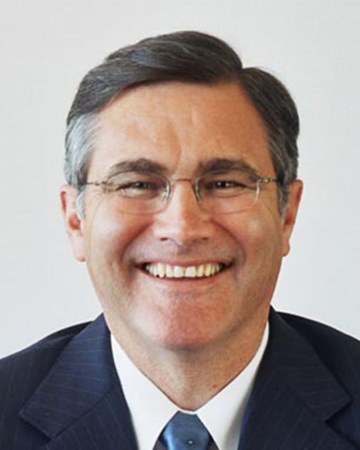
Eminent Western Australian medical researcher Professor Barry Marshall has won the $10,000 major prize in the inaugural Premier's Science Awards for his work related toulcer causing bacterium.
Premier Geoff Gallop, who is also the Minister for Science, presented Professor Marshall with the first-ever Premier's Prize for Achievement in Science tonight.
Dr Gallop also announced that Dr Kliti Grice from Curtin University and Professor Andre Luiten from the University of Western Australia had tied for the Premier's Prize for Early Career Achievement and would receive $5,000 each.
"The Premier's Science Awards have been created to recognise and celebrate the impressive diversity and excellence of the scientific research that occurs in WA," Dr Gallop said.
"So it is extremely fitting that the work of Professor Marshall has won the Achievement in Science Award which honours outstanding achievement in scientific research and leadership."
The Premier said that Professor Marshall had persevered to uncover the cause of a significant health problem that was suffered by half the world's population.
The research to identify the causes and to develop diagnostic testing and therapies to eradicate this bacterium was conducted in Perth. Professor Marshall was the co-discoverer of the ulcer causing bacterium Helicobacter pylori with Dr Robin Warren.
"Professor Marshall developed a blood test, a biopsy test and a breath test to easily diagnose the bacterium," Dr Gallop said.
"All these methods are now widely used and Professor Marshall holds several patents related to diagnosis and treatment."
Dr Gallop also said that owing to the outstanding quality of the work of Dr Grice and Professor Luiten, they had been jointly awarded the Premier's Prize for Early Career Achievement in Science. The prize recognises excellence in scientific research achieved by a science researcher under the age of 35.
The Premier said Dr Grice's work in geochemistry would have application for petroleum exploration while Professor Luiten's work as a physicist had attracted the attention of the National Aeronautics and Space Administration (NASA).
"Dr Grice has more than 10 years experience in carbon compound specific isotope research and is the only stable isotope geochemist with experience in both carbon and hydrogen compound specific analysis in WA and one of a few in Australia," he said.
"Her research can be applied to a number of WA industries including petroleum exploration, water geochemistry and environmental geochemistry."
Dr Gallop said Professor Luiten had spent his career testing the validity of fundamental laws governing our understanding of the world by developing instruments to test scientific theory.
"His validation experiments of Einstein's theory of special relativity have a 50 times higher confidence of special relativity than previous attempts," he said.
"Professor Luiten has been invited to conduct research for NASA and this month was, along with his UWA team, awarded a $13million Federal Government grant."
Dr Gallop said the awards had attracted 54 nominations of an extremely high standard.
The nominations were judged by members of the Premier's Science Council that was set up last year to advise Government on new strategies and policies to develop WA's scientific and technological capability.
The judges were: Professor Ian Constable (Chair), the director of the Lions Eye Institute: Dr Pam Garnett, the Dean of Curriculum at St Hilda's Anglican School; Dr Stephen Hopper, chief executive officer of Botanic Gardens and Parks Authority; Mr Kim Ng, lecturer at Central TAFE and Professor Alan Robson, Deputy Vice Chancellor of UWA.
The Premier also thanked the WA Branch of Australian Science Communicators, the Premier's Science Council and the Office of Science and Innovation for their joint efforts in organising the awards.
Premier's office: 9222 9475