Published
16 March 2001
Ministers

16/3/01
The State Government has delivered on another election commitment - ensuring the protection of one of Perth's most well known landmarks, the Raffles Hotel.
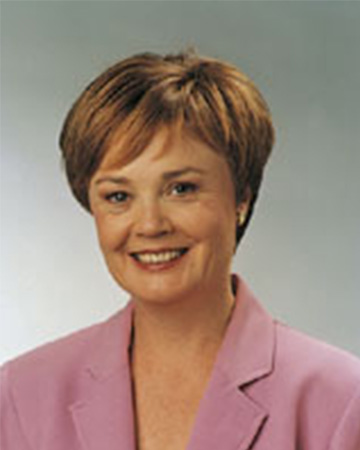
Following a final briefing from the Heritage Council, Environment and Heritage Minister Dr Judy Edwards has approved the listing of the 1937 art deco hotel onto the State Register of Heritage Places.
"For more than two years the previous Government refused to act on Heritage Council's recommendation to register the hotel - leaving its status as a heritage building uncertain," she said.
"Now the Raffles Hotel will finally be safeguarded.
"As one of the few surviving examples of a hotel in the Inter-War Functionalist style, the Raffles Hotel has significant heritage value. It deserves the protection of the State's heritage laws.''
Dr Edwards said the determined campaign to save the Raffles from demolition was indicative of the hotel's value to the local and broader community.
"It is obvious the Raffles Hotel has a special place in the hearts of many Perth people," she said.
"Diverse groups such as the Art Deco Society of WA, the Melville Conservation Society, the Melville Historical Society, the Melville Ratepayers Association and the Friends of the Swan River have all rallied to preserve the hotel.
"There were also letters of support from national and overseas architects and supporters of the retention of art deco buildings."
Dr Edwards said under the Heritage Council's registration process - the hotel would first be listed on an interim basis until final public comment.
"It now has the full protection of the Heritage Act - any proposed development of the Raffles Hotel must face Heritage Council scrutiny and approval,'' she said.
History
Dr Edwards said the location of the Raffles, on a promontory of land overlooking the Swan and Canning Rivers in Applecross, had been the site of a hotel for more than 100 years.
The history of the pub dated back to the Canning Bridge Hotel, built in 1896 at a time when the area was an isolated district with only a few rough bush tracks. Most visitors to the area were day trippers who caught the ferry from Perth for a day of swimming, fishing, boating and crabbing.
The Canning Bridge Hotel was a single storey structure with a high gabled roof and was the venue for many social and sporting groups, such as the WA Hunt Club.
In 1937, as Perth emerged from the Depression with a new sense of prosperity and optimism, the hotel was extensively remodelled and renamed the Raffles, after the famous Singapore hotel.
"Nearly ten thousand pounds was spent reconstructing the hotel into one of the most modern and attractive hotels in the metropolitan area," Dr Edwards said.
"Modern, streamlined facades were added and the interior was extensively renovated, including the addition of a 'Tropical Lounge' with cane furniture, large palms and pot plants.
"The hotel is a significant example of the work of prominent Perth architect W.G. Bennett, who was a major exponent of Inter-War Art Deco and Inter-War Functionalist buildings in Western Australia.
"The Raffles quickly became a fashionable hotel for many social events and was advertised as an ideal place for enjoying water sports and Perth's sunny mediterranean climate."
Dr Edwards said a unique feature of the hotel was the inclusion of a traditional German bier garten (beer garden), believed to be the first of its type in Western Australia and possibly Australia.
While work was in progress on the hotel, the Canning Road was upgraded and renamed Canning Highway and the new Canning Bridge was completed in 1938.
Dr Edwards said the hotel, together with the nearby Applecross District Hall, the Canning Bridge and Canning Highway, were important reminders of the development of the Melville district and formed a distinctive cultural landscape.
"For more than a century, the hotel has had high social value as a place of recreation, the celebration of events and the venue for various meetings and functions," Dr Edwards said.
"The Raffles has been enjoyed by generations of Western Australians and contributes significantly to the community's sense of place."
Media contact: John Carey 9421 7777