26/3/02
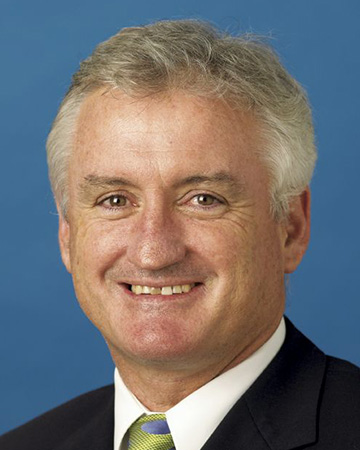
Education Minister Alan Carpenter has released a blueprint for the future of Western Australia's post-compulsory education system, aimed at keeping more young people in formal education for longer.
Speaking at the launch of the Post-Compulsory Education Review report Our Youth, Our Future at Morley Senior High School this morning, Mr Carpenter said the main focus of the report was to improve the life prospects of all young people in WA.
"The time when students could leave school at the age of 15 and expect to gain an apprenticeship or find a job with long-term prospects, is over," he said.
"So, too, are the days of a post-compulsory school system with a single-minded focus on university entrance."
Mr Carpenter said Our Youth, Our Future was the result of three years of consultation and research.
"The review has the support of the State Government, Government and non-Government school systems, the TAFE and university sectors, parent groups and industry," he said.
"Over the next six years, a new system of courses of study, that incorporates the strengths in the current system, will be gradually developed and trialled in schools.
"Through this process of adaptive implementation, we will develop a post-compulsory schooling system for WA that will accommodate the learning needs, interests and aspirations of all students."
Mr Carpenter said the present system had many strengths, but it had been developed mainly for university-bound students.
"Only two-thirds of WA students complete year 12, which means we have been consigning one-third of our youth to a future of dubious employment prospects," he said.
"The new system will accommodate the diverse needs of all students, including the disadvantaged and those in rural and remote areas; it will raise standards of achievement, particularly in literacy and numeracy; and it will develop in all students an orientation to learning for life.
"Most importantly, the new system will give our young people a reason to stay in the education system, even if they do not want to study at university."
Mr Carpenter said there would be an increase in the use of learning technologies across all learning areas.
He said he had resisted calls to make the study of English non-compulsory.
"English will be compulsory in years 11 and 12, and a standard for English language competence will be developed that all students will have to achieve to graduate," he said.
The Minister said central to the reform was the development, in accordance with the Curriculum Framework, of 50 courses of study that would eventually replace all Tertiary Entrance Examinations (TEE) subjects, wholly school-assessed (WSA) subjects, and vocational education and training (VET) subjects.
"These courses will provide a flexible system of curriculum that provides explicit standards for all students, offers opportunities for external assessment for all students, and provides all students with opportunities for achievement of national VET units of competency," he said.
"For example, only 37 per cent of students in WA currently are eligible for a tertiary entrance rank at the end of Year 12, whereas the comparable figure in NSW, Victoria and Queensland is between 65 and 71 per cent.
"With all of the new 50 courses of study counting towards university and TAFE entrance, students will have greater opportunity for selecting the post-school pathway of their choice at the end of year 12 instead of the end of year 10."
Mr Carpenter said the adaptive process of implementation of the new system meant students completing year 12 before full implementation in 2009 would not be disrupted or disadvantaged.
"The State Government is committed to providing significant funding to development of the courses, so that the first stage of trialling 10 courses of study at six schools can start in 2004," he said.
The Minister said the new post-compulsory schooling system would contribute to the continued development of a caring and robust community that was outward-looking, and in which all individuals were nurtured and welcomed on an equal footing.
"This system will secure the future for our youth and return to the State many times over, the investment required for reform," he said.
Minister's office: 9213 6800