Published
27 February 2003
Ministers

27/02/03
The Eastern Railway Deviation in Swan View, Coolgardie Bowling Pavilion, the Federal Hotel in Wagin and Walkaway CWA Rooms have been permanently listed in the State Government's Register of Heritage Places.
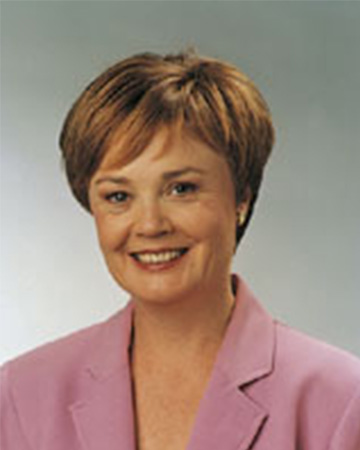
Environment and Heritage Minister Judy Edwards said the registration would provide permanent statutory protection and recognition of the contribution made by the places to the State's cultural history.
"The Eastern Railway Deviation is a single line railway tunnel located at the end of Curve Road in Swan View," Dr Edwards said.
"It was built at the request of C Y O'Connor to find a route with easier grades and gentler curves than the original railway line route, to service the booming Goldfields of the 1890s."
As locomotive sizes increased beyond the tunnel's capacity, the tunnel was bypassed with a short deviation to the north opened in 1945. The mainline service was discontinued in 1966.
"In 1978, a baseline facility for calibrating survey instruments was established inside the tunnel, forming one of the only all-weather instrument calibration facilities in Western Australia," Dr Edwards said.
The Minister said the Coolgardie Bowling Pavilion, which was interim listed in November, had been permanently listed in recognition of its important historical qualities.
"The Coolgardie Bowling Pavilion is the only remaining building from the 1899 WA Mining and Industrial Exhibition," she said.
"It is associated with the development of Coolgardie as a mining, business and administrative centre of the Eastern Goldfields.
"It is highly valued by the local community and contributes to the townscape of Coolgardie.
"The place is also associated with the development of recreation facilities as the town became a regional centre at the turn of the 19th century."
In 1907 the pavilion was relocated to Sylvester Street, where it served as the clubroom for the Coolgardie Bowling Club for 60 years. It continues to provide storage facilities for the club today.
The pavilion is a small-scale timber structure of ornate design, built in the Federation Filigree style.
"The pavilion has a high degree of rarity as one of the few kiosk structures of this type in WA," Dr Edwards said.
The Minister said the former Federal Hotel in Wagin, also interim listed in November, was a double-storey brick and iron regional hotel, designed in the Federation Filigree style.
"The place comprises the hotel building and ground-floor shops built in 1896, as well as a store circa 1900 and motel built in 1965," she said.
"It is a substantial structure extending an entire block and wrapping two street corners, a scale of which is rarely seen in regional WA.
"As one of three hotels constructed in Wagin between 1889 and 1905, the place reflects the initial development and boom in Wagin following the installation of the Great Southern Railway in 1889.
"Generations of Wagin residents and visitors valued the hotel as a place for socialising and gathering since circa 1896 to its closure as a licensed hotel in 1987.
"The reopening of the Federal Hotel in 2000 as an art gallery, coffee shop, and function centre, and as the Royal Flying Doctor Service Wagin Visitor Centre since October 1999, stands as a testament to the importance of the place to both locals and tourists."
Dr Edwards said the Walkaway CWA Rooms were a single-storey fibre-cement clad building with a corrugated iron roof constructed for the Walkaway branch of the Country Women's Association in 1959.
"The Walkaway CWA rooms have particular significance for women of the Walkaway district as a venue for social interaction and community activity, and for the families whose children attended pre-school at the place between 1972 and 1996," she said.
"The branch has been active in the community since 1932, following the establishment of the Country Women's Association movement in 1922.
"The association has been important in the community life of isolated regional towns such as Walkaway, where few other services are available.
"During the 1950s, the time of the CWA Walkaway Rooms construction, the rural sector was booming and there was a spate of home construction and renovation at Walkaway as rural populations increased following World War Two.
"The place demonstrates the value of the association and the nature of activities held in this post war period."
Minister's office: 9220 5050